
Key Takeaways
- Cockroaches are nocturnal — seeing one during the day often signals a large hidden population.
- They spread allergens and bacteria; controlling them protects both health and hygiene.
- Gel baits and boric acid are the most effective low-toxicity treatments for homes.
- Eliminating food, water, and entry points is the foundation of long-term prevention.
What Are Cockroaches?
Cockroaches are flat-bodied insects in the order Blattodea. Of roughly 4,500 species worldwide, only about 30 live near humans — and just four are common household pests: the German cockroach, American cockroach, Oriental cockroach, and brown-banded cockroach. They are ancient survivors, thriving in warm, moist environments with access to food scraps.
Beyond being unsightly, cockroaches carry bacteria (Salmonella, E. coli), trigger asthma and allergies through their droppings and shed skins, and can contaminate food. Understanding which species you’re dealing with helps you choose the right control approach.
How to Identify Common Cockroaches
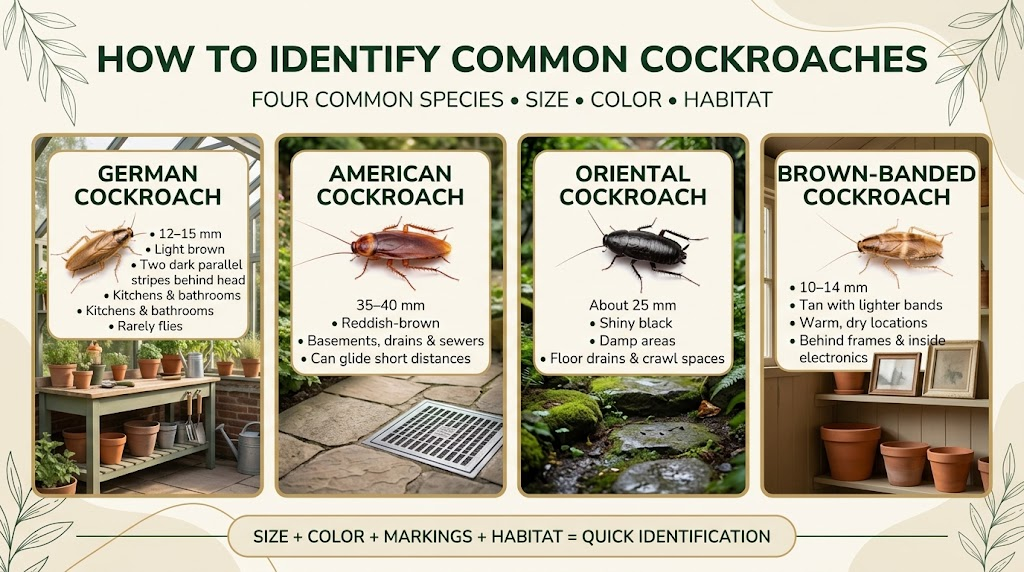
German cockroaches (Blattella germanica) are the most common indoor species — light brown, 12–15 mm long, with two dark parallel stripes behind the head. They rarely fly and prefer kitchens and bathrooms. American cockroaches (Periplaneta americana) are much larger (35–40 mm), reddish-brown, and often found in basements, drains, and sewers. They can glide short distances.
Oriental cockroaches are shiny black, about 25 mm, and strongly associated with damp areas like floor drains and crawl spaces. Brown-banded cockroaches are smaller (10–14 mm), tan with lighter bands across the wings, and prefer warm, dry spots like behind picture frames or inside electronics.
Signs of a Cockroach Infestation
Look for small dark droppings resembling ground pepper or coffee grounds along baseboards, in cabinet corners, and behind appliances. German cockroach droppings may appear as dark smears on surfaces near harbourage sites. You may also find oval-shaped egg cases (oothecae) — light brown and about 8 mm long — glued to hidden surfaces.
A musty, oily odour in enclosed spaces is another telltale sign, especially with larger populations. Shed skins accumulate where roaches congregate. If you see a cockroach scurrying during the daytime, the infestation is likely significant — they are strongly nocturnal and avoid light when numbers are low.
Lifecycle & Habitat
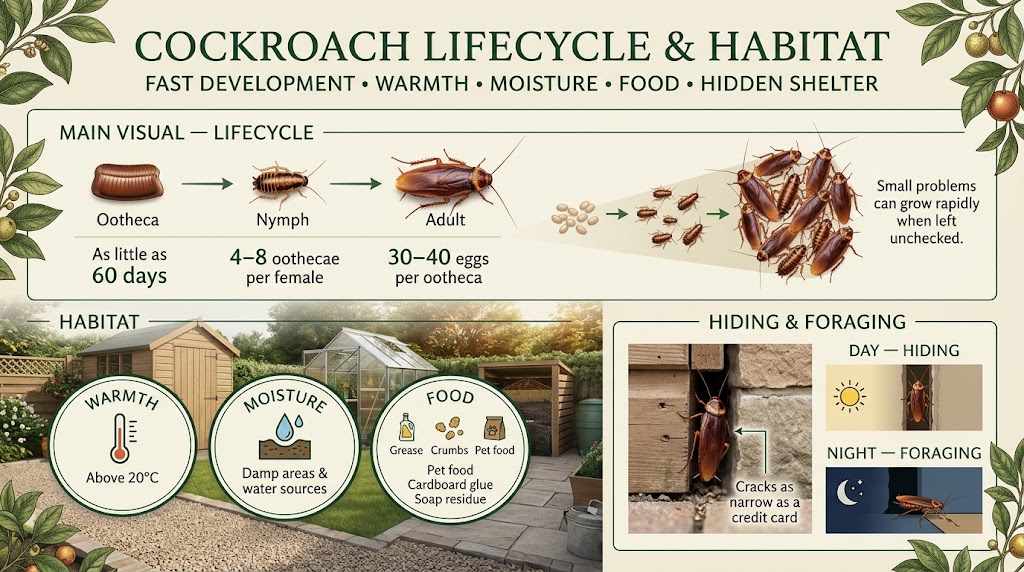
German cockroaches develop fastest: egg to adult in as little as 60 days under ideal conditions. A single female produces 4–8 oothecae in her lifetime, each containing 30–40 eggs. This means a small problem can explode into thousands within months if left unchecked.
All pest cockroaches seek warmth (above 20 °C), moisture, and food. They are omnivorous scavengers — grease, crumbs, pet food, cardboard glue, and even soap residues sustain them. They hide in cracks as narrow as a credit card during the day and forage at night.
Common Areas They Infest
Kitchens (behind refrigerators, under sinks, inside appliances), bathrooms (around pipes, under vanities), laundry rooms, and basements are primary harbourage zones. German cockroaches stay close to food and water, often clustering within a few metres of the kitchen. American and Oriental cockroaches favour drains, sewer lines, and damp crawl spaces but may move indoors during hot or dry weather. Brown-banded cockroaches disperse throughout the home, preferring elevated, warm spots like upper cabinets and ceiling mouldings.
Lookalikes: What Else Could It Be?
Ground beetles are often mistaken for cockroaches — they are similarly sized and dark, but have a harder shell, shorter antennae, and move quickly when disturbed outdoors. Water bugs (giant water bugs) are sometimes confused with American cockroaches but are aquatic predators rarely found indoors. Wood roaches (Parcoblatta species) occasionally wander inside from firewood or leaf litter; they do not infest homes and die quickly indoors. If insects are concentrated near drains, confirm whether they are cockroaches or drain flies (small, fuzzy, moth-like).
Control Methods (Least-Disruptive First)
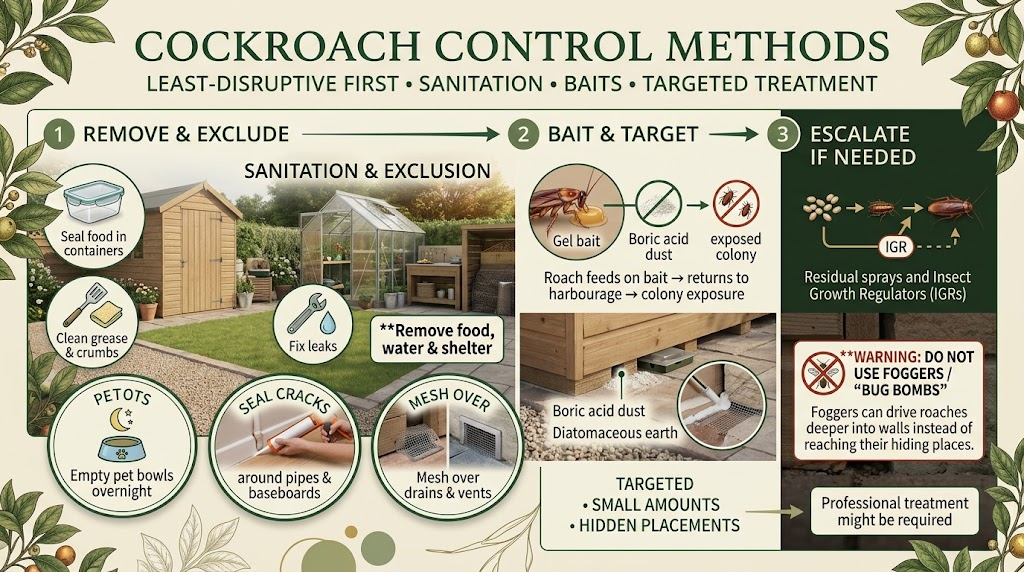
1. Sanitation & Exclusion
Remove food and water sources: store food in sealed containers, clean grease behind stoves, fix leaky taps, and empty pet bowls overnight. Seal cracks around pipes, baseboards, and door frames with caulk. Install fine mesh over drains and vents. This alone can significantly reduce populations by removing what sustains them.
2. Baits & Low-Toxicity Treatments
Gel baits (containing fipronil, hydramethylnon, or indoxacarb) are the gold standard — roaches eat the bait and carry toxicant back to the colony via their droppings, creating a cascade effect. Place small dots in cracks, under sinks, and behind appliances. Boric acid dust applied lightly into wall voids and crevices is another effective, long-lasting option. Diatomaceous earth works similarly but more slowly.
3. Sprays & IGRs (Severe Infestations)
Residual sprays (pyrethroids) can be applied to harbourage perimeters but may repel roaches away from baits — use them separately. Insect Growth Regulators (IGRs) like gentrol prevent nymphs from maturing, reducing reproduction over time. Combine IGRs with baits for heavy infestations. Avoid foggers (‘bug bombs’) — they disperse roaches deeper into walls without reaching harbourage sites.
Prevention Tips
Keep kitchens scrupulously clean — wipe counters nightly, sweep floors, and take rubbish out daily. Reduce clutter, especially cardboard and paper, which provide harbourage. Fix all moisture issues: dripping taps, condensation on pipes, and standing water in trays. Inspect grocery bags, second-hand appliances, and deliveries before bringing them inside — German cockroaches often hitchhike this way. Maintain door sweeps and window seals, and screen floor drains.
When to Call a Professional
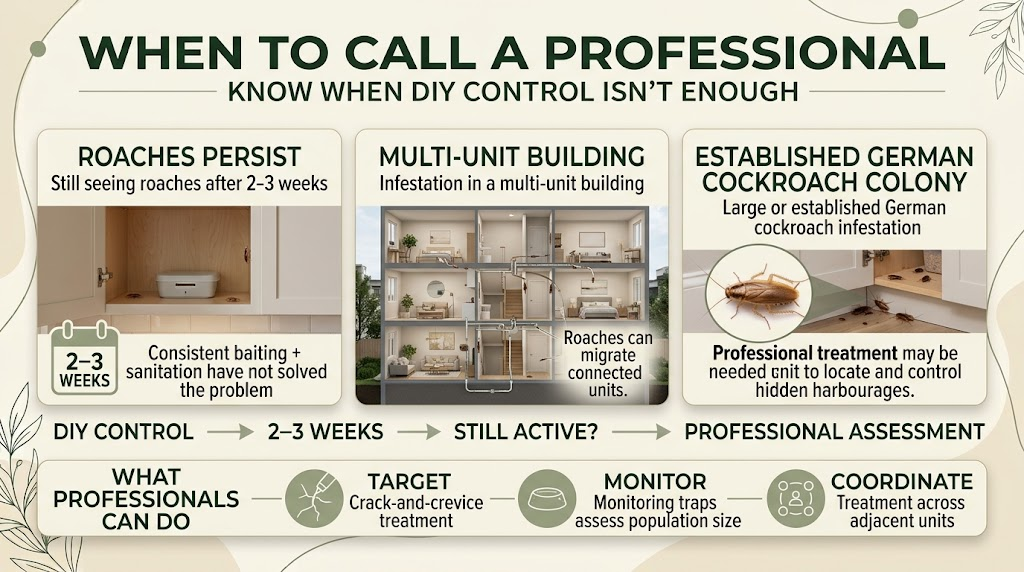
Seek professional pest control if you still see roaches after 2–3 weeks of consistent baiting and sanitation, if the infestation is in a multi-unit building (roaches migrate between units through shared plumbing), or if you suspect the species is German cockroach with a large established colony. Professionals can apply targeted crack-and-crevice treatments, use monitoring traps to assess population size, and coordinate treatment across adjacent units where needed.
Frequently Asked Questions
Does seeing one cockroach mean I have an infestation?
Not necessarily — a single American or wood cockroach may have wandered in from outside. However, one German cockroach indoors almost always indicates more are hiding. Inspect with a torch at night and place sticky traps to gauge numbers.
Are cockroaches harmful to health?
Yes. Their droppings, saliva, and shed skins contain allergens that trigger asthma attacks, especially in children. They also mechanically spread bacteria like Salmonella and E. coli by walking over food-preparation surfaces after visiting drains and rubbish.
Do natural remedies like bay leaves or cucumber peels work?
There is no scientific evidence that bay leaves, cucumber, or essential oils repel cockroaches effectively. Boric acid and gel baits are far more reliable. Focus your efforts on sanitation and proven treatments rather than folk remedies.
How long does it take to get rid of control roach?
With proper baiting and sanitation, you should see a significant reduction within 1–2 weeks. Complete elimination of a German cockroach colony typically takes 4–6 weeks because eggs continue hatching. Maintain bait stations and monitoring traps for at least 3 months to confirm they are gone.