A complete guide to planting, watering, pruning, and getting dependable blooms from your hydrangeas — based on years of hands-on growing.
1. Planting & Site Selection
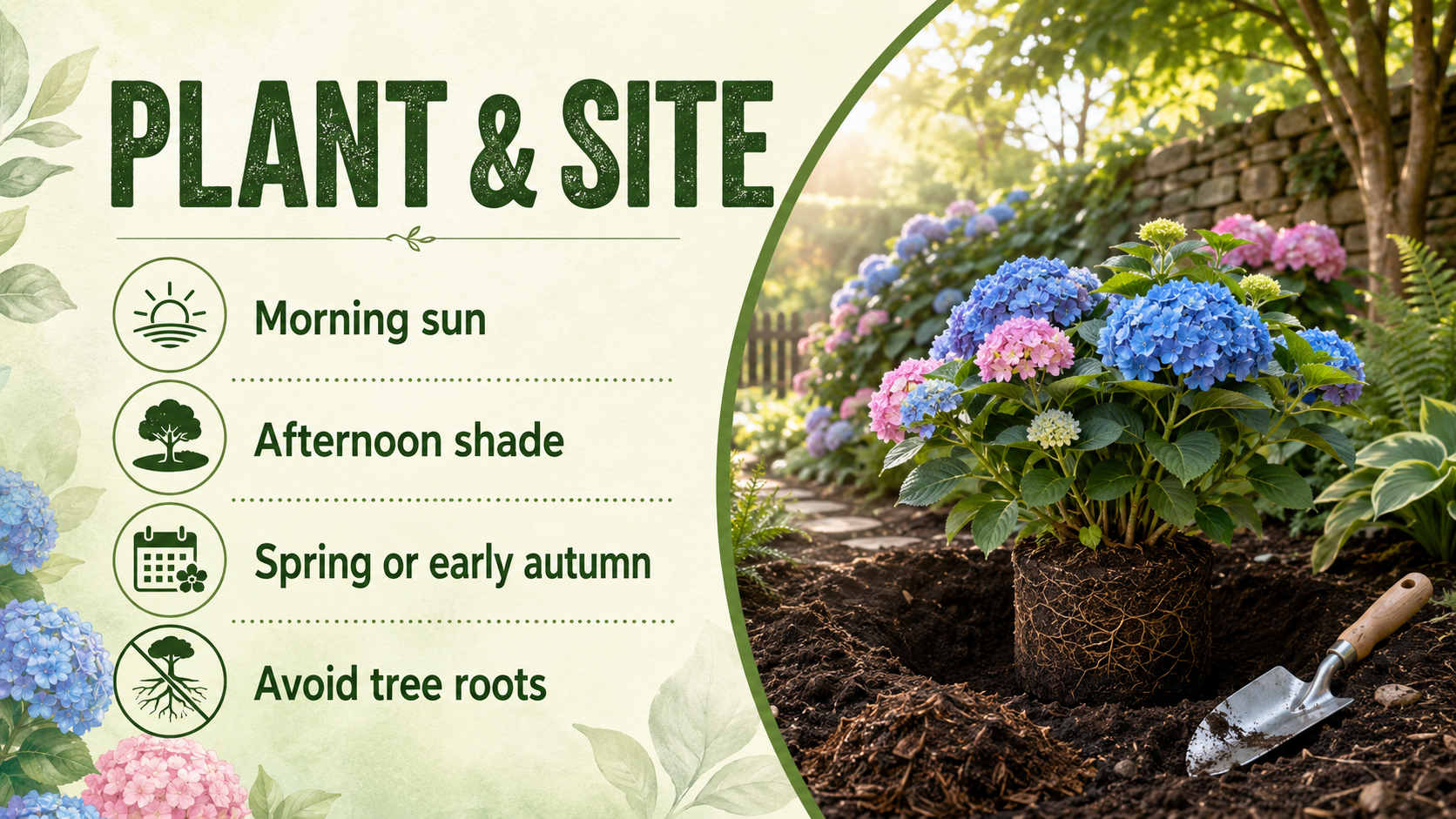
Hydrangeas perform best in a spot that receives morning sun and dappled afternoon shade — roughly 4–6 hours of gentle sunlight. In hotter climates (zones 7–9), afternoon shade is essential to prevent scorched leaves and wilted blooms.
Plant in spring or early autumn when the soil is workable and temperatures are mild. Dig a hole twice the width of the root ball and just as deep. Backfill with a mix of native soil and compost, then water deeply to settle air pockets.
Tip: Avoid planting directly beneath large trees where root competition steals water and nutrients. A sheltered border or north-facing bed (in warm climates) is ideal.
2. Watering Your Hydrangeas
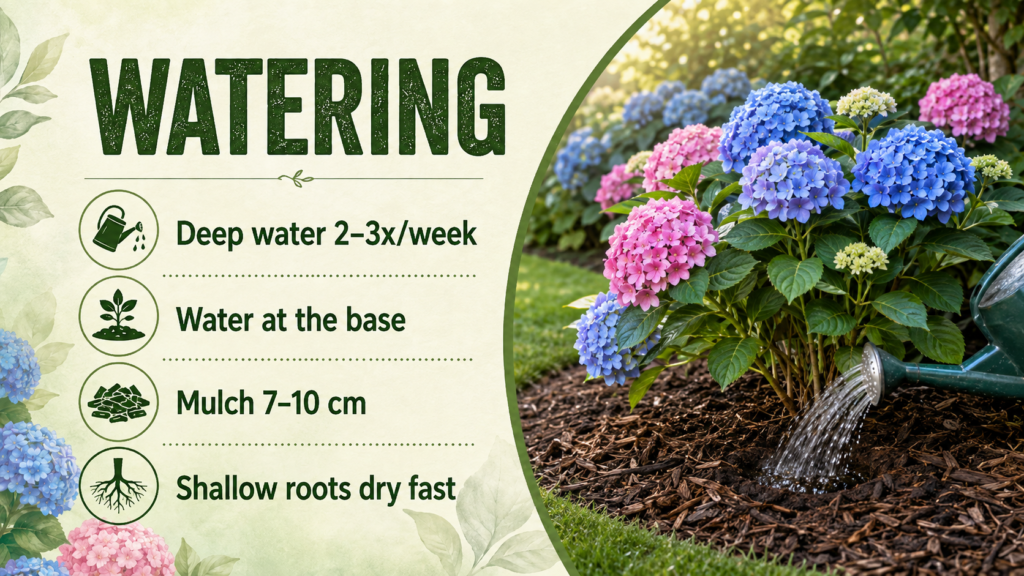
Hydrangeas are thirsty plants with shallow root systems. Water deeply 2–3 times per week rather than lightly every day. In summer heat, wilting by midday is common even with adequate soil moisture — the leaves recover by evening. True drought stress shows as crispy leaf edges.
Always water at the base, not overhead. Wet foliage encourages leaf spot and powdery mildew. A thick 7–10 cm layer of organic mulch (bark chips or straw) keeps roots cool and conserves moisture remarkably well.
3. Feeding & Soil
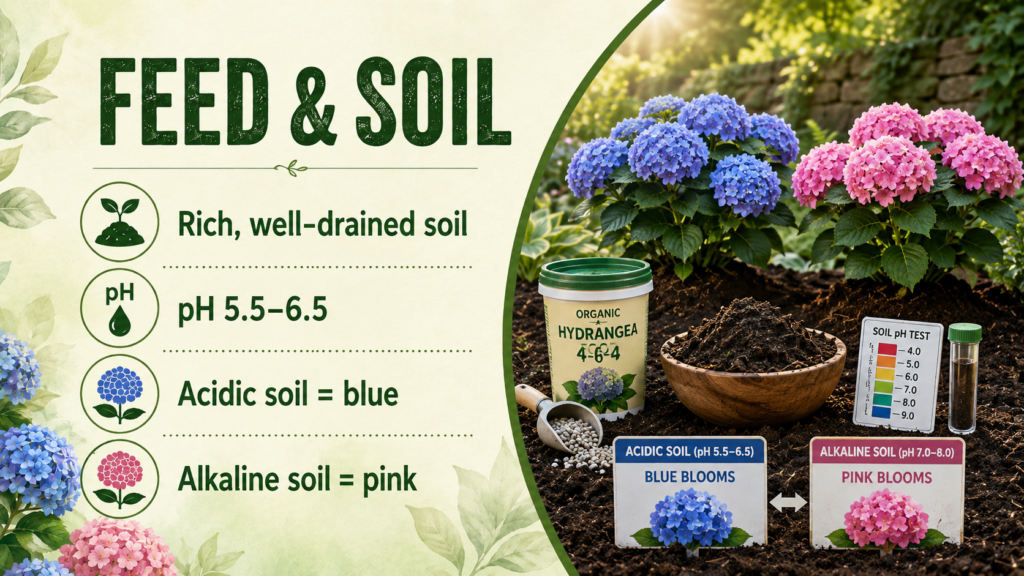
Hydrangeas prefer rich, well-draining soil with a slightly acidic to neutral pH (5.5–6.5). Soil pH directly affects flower colour on mophead and lacecap types: acidic soil (below 5.5) produces blue blooms, while alkaline soil (above 6.5) pushes flowers toward pink.
Feed once in early spring with a slow-release balanced fertiliser (10-10-10) and again in midsummer with a bloom-boosting formula. Avoid high-nitrogen feeds after July — they promote leaf growth at the expense of flower buds for next year.
4. Pruning Guide
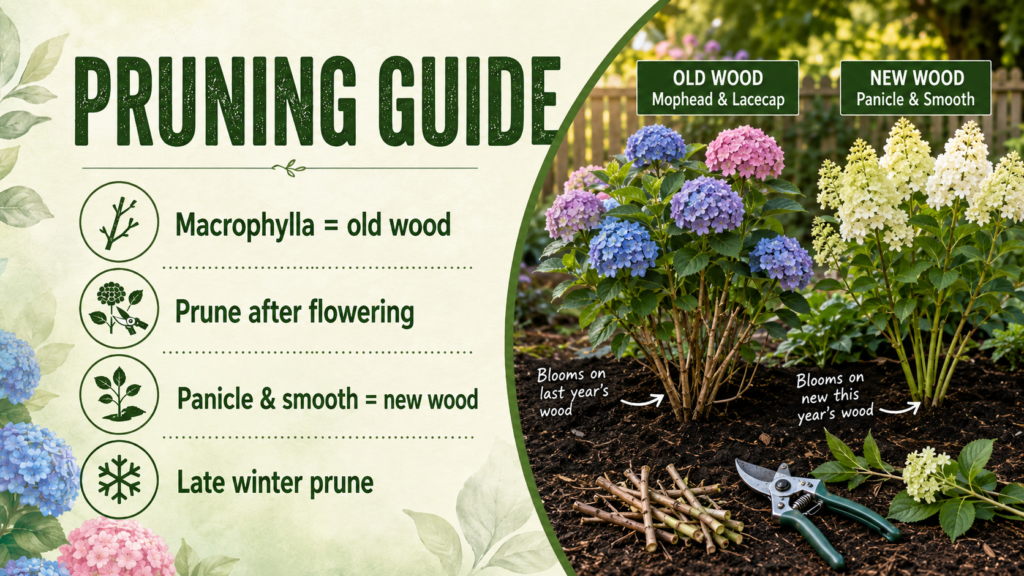
Pruning depends entirely on your hydrangea type. Mopheads and lacecaps (H. macrophylla) bloom on old wood — prune lightly after flowering in late summer, removing only spent flower heads and dead stems. Cutting hard in spring removes next year’s buds.
Panicle hydrangeas (H. paniculata) and smooth hydrangeas (H. arborescens) bloom on new wood. Prune these in late winter or early spring — cut back to 30–60 cm. This encourages vigorous new shoots that produce larger flower heads.
5. Seasonal Maintenance
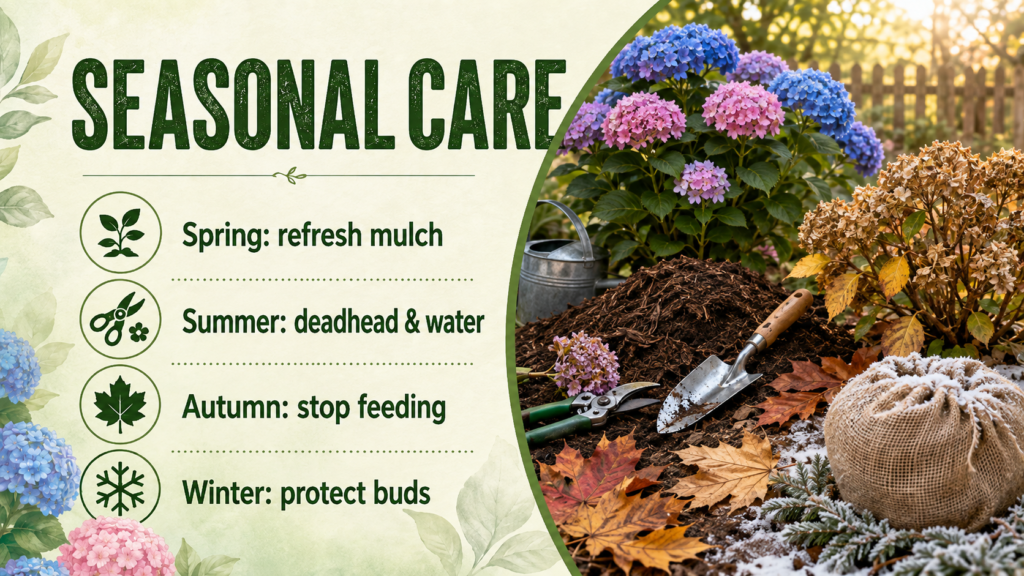
Spring: Remove winter-damaged stems once new growth appears. Refresh mulch and apply fertiliser. Summer: Deadhead spent blooms to encourage reblooming on remontant varieties. Keep up with watering during hot spells.
Autumn: Stop fertilising by September. Leave dried flower heads on the plant — they protect buds through winter. Winter: In cold zones (5–6), mound 15 cm of mulch or straw around the base and wrap exposed stems with burlap to prevent bud death from late frosts.
6. Common Problems & Bloom Tips
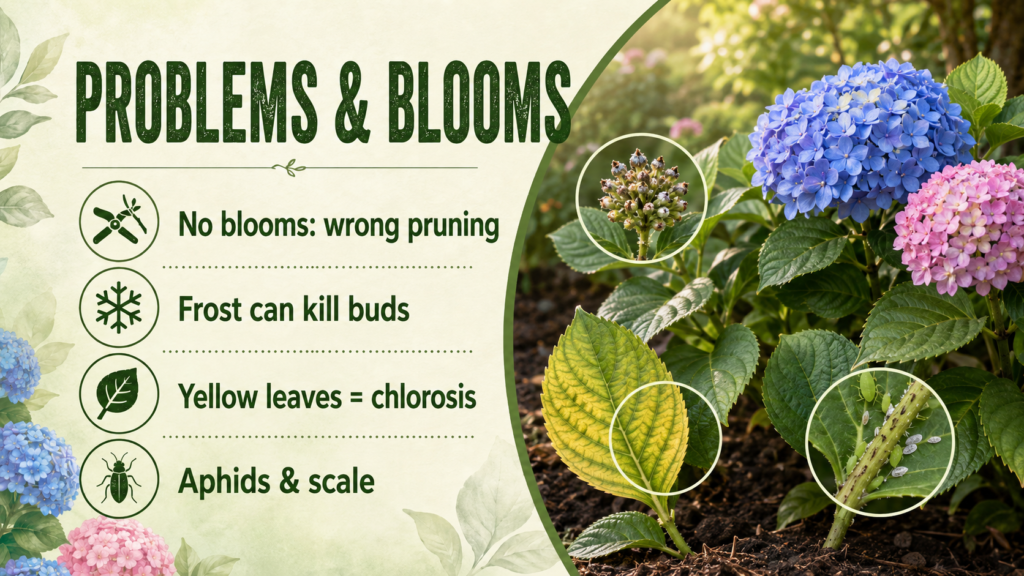
No blooms? The most common cause is pruning at the wrong time (removing old-wood buds) or late spring frosts killing flower buds. Other culprits: too much shade, excessive nitrogen, or a young plant that hasn’t matured enough to flower (give it 2–3 years).
Yellowing leaves usually signal chlorosis from alkaline soil — apply iron sulphate or aluminium sulphate to lower pH. Brown leaf edges indicate drought stress or fertiliser burn. Scale insects and aphids can weaken plants; treat with horticultural oil in early spring.
Frequently Asked Questions
How do I change my hydrangea’s flower colour?
Flower colour on mophead hydrangeas is controlled by soil pH and aluminium availability. For blue flowers, lower pH below 5.5 by applying aluminium sulphate. For pink flowers, raise pH above 6.5 with garden lime. Apply treatments in autumn and spring — colour change takes one full growing season. White varieties cannot be changed.
Why didn’t my hydrangea bloom this year?
The most likely causes are: pruning at the wrong time (removing flower buds on old-wood types), a late frost that killed developing buds, too much shade (less than 4 hours of sun), or over-fertilising with nitrogen. Identify your variety first — this determines when and how to prune.
Can I grow hydrangeas in pots?
Yes — compact varieties like ‘Cityline Paris’ or ‘Little Lime’ do well in large containers (at least 45 cm wide). Use ericaceous compost for blue varieties. Potted hydrangeas dry out faster, so water daily in summer. Move containers to a sheltered spot in winter to protect roots from freezing.
When is the best time to take hydrangea cuttings?
Take softwood cuttings in late spring or early summer from non-flowering shoots. Cut a 10–15 cm stem just below a leaf node, remove lower leaves, dip in rooting hormone, and plant in a mix of perlite and peat. Keep humid under a clear bag or propagator. Roots develop in 3–4 weeks.