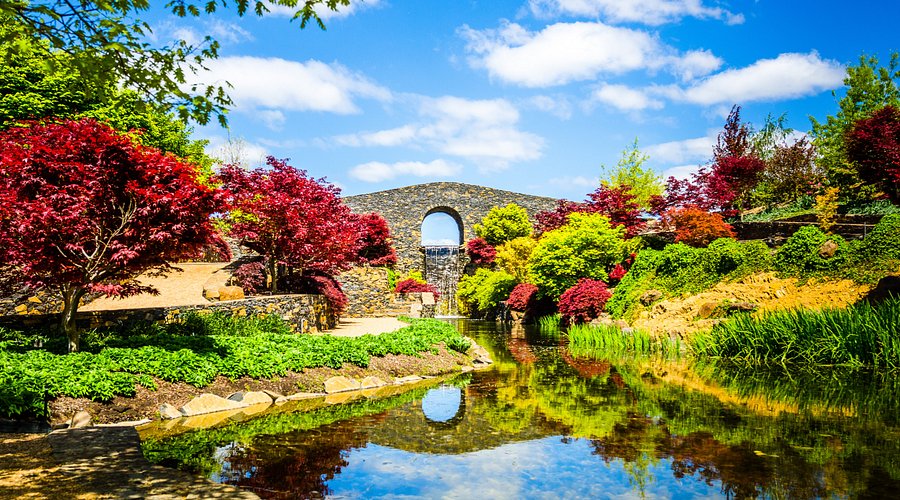
From their trick ‘petals’ to the birds they feed — discover what makes dogwood trees one of nature’s most fascinating ornamentals.
What Is a Dogwood Tree?
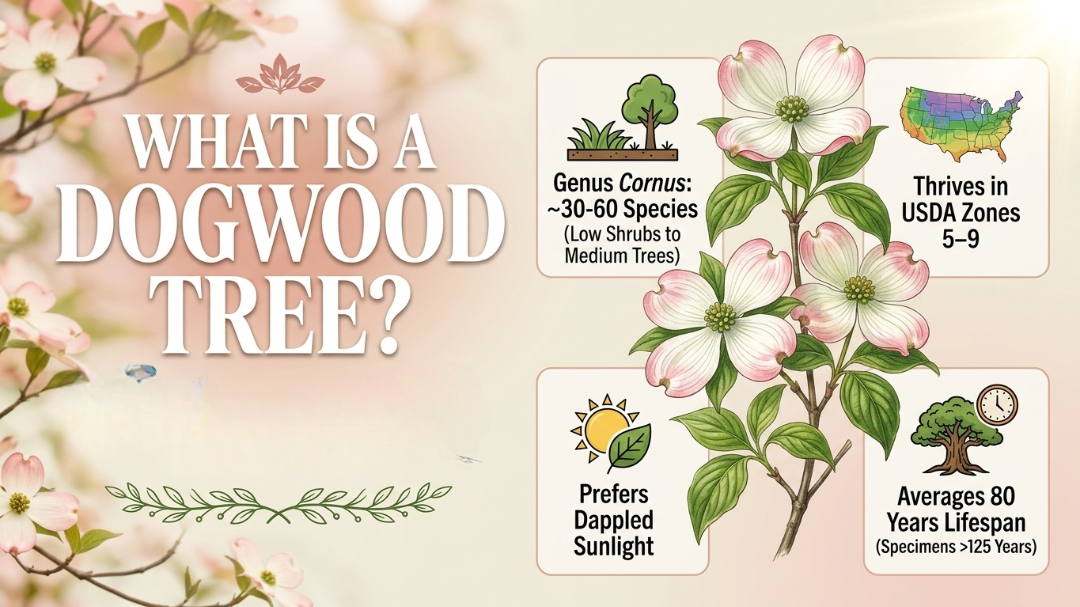
A dogwood tree belongs to the genus Cornus — a group of around 30–60 species of woody plants ranging from low ground-cover shrubs to graceful medium-sized trees. The most celebrated species is the flowering dogwood (Cornus florida), native to eastern North America, prized for its spectacular spring display and rich autumn colour.
Dogwoods typically reach 6–12 metres (20–40 feet) tall in the landscape. They thrive in USDA Zones 5–9 and prefer dappled sunlight — a nod to their origin as understorey trees in deciduous forests. Their lifespan averages 80 years, with some specimens documented beyond 125 years.
🌳 Did you know? The word ‘dogwood’ likely comes from ‘dagwood’ — referring to the hard, dense wood once used to make daggers, skewers, and spindles.
The “Petals” Aren’t Really Petals
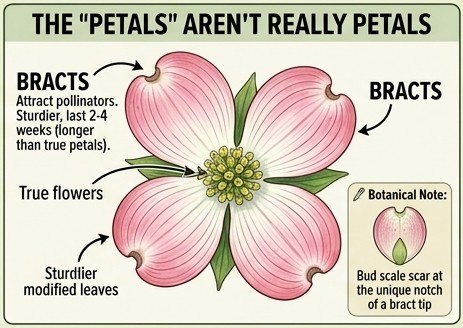
Here’s the fact that surprises almost everyone: the four large white or pink structures most people call dogwood petals are actually modified leaves called bracts. The true flowers are the tiny, yellowish-green clusters in the centre. Each bract simply evolved to attract pollinators to the inconspicuous real blooms.
This is why dogwood ‘flowers’ last so long — bracts are sturdier than petals. A flowering dogwood display can persist for 2–4 weeks in spring, far longer than most true-petalled blossoms. The bracts even have a small notch at their tip, a useful identification feature.
🔬 Botanical note: The notch at each bract tip is thought to be a scar from the bud scale that protected the flower cluster over winter.
Popular Dogwood Species Compared
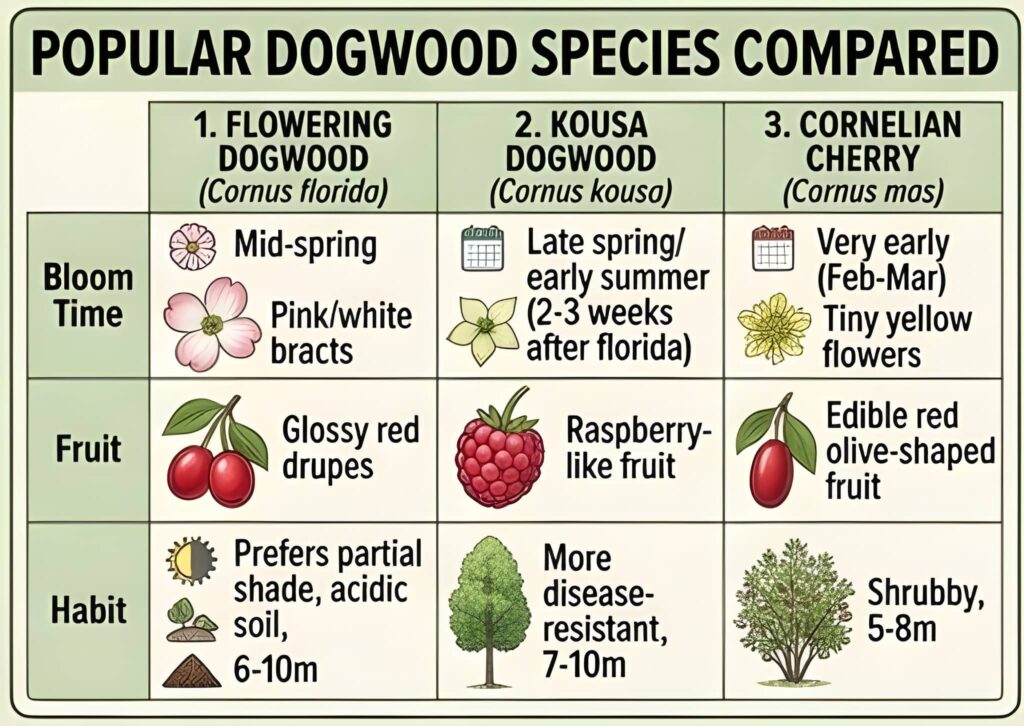
Not all dogwoods are alike. These three species are the most commonly grown in gardens — each with distinct bloom times, fruit, and growing requirements.
Flowering Dogwood (Cornus florida)
Native to eastern North America. Blooms mid-spring with white or pink bracts. Produces glossy red drupes. Grows 6–10 m. Prefers partial shade and acidic soil.
Kousa Dogwood (Cornus kousa)
Native to East Asia. Blooms late spring to early summer — 2–3 weeks after C. florida. Produces raspberry-like red fruit. More disease-resistant. Grows 7–10 m.
Cornelian Cherry (Cornus mas)
Native to southern Europe and western Asia. Tiny yellow flowers appear very early (February–March). Produces edible red olive-shaped fruit. Shrubby habit, 5–8 m.
Dogwood Berries & Wildlife Value
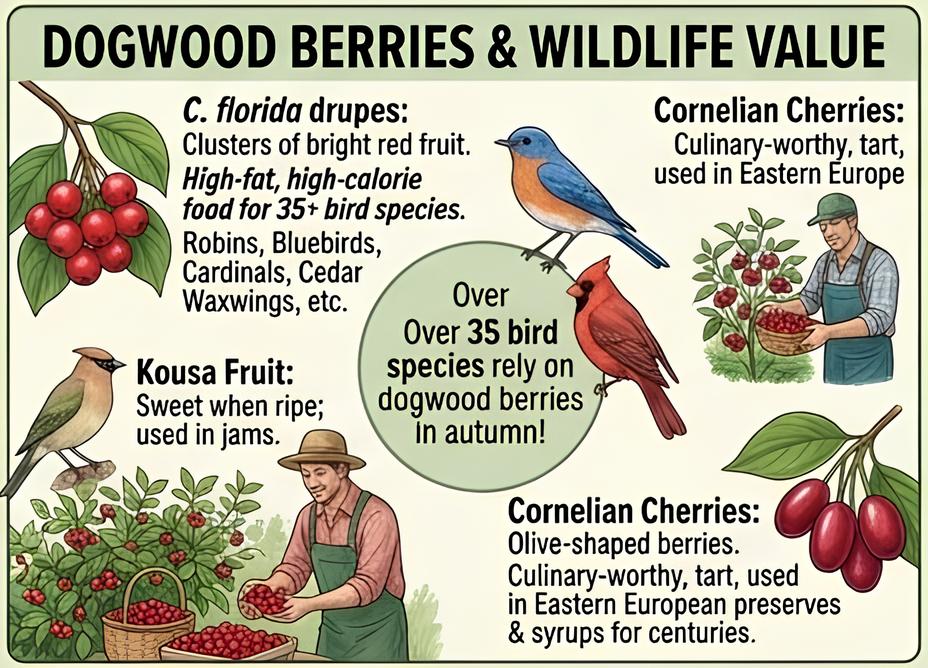
Flowering dogwood produces clusters of bright red drupes in autumn. These are technically edible but extremely bitter and unpalatable to humans. However, they are a high-fat, high-calorie food source for over 35 bird species including robins, bluebirds, cardinals, and cedar waxwings.
Kousa dogwood fruit resembles a bumpy raspberry and is mildly sweet when fully ripe — some gardeners use it in jams. Cornelian cherry (Cornus mas) produces the most culinary-worthy fruit: tart, olive-shaped berries used in Eastern European preserves and syrups for centuries.
Over 35 bird species rely on dogwood berries as an autumn food source.
Four-Season Garden Interest
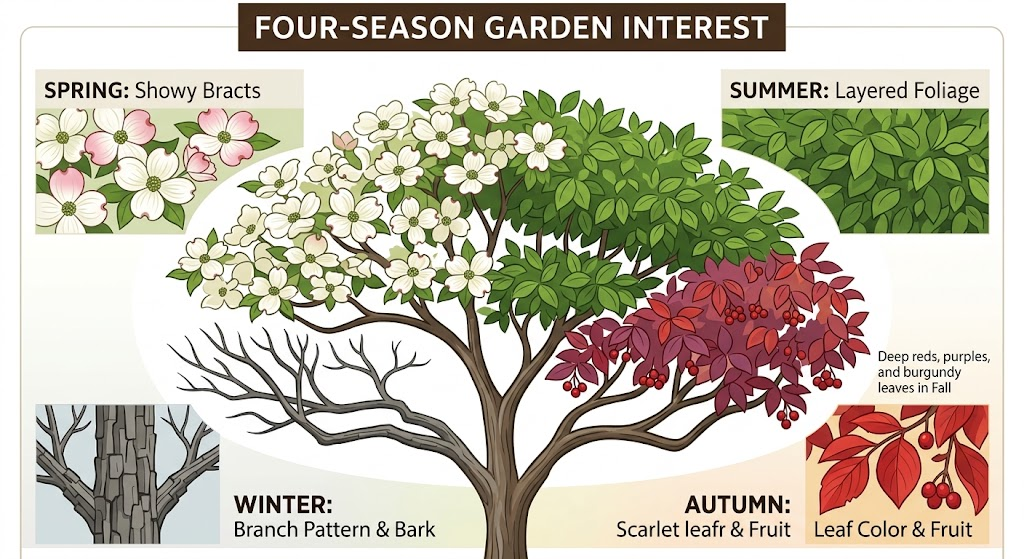
Few small trees deliver visual impact across all four seasons like dogwoods. Spring brings the showy bracts. Summer offers clean, layered foliage. Autumn ignites with deep reds, purples, and burgundy leaves alongside colourful fruit. In winter, the elegant horizontal branching pattern and textured bark create architectural interest — particularly the blocky, alligator-skin bark of mature Cornus florida.
🍂 The autumn leaf colour of flowering dogwood is among the most vivid of any North American tree — ranging from scarlet to deep purple depending on sun exposure.
Growing Dogwoods in Your Garden
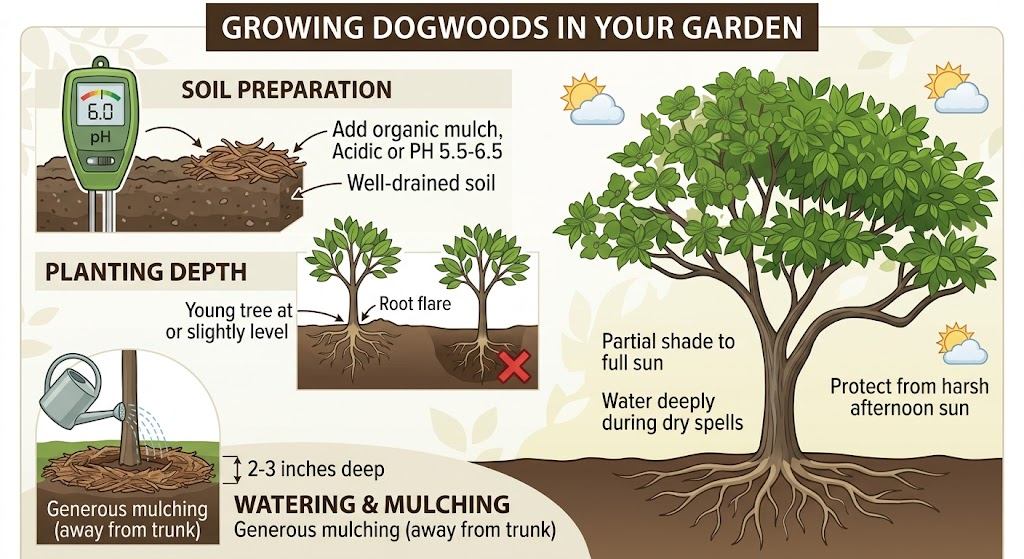
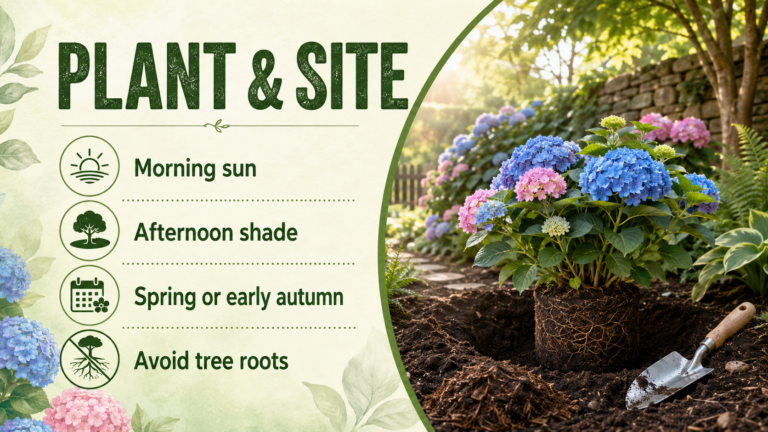
Dogwoods prefer partial shade to full sun, moist but well-drained acidic soil (pH 5.5–6.5), and protection from harsh afternoon sun. They are understorey trees by nature, so mimicking dappled woodland light produces the healthiest specimens.
Growth rate is moderate — roughly 30–40 cm (12–16 inches) per year once established. A common reason dogwoods fail to flower is planting too deep, heavy pruning of flower buds, or excessive nitrogen fertiliser that promotes leaf growth at the expense of blooms.
For best results, mulch generously (but away from the trunk), water deeply during dry spells, and avoid disturbing shallow roots with cultivation. Choose kousa dogwood if anthracnose is a concern in your area — it shows strong natural resistance.
Frequently Asked Questions
When is the best time to plant a dogwood?
Plant dogwoods in early spring or autumn, when temperatures are mild and soil moisture is reliable. Avoid planting during summer heat or frozen ground.
How much sunlight does a dogwood need?
Most dogwoods perform best in partial shade or dappled sunlight. Morning sun with protection from intense afternoon heat helps maintain healthy foliage and blooms.
How often should I water a young dogwood?
Water deeply once or twice a week during the first growing season, adjusting for rainfall. Keep the soil evenly moist but never waterlogged.
Are dogwood berries safe for birds and people?
Dogwood berries are an important autumn food for many birds. Flowering dogwood fruit is bitter to people, while fully ripe kousa and Cornelian cherry fruit are more palatable.