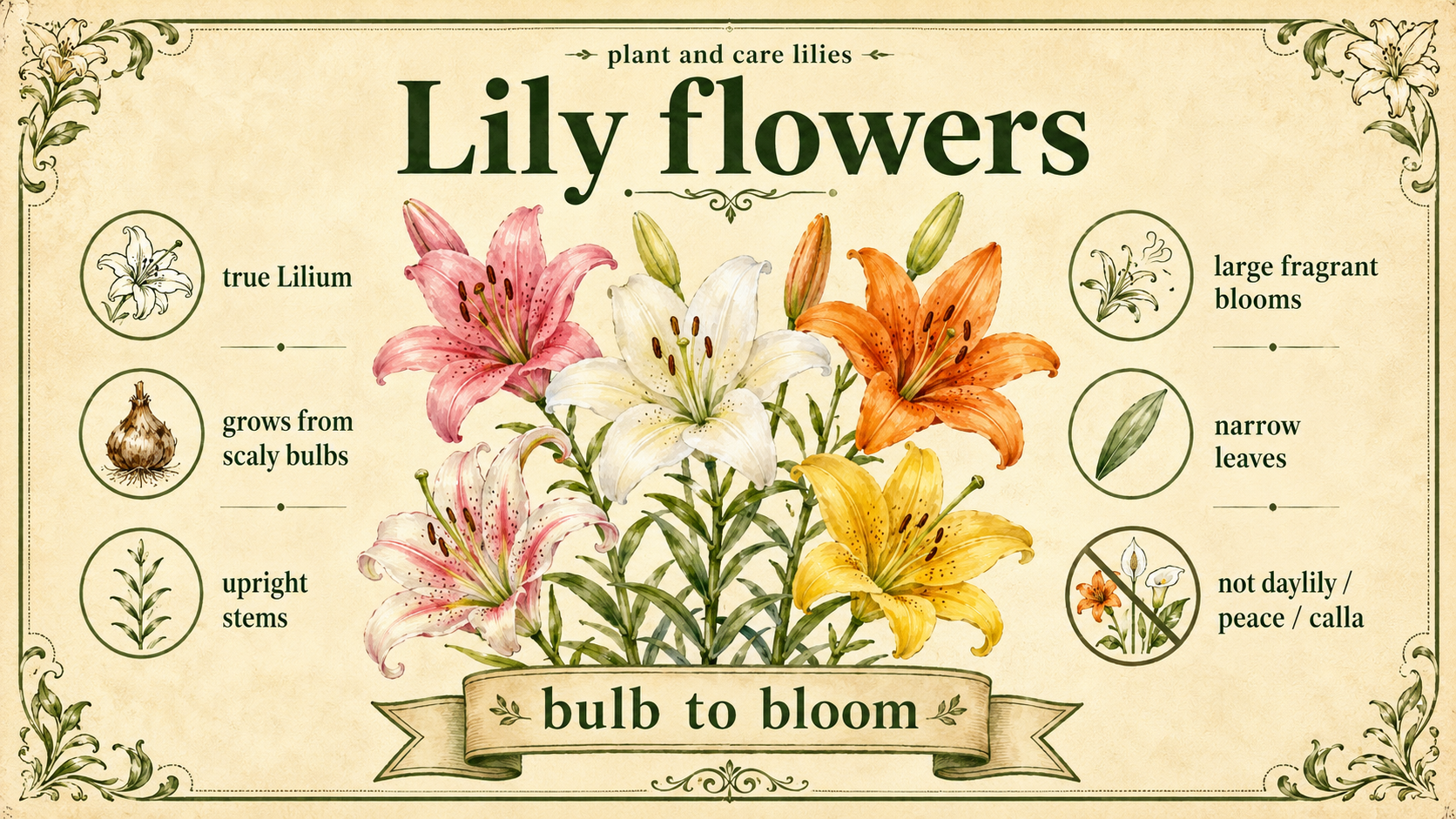

Everything you need to grow stunning lilies — from bulb to bloom and beyond.
Lily Care at a Glance
| ☀️ Full sun to part shade (6+ hours) | 💧 Moderate — keep moist, never waterlogged |
| 🌱 Fertile, well-drained, slightly acidic | 🌸 Summer (June–September) |
What Are Lily Flowers?
Lily flowers (Lilium) are perennial bulbs prized for their large, elegant blooms and intoxicating fragrance. True lilies grow from scaly bulbs, producing a single upright stem with narrow leaves and trumpet, star, or bowl-shaped flowers at the top.
Important: Not all plants called “lilies” are true lilies. Daylilies (Hemerocallis), peace lilies, and calla lilies belong to different plant families. This guide covers only true Lilium species and hybrids — the ones that grow from layered, garlic-like bulbs.
Popular Types of Lilies
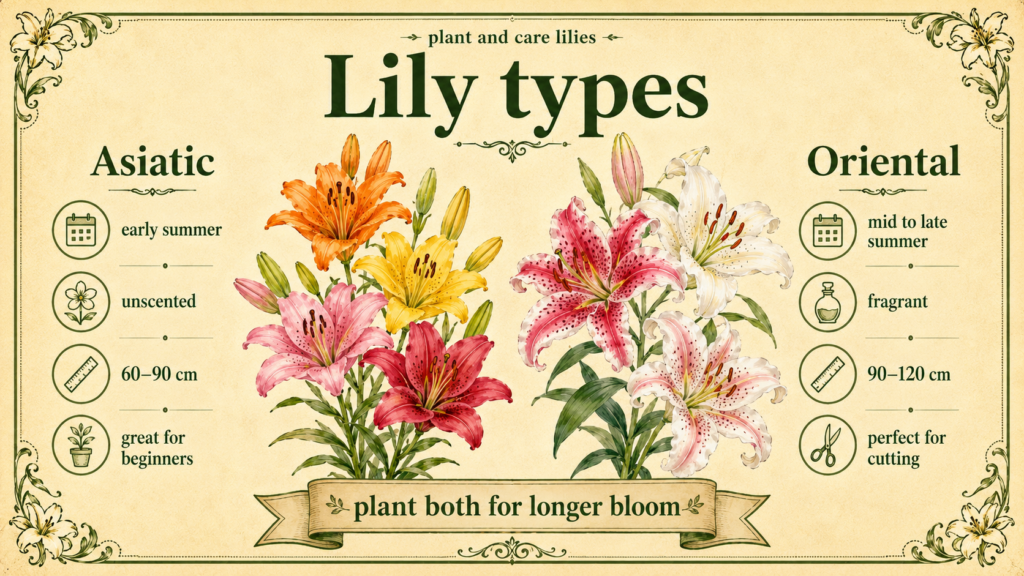
The two most popular groups for home gardeners are Asiatic and Oriental lilies. Each has different strengths, so many growers plant both for an extended blooming season.
Asiatic Lilies
Bloom early summer (June–July). Unscented, upward-facing flowers in vibrant colours. Grow 60–90 cm tall. Hardy, easy for beginners, and excellent in borders or pots.
Oriental Lilies
Bloom mid to late summer (July–September). Intensely fragrant with large outward-facing flowers, often spotted or striped. Grow 90–120 cm. Perfect for cutting gardens.
When Should Lily Bulbs Be Planted?
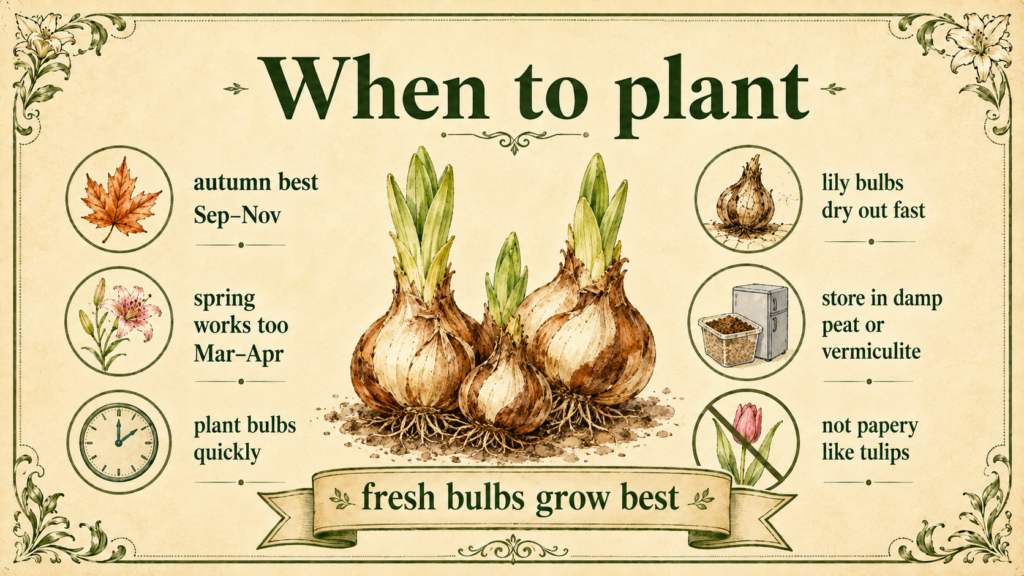
Plant lily bulbs in autumn (September–November) for the strongest root development before winter. Spring planting (March–April) also works if you missed the autumn window — just expect slightly later blooms in the first year. Plant bulbs as soon as you buy them; unlike tulips, lily bulbs have no protective papery skin and dry out quickly.
💡 Pro tip: If you can’t plant immediately, store bulbs in a bag of slightly damp peat or vermiculite in the fridge — never let them sit dry on a shelf.
How to Plant Lily Bulbs (Step by Step)
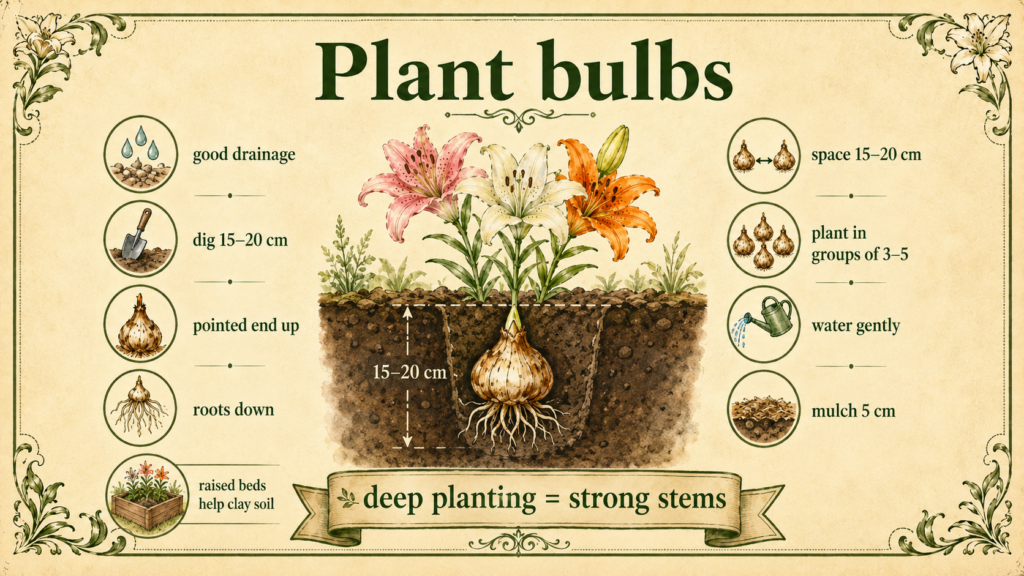
Follow these steps for reliable results every time you plant lily bulbs:
- Choose a spot with good drainage — lilies hate sitting in water. Raised beds work brilliantly in heavy clay.
- Dig a hole three times the height of the bulb (typically 15–20 cm deep).
- Place the bulb pointed end (nose) facing up, roots facing down.
- Space bulbs 15–20 cm apart. Plant in groups of 3–5 for the best visual impact.
- Backfill with soil, water gently, and add a 5 cm layer of mulch to keep roots cool.
Sunlight & Soil Requirements

Lily flowers perform best in full sun (at least 6 hours of direct light daily). In very hot climates, light afternoon shade helps prevent flower colour from fading. The ideal position gives the flower heads sun while keeping the lower stems and roots shaded — low-growing companion plants or mulch achieve this naturally.
Soil should be fertile, humus-rich, and well-drained with a slightly acidic to neutral pH (6.0–7.0). If your soil is heavy clay, dig in generous amounts of grit and compost before planting. Good drainage is the single most important factor — waterlogged soil causes bulb rot.
Watering & Feeding Lilies
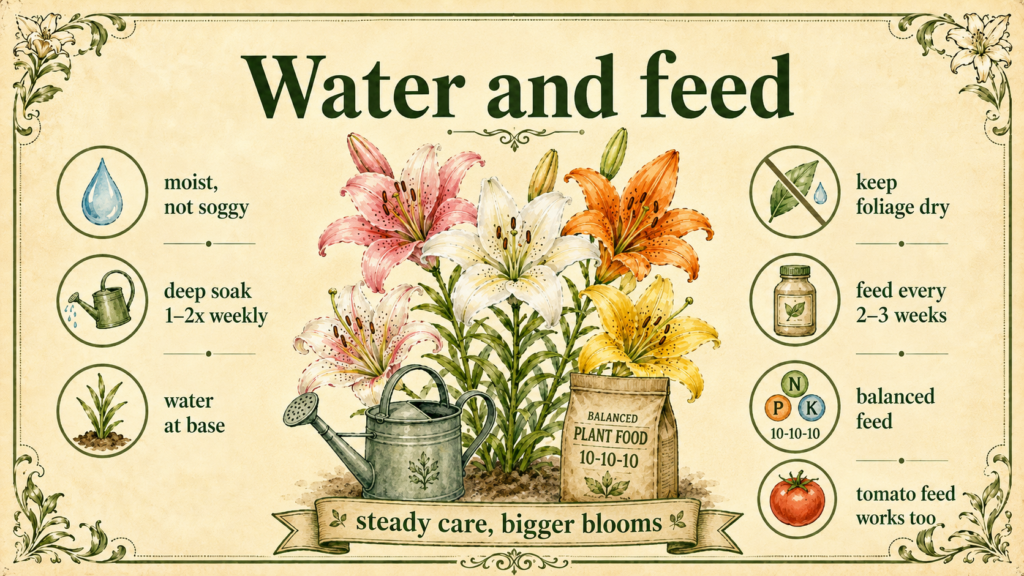
Water lilies regularly during the growing season, aiming for consistently moist (not soggy) soil. In dry spells, give a deep soak once or twice a week rather than frequent light sprinkles. Water at the base to keep foliage dry and reduce fungal disease risk.
Feed with a balanced liquid fertiliser (such as 10-10-10) every 2–3 weeks from when shoots emerge until flowers begin to fade. A potassium-rich tomato feed also works well and encourages bigger, bolder blooms.
Staking Tall Lily Varieties
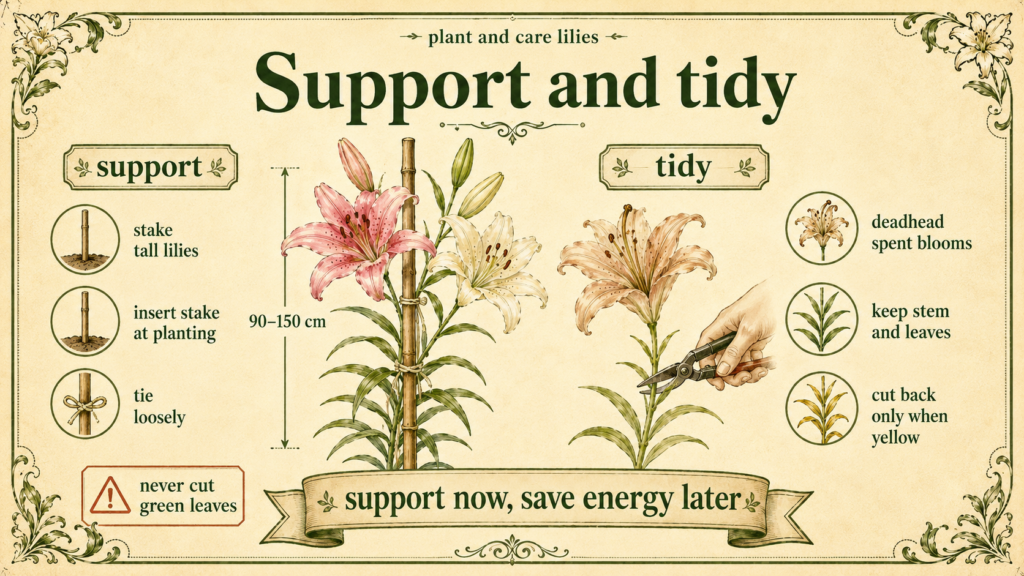
Oriental lilies and tree lilies regularly reach 90–150 cm and can topple in wind or heavy rain. Insert a stake at planting time (to avoid spearing the bulb later) and loosely tie the stem with soft garden twine as it grows. Place stakes behind the stem so they’re hidden by foliage.
What to Do After Lilies Finish Flowering
Once flowers fade, deadhead by snapping off the spent bloom — this stops the plant wasting energy on seed production. Leave the stem and leaves completely intact; they continue photosynthesising and feeding the bulb for next year’s flowers. Only cut stems back to ground level once foliage has turned completely yellow and died down naturally in autumn.
💡 Key rule: Never cut green leaves off a lily — the bulb needs every leaf to store energy for next year’s bloom.
Winter Protection for Lily Bulbs

Most hardy lilies (Asiatic and many Orientals) survive winters in zones 4–8 without lifting. After the first frost, apply a thick layer (10–15 cm) of mulch — straw, bark chips, or leaf mould — to insulate the bulbs. In very cold or wet regions, grow lilies in pots and move them to a sheltered spot like a cold greenhouse or unheated garage.
Growing Lily Flowers in Pots & Containers

Lilies thrive in containers, making them perfect for patios, balconies, and doorstep displays. Use a pot at least 30 cm deep and wide with drainage holes. Fill with a mix of peat-free multi-purpose compost and perlite (roughly 3:1) for good drainage and aeration.
Plant 3 bulbs per 30 cm pot, about 12–15 cm deep. Water when the top 2 cm of compost feels dry. Container lilies need more frequent feeding than those in the ground — apply liquid feed weekly during the growing season. Repot or refresh compost every autumn.
Common Lily Pests & Problems
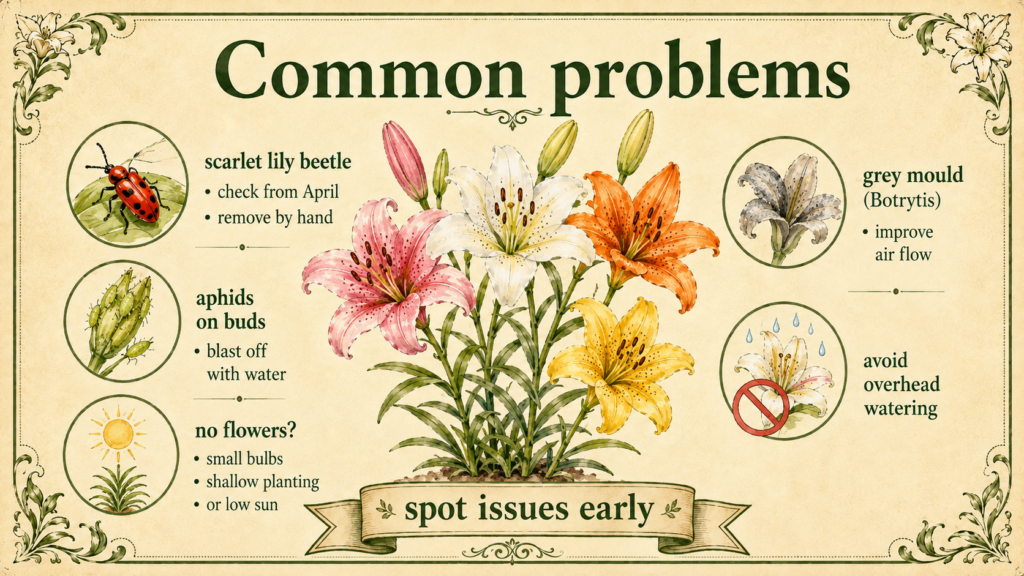
The scarlet lily beetle is the most common pest — bright red adults and their larvae strip leaves and buds. Check plants regularly from April onward and remove beetles by hand. Aphids cluster on buds; blast them off with water or use insecticidal soap. Grey mould (Botrytis) appears in damp conditions — improve air circulation and avoid overhead watering. If lilies produce leaves but no flowers, the bulbs may be too small, planted too shallow, or not receiving enough sunlight.
⚠️ Pet Safety: Lilies Are Toxic to Cats
All parts of true lilies (Lilium) are extremely toxic to cats — even small amounts of pollen, petals, or water from the vase can cause fatal kidney failure within 24–72 hours. If you have cats, do not grow true lilies indoors or in areas your cat can access. If you suspect your cat has come into contact with any part of a lily, contact your vet immediately. Dogs are not affected in the same way, but it’s still best to keep lilies out of reach of all pets.
Frequently Asked Questions
Do lilies come back every year?
Yes — lilies are true perennials. With good drainage, adequate sun, and proper after-bloom care, healthy bulbs will return and multiply for many years.
How deep should I plant lily bulbs?
Plant bulbs at a depth of three times their height — typically 15–20 cm (6–8 inches). Planting too shallow leads to weak stems; too deep and shoots may struggle to emerge.
Why are my lilies not flowering?
Common causes include insufficient sunlight, bulbs planted too shallow, overcrowding, poor nutrition, or bulbs that are still too small. Ensure at least 6 hours of sun, feed regularly, and allow foliage to die back naturally after blooming.
Can I grow lilies indoors?
Lilies can be grown in pots on a sunny windowsill or conservatory, but they do best outdoors where they receive natural light cycles. If you have cats, never grow lilies indoors due to their extreme toxicity to felines.