
What makes figs one of nature’s most unusual — and delicious — structures, explained by a horticulturist.
Quick Answer
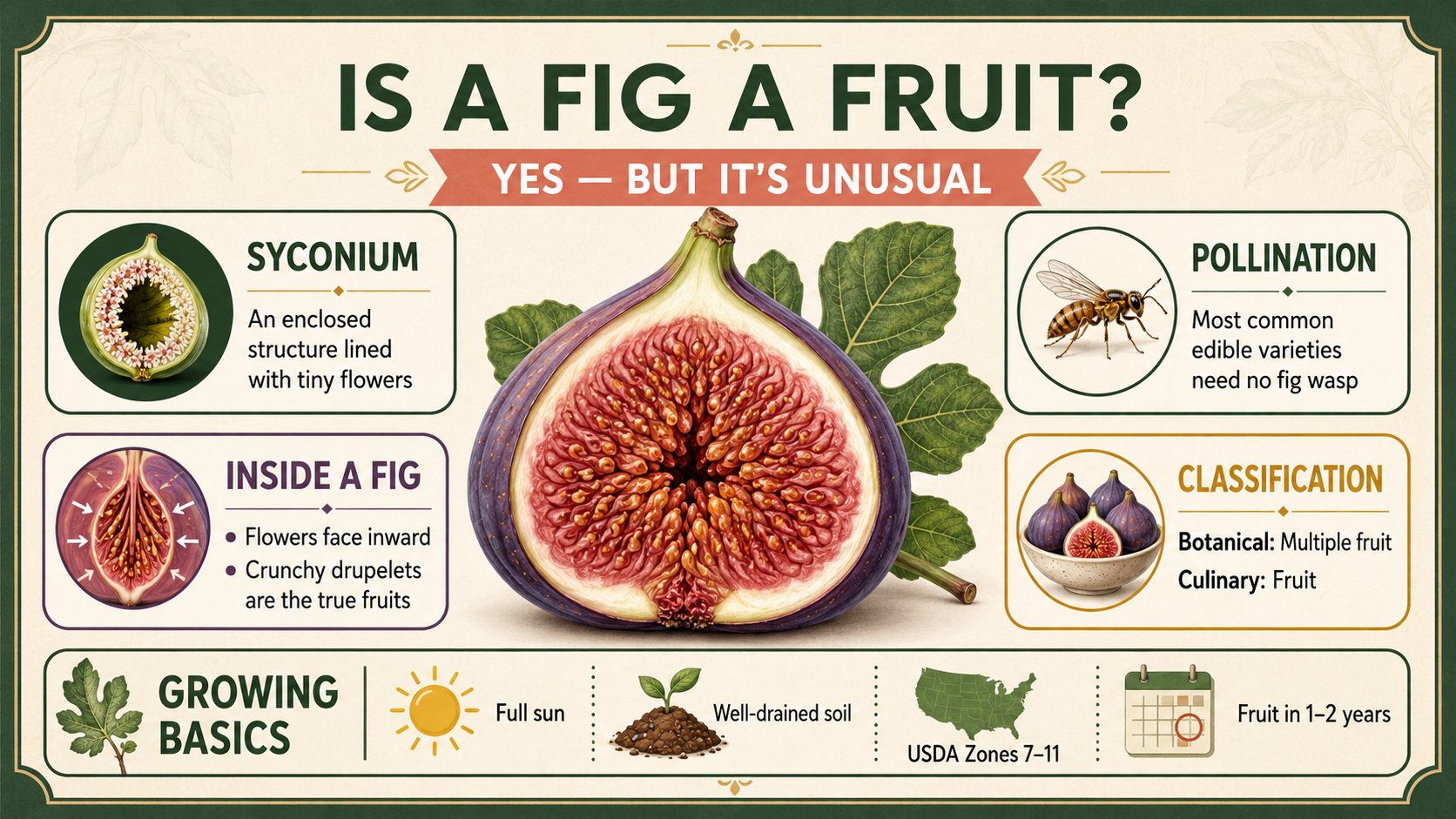
Yes, a fig is a fruit — but it is a highly unusual one. Botanically, a fig is a syconium: a fleshy, hollow receptacle that contains hundreds of tiny flowers and their resulting fruits on the inside. So when you eat a fig, you are eating an inside-out bouquet of flowers and fruits all at once.
What Exactly Is a Fig?
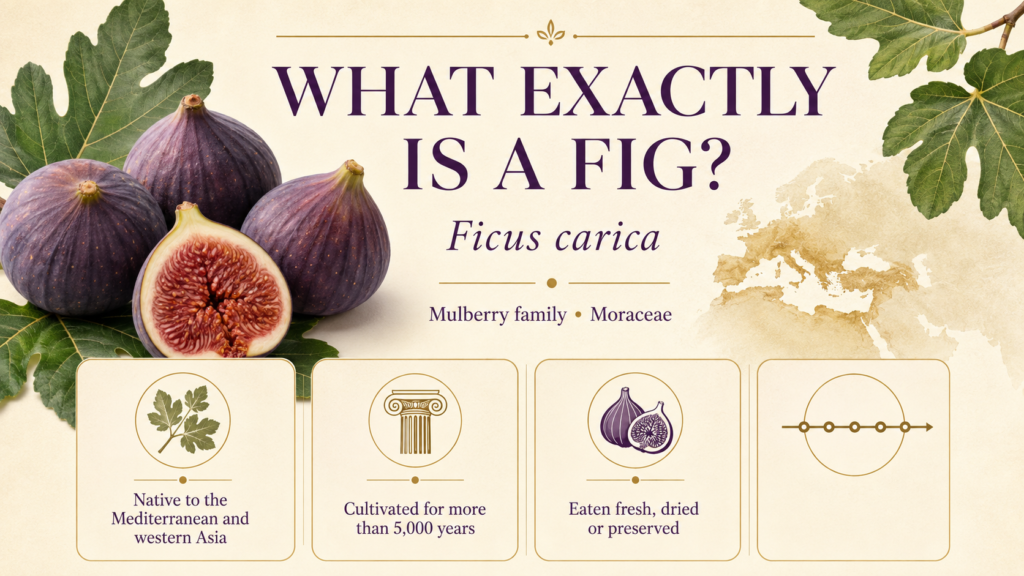
A fig (Ficus carica) is the edible structure produced by the common fig tree, a member of the mulberry family (Moraceae). Native to the Mediterranean and western Asia, figs have been cultivated for over 5,000 years — making them one of the earliest fruits domesticated by humans.
While most people treat figs as a fruit in the kitchen — eating them fresh, dried, or in jams — their botanical classification is more nuanced than a typical apple or peach. To understand why, we need to look inside.
The Syconium: A Fruit That’s Really an Inverted Flower
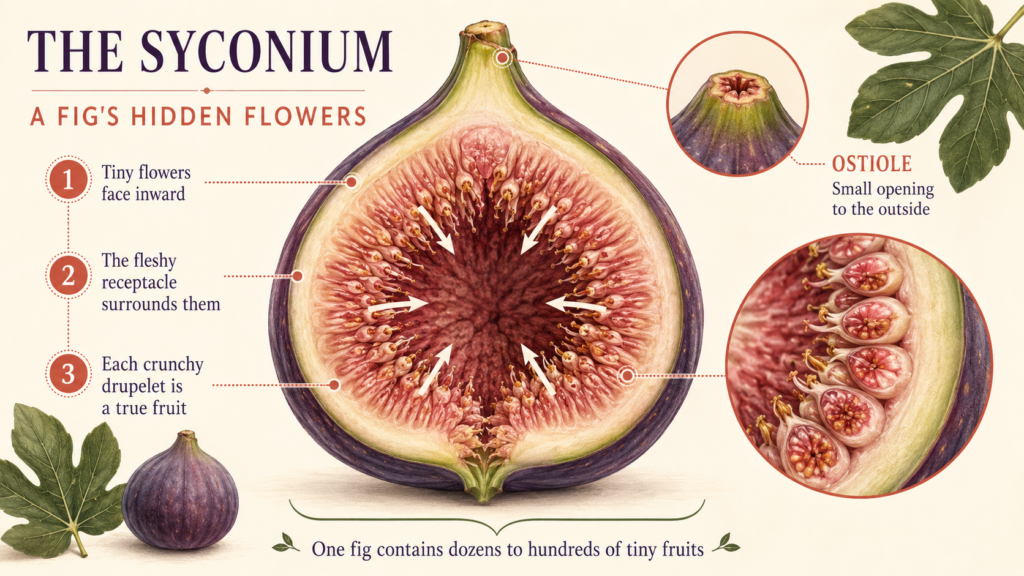
Botanists classify the fig as a syconium — a specialized, enclosed receptacle lined with tiny flowers on the inside. Unlike an apple blossom that opens to the air, fig flowers bloom entirely within this hollow shell. The small opening at the base (called the ostiole) is the only connection to the outside world.
Those tiny crunchy bits you feel when eating a fig? They are drupelets — the actual fruits, each containing a single seed. So technically, a single fig contains dozens to hundreds of individual fruits. The fleshy part you enjoy is the flower receptacle that surrounds them.
This is why people say a fig is an “inverted flower.” The description is accurate: the flowers face inward rather than outward, and the entire structure functions as both a flowering body and a fruit.
How Fig Pollination Works (And the Fig Wasp Question)
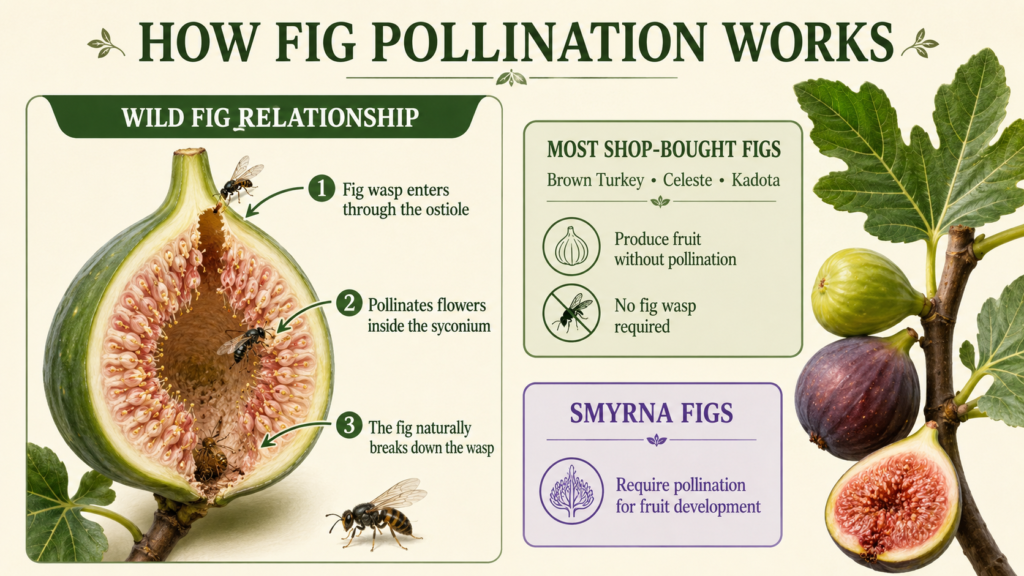
In the wild, most fig species rely on a mutualistic relationship with tiny fig wasps (family Agaonidae). A female wasp enters the syconium through the ostiole, pollinates the internal flowers, lays her eggs, and dies inside. The fig then digests the wasp body using enzymes — an entirely natural process.
However — and this is important — most edible fig varieties sold in shops (such as ‘Brown Turkey,’ ‘Celeste,’ and ‘Kadota’) are parthenocarpic. This means they produce fruit without pollination and do not require wasps at all. If you buy figs from a supermarket, they almost certainly developed without any wasp involvement.
Only the Smyrna-type figs (used primarily for drying) require caprification — the deliberate introduction of pollen-carrying wasps. This is primarily a commercial farming practice, not something home gardeners need to worry about.
Botanical Fruit vs. Culinary Fruit: Why It Matters
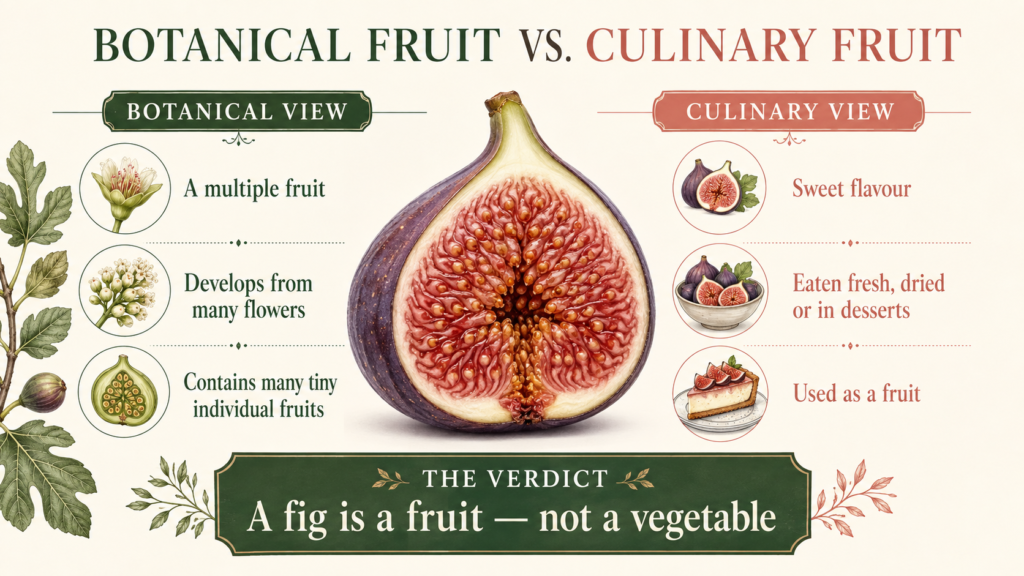
In botany, a fruit is any mature ovary of a flowering plant, often containing seeds. By this definition, tomatoes, peppers, and cucumbers are fruits too. A fig qualifies as a fruit — specifically a multiple fruit, since it develops from multiple flowers fused together within one structure.
In the culinary world, classification is simpler: if it’s sweet and eaten as a dessert or snack, it’s a fruit. Figs fit this definition perfectly. Whether you approach it from a scientific or a kitchen perspective, a fig is a fruit. It is not a vegetable by any standard classification.
Nutritional Benefits of Figs
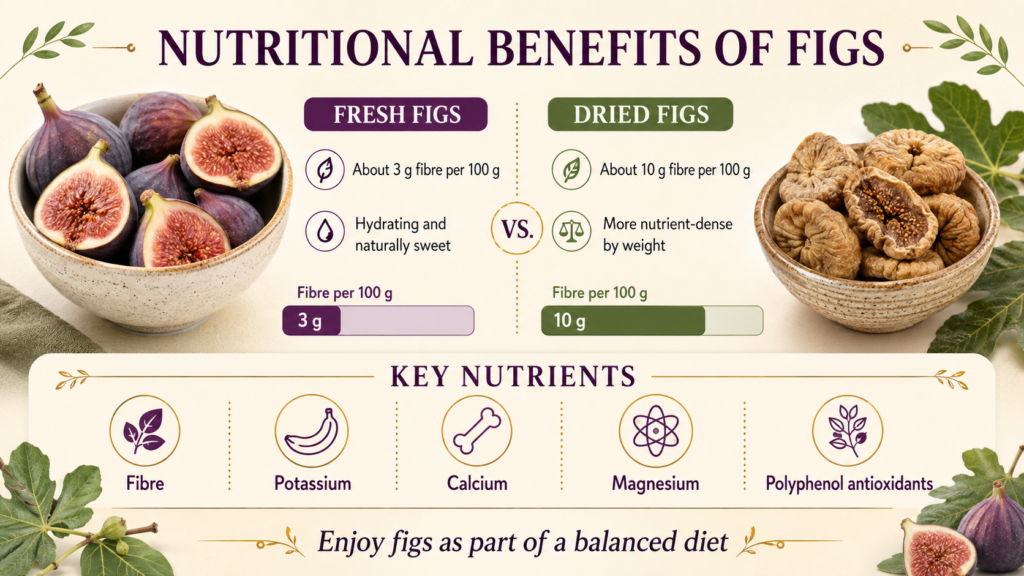
Figs are a good source of dietary fibre (about 3 g per 100 g fresh), potassium, calcium, and magnesium. Dried figs are more nutrient-dense by weight, providing roughly 10 g of fibre per 100 g — one of the highest values among common dried fruits.
They also contain polyphenol antioxidants, particularly in the skin. Research published in the Journal of the American College of Nutrition notes that figs may support digestive health and blood sugar regulation when consumed as part of a balanced diet.
How Figs Grow: Tips for Home Gardeners
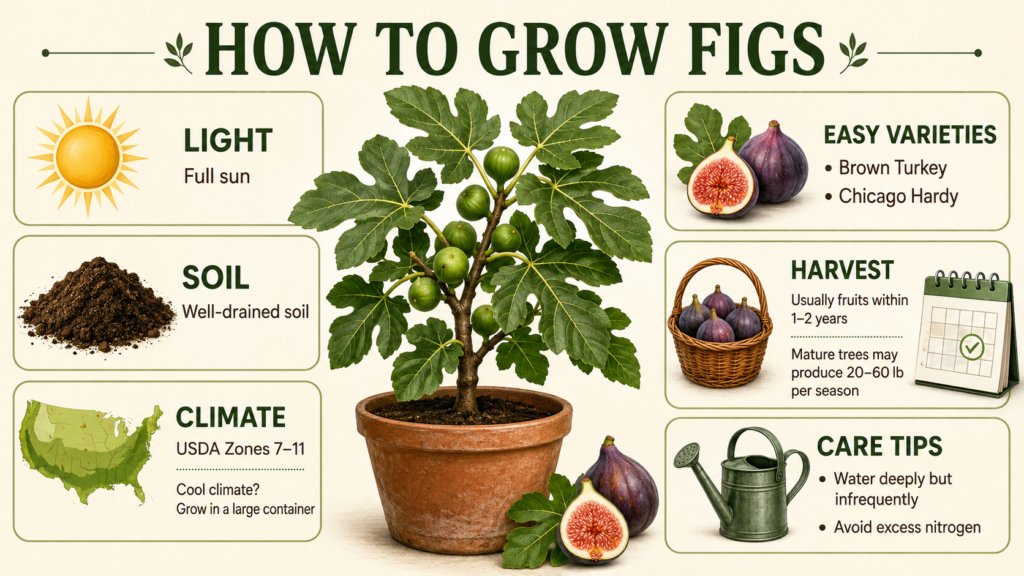
Fig trees thrive in USDA zones 7–11 and prefer full sun with well-drained soil. In cooler climates, they grow well in large containers that can be moved indoors over winter. Choose self-fertile (parthenocarpic) varieties like ‘Brown Turkey’ or ‘Chicago Hardy’ for the easiest harvest.
Trees typically produce fruit within 1–2 years of planting. Water deeply but infrequently, and avoid high-nitrogen fertilisers which promote leaf growth at the expense of fruit. A mature fig tree can produce 20–60 pounds of fruit per season.
Frequently Asked Questions
Is a fig technically a fruit?
Yes. Botanically, a fig is a multiple fruit called a syconium, formed from many flowers enclosed inside a fleshy structure.
Do all figs need fig wasps to grow?
No. Most edible varieties sold fresh, including Brown Turkey, Celeste, and Kadota, are parthenocarpic and develop without pollination or wasps.
Are figs healthy to eat?
Figs provide fibre and minerals such as potassium, calcium, and magnesium. Enjoy them as part of a varied, balanced diet, especially because dried figs are naturally higher in sugar and calories by weight.