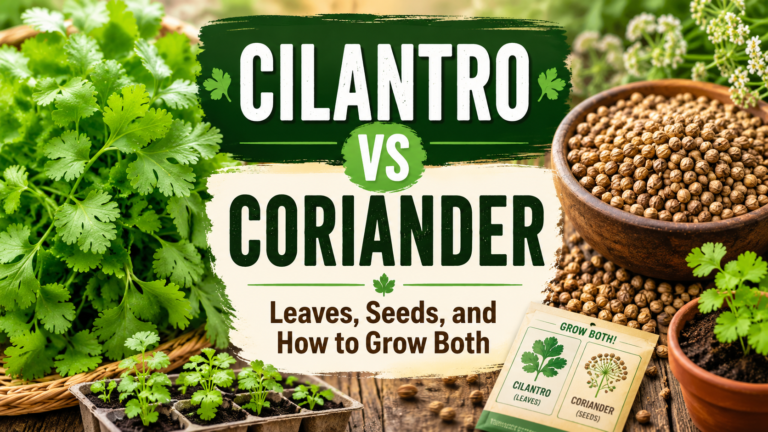
One useful plant, two distinct kitchen harvests. Learn when to pick cilantro leaves, when to wait for coriander seeds, and how to grow Coriandrum sativum from seed to spice.
Cilantro and coriander usually come from the same plant: Coriandrum sativum. In US cooking, cilantro means the fresh leaves and tender stems, while coriander seeds are the dried, round fruits that develop after the plant flowers. In the UK and many other places, coriander can mean the whole plant, including the leaves.
Are cilantro and coriander the same plant?

Yes—despite the different names, cilantro leaves and coriander seeds are two harvests from one annual herb, Coriandrum sativum. You do not need one plant for cilantro and another plant for coriander. A single plant can move from seedling to leafy herb, then to flowers and seed heads.
What is the herb cilantro? It is the leafy, early-growth stage of the coriander plant, valued for its bright green, citrus-like flavor. As the plant matures, its foliage becomes finer, it sends up flower stems, and the flowers eventually form the round fruits cooks call coriander seeds.
What are coriander seeds?
Coriander seeds develop after the small white flowers are pollinated. Strictly speaking, each dry, ridged globe is a fruit containing seeds, but “coriander seed” is the familiar culinary and gardening name. Green, immature seed heads are soft and fresh-tasting; dry, tan-to-brown heads are ready to harvest for spice or storage.
The seeds taste very different from cilantro leaves: warm, gently citrusy, and aromatic rather than sharply green. Use them whole in pickles and curries, or lightly toast and grind them. Untreated coriander seeds sold for planting are the more reliable choice for sowing.
One plant, from coriander seed to cilantro leaf
Thinking of cilantro as a short lifecycle makes the naming—and the harvest timing—much easier to understand. Grow several plants for leaves, then leave a few uncut to flower and make seeds.

1. Sow coriander seeds
Plant fresh seed in cool, workable soil or a deep container.
2. Harvest cilantro leaves
Pick outer leaves while plants are young and leafy.
3. Let selected plants flower
Warmth and lengthening days can trigger bolting and flower stalks.
4. Collect mature seed heads
Wait for round fruits to dry and turn straw-brown before storing.
Cilantro leaves vs. coriander seeds
The flavor, harvest stage, and best storage method change completely as Coriandrum sativum moves from leaf production to seed production.
| Feature | Cilantro leaves | Coriander seeds |
|---|---|---|
| Plant part | Fresh leaves and tender stems | Mature dried fruits, commonly called seeds |
| Harvest stage | Vegetative, before heavy flowering | After flowering and drying on the plant |
| Flavor | Fresh, green, lively, citrus-like | Warm, aromatic, gently citrusy |
| Storage | Best used fresh soon after picking | Dry thoroughly; keep airtight, cool, and dark |
How to grow cilantro from coriander seeds
Cilantro has a taproot and generally prefers being sown where it will grow. Its ideal timing varies by climate, but the plant usually gives the longest leafy harvest in mild weather rather than summer heat.

Sow little and often
Sow a small patch every two to three weeks during suitable weather. This succession sowing gives you new leafy plants as older ones begin to bolt. Cover seed lightly and keep the seedbed evenly moist until seedlings emerge.
Give it gentle light
Aim for sun in cool weather. Where days become hot, morning sun and afternoon shade can help slow stress. Choose a spot with loose, well-drained soil and enough room for air to move around plants.
Water by the soil, not the calendar
Check the top layer of soil with a finger before watering. Water when it is drying, then soak the root zone rather than giving frequent shallow splashes. Containers dry faster than garden beds, especially in wind and warmth.
Pick leaves first—or let the plant make coriander seeds
How to harvest cilantro leaves
When plants have several stems, snip the largest outer stems near the base and leave the center growing. Take only what you need, rather than stripping a small plant bare. Leaves are typically at their best before the plant sends up a tall central flower stalk.
Why cilantro bolts
Bolting is the normal switch from leaf growth to flowering and seed-making. Heat, long days, root disturbance, and plant maturity can all contribute. Flowering does not ruin the plant—it changes your harvest plan. The feathery upper leaves are edible, flowers attract beneficial insects, and the seed heads become coriander.
How to harvest coriander seeds
- Watch for the color change
After flowering, seed heads are green and soft. Leave them on the plant until most have changed to pale tan or light brown and feel firm. Do not wait through repeated wet weather if heads are already dry enough to shatter. - Cut and dry the stems
Cut whole dry-looking stems on a dry day. Hang them upside down inside a paper bag or spread them in a sheltered, airy place. The bag catches seeds that loosen as the stems finish drying. - Rub, clean, and store
Once fully crisp, gently rub the seed heads to release the round fruits. Remove loose plant debris and store only completely dry seeds in a labeled airtight jar. For planting, use seed from healthy plants and remember that germination naturally declines with age.

Use local conditions to fine-tune general advice
This guide uses standard botanical terminology for Coriandrum sativum and practical home-garden principles. Weather, day length, soil type, containers, and local pests all change how fast cilantro grows or bolts. For timing and variety advice in your area, consult a university cooperative extension service, the Royal Horticultural Society, a botanical garden, or a trusted local nursery.
Cilantro and coriander FAQs
Can I plant grocery-store coriander seeds?
Sometimes, but it is not guaranteed. Culinary coriander may be old, heat-treated, crushed, or otherwise unsuitable for germination. Seed packets labeled for planting provide the clearest starting point. If you experiment with whole grocery-store seed, sow a small test batch first.
Can I still eat cilantro after it flowers?
Yes. The fine leaves on flowering stems are edible, although their texture and flavor may be less like the broad young cilantro leaf you know from the kitchen. The flowers are also edible in small amounts and can be used as a delicate garnish.
How do I grow cilantro in pots?
Use a pot with drainage holes and enough depth for the root system—roughly 20 to 25 cm (8 to 10 inches) deep is a helpful starting point. Fill it with free-draining potting mix, sow directly, and check moisture more often than you would in a garden bed.
Do cilantro leaves and coriander seeds taste the same?
No. They are from the same plant but have notably different flavors. Cilantro leaves are fresh and pungent, while coriander seeds are warmer, sweeter, and citrusy. A person’s dislike of cilantro leaves does not necessarily mean they will dislike coriander seed.