
A clear, species-aware guide to choosing, potting, watering, training and pruning jasmine in containers—so your plant has the conditions it needs to flower.
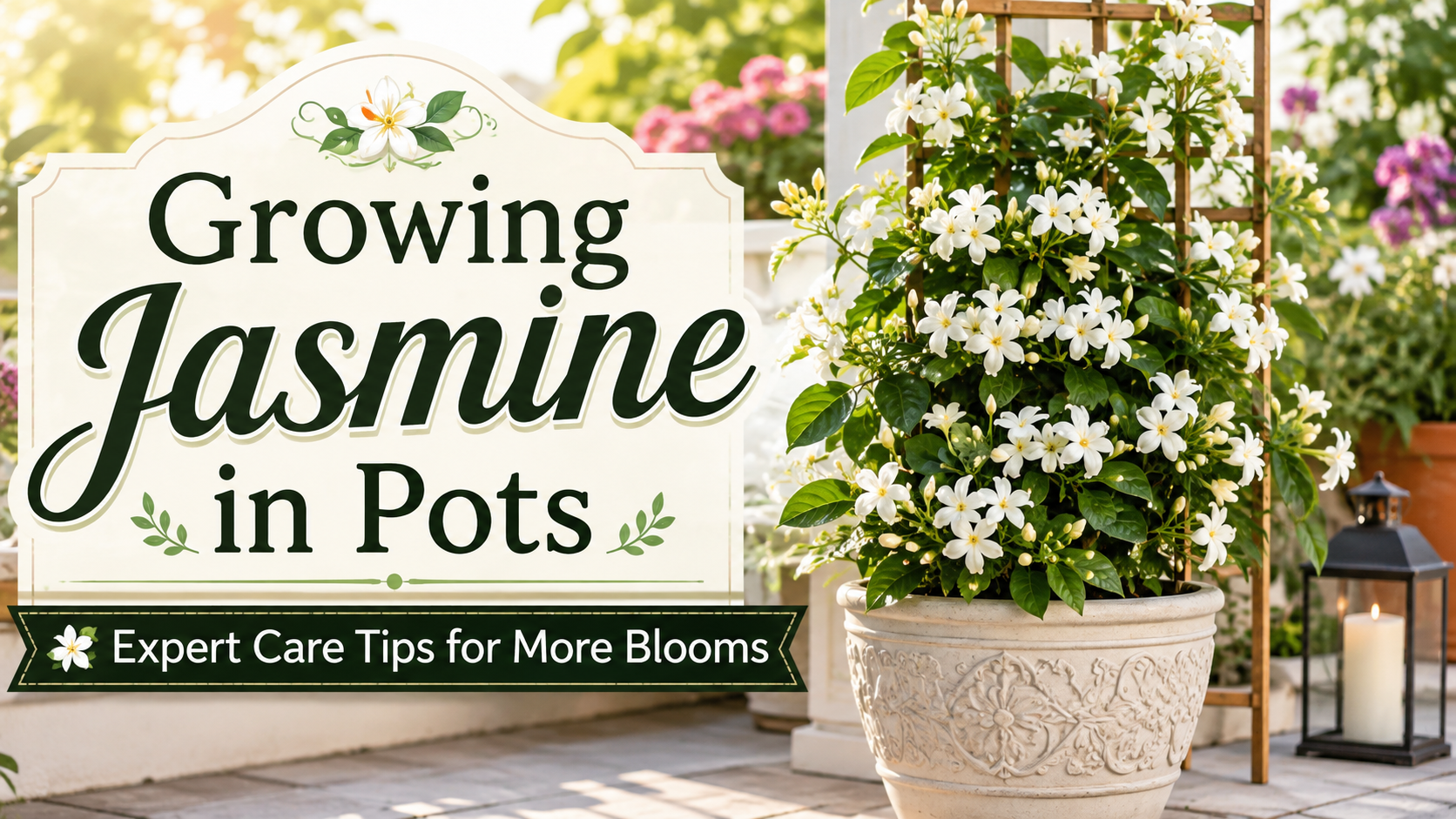
Growing jasmine in pots is one of the best ways to enjoy fragrance on a balcony, patio, porch, or bright indoor space. A container also gives cold-climate gardeners control: tender plants can move under cover before frost, while vigorous climbers can be trained into a manageable shape.
The key is not treating every plant labelled “jasmine” alike. In my own container-growing routine, the biggest gains come from checking the root zone and light first. A plant with glossy leaves but no flowers is often receiving too little sun, staying wet too long, or being fed more nitrogen than it can use for flowering.
Know which “jasmine” you are growing
True jasmines belong to the genus Jasminum. Star jasmine, Trachelospermum jasminoides, is a different plant with similar fragrant white flowers and evergreen leaves. It is often sold beside jasmines, but its cold tolerance, growth pattern, and pruning response differ. Read the botanical name on the label before applying advice.
| Plant | Container character | Best fit |
|---|---|---|
| Arabian jasmine — Jasminum sambac | Compact, intensely fragrant, tender. | Warm patios or bright winter protection. |
| Pink jasmine — Jasminum polyanthum | Fast-growing vine; needs a support. | Cool bright rooms or sheltered seasonal containers. |
| Common jasmine — Jasminum officinale | Large climber with summer flowers. | Substantial outdoor pot and regular training. |
| Spanish jasmine — Jasminum grandiflorum | Fragrant and frost-tender. | Containers in cooler regions for easy overwintering. |
| Star jasmine — Trachelospermum jasminoides | Evergreen twiner; not a true Jasminum. | Sunny sheltered walls, pots, and conservatories. |
Choose a pot that drains, not one that overwhelms
Start with a container only moderately larger than the nursery root ball—usually 2 to 4 inches wider. Jasmine does not need an unusually deep pot, but climbing varieties need a stable, broad-based container that will not tip once the trellis and leafy stems gain height. Most importantly, make sure drainage holes are open and unobstructed.
Use a moisture-retentive but free-draining mix
Dense garden soil is rarely suitable for a jasmine plant in a pot. Use a quality container mix amended with perlite, pumice, or fine bark for air spaces. When roots circle tightly around the pot wall or form a dense mat at the drainage holes, move up one pot size in spring or after flowering—never tear roots apart aggressively.
Light is the first bloom lever
Most flowering jasmine needs very bright light and several hours of sun outdoors. In hot climates, protect a potted plant from punishing late-afternoon heat while keeping morning sun. Indoors, place it close to the brightest available window; a dim corner may keep foliage alive but rarely supports generous flowering. Acclimate gradually when moving a plant outdoors, because sudden sun can scorch leaves and sudden relocation can drop buds.
Water deeply, then let the surface tell you when to water again
Do not follow a fixed weekly schedule. Push a finger about an inch into the mix: when that upper layer is dry, water slowly until excess drains away. During hot weather, a small terracotta pot can dry surprisingly quickly; in cool, low-light weather, the same pot may need far less. Empty saucers after watering so roots are not left standing in water.
Feed for steady growth, not a forced flower show
Use a balanced container fertilizer at the label rate during active growth, then reduce or pause feeding when growth slows. Too much nitrogen often produces long green shoots and few blooms. A bloom-focused fertilizer cannot compensate for poor light, a saturated mix, or pruning at the wrong time. If leaves are lush but flowers are absent, diagnose those conditions before adding more feed.
Give vigorous stems a gentle route upward
Install a small trellis, hoop, or bamboo canes at planting time, then guide stems every week or two with soft ties. Avoid tight knots that can pinch enlarging stems. Light pinching of young tips encourages branching, while regular positioning keeps the plant balanced instead of top-heavy on one side of the pot.
Prune according to flowering time
Remove dead, damaged, or weak growth whenever you see it. Major shaping is usually safest just after the main flowering period, because many jasmines set buds on growth that is still developing. Before cutting hard, identify your species and its bloom season. Heavy pruning immediately before flowering is a common reason a healthy jasmin loses its anticipated display.
Winter care depends on species and local temperatures
Container roots experience cold faster than roots in the ground. Tender Jasminum sambac and Jasminum grandiflorum need frost-free shelter; reduce watering once growth slows, but do not let the root ball become bone dry. Hardy types and star jasmine may stay outside in milder climates, especially against a protected wall, though pots benefit from insulation during prolonged freezes.
Why is my jasmine growing leaves but not flowers?
Work through the likely causes in order. Do not repot or fertilize automatically: a stressed plant may need more light or better drainage rather than more input. Developing buds are small, firm, and pointed; buds that yellow, shrivel, or fall after a move often signal a sudden environmental change.
- Check light: move gradually toward brighter conditions before changing fertilizer.
- Check drainage: yellow lower leaves plus persistently wet mix can indicate stressed roots.
- Check pruning: review whether flowering shoots were removed too recently.
- Check stability: bud drop can follow abrupt changes in temperature, watering, or location.