Is Jicama a Fruit or Vegetable?

The botanical truth behind this crunchy, refreshing root — and why it confuses so many people.

If you’ve ever picked up a jicama at the grocery store, you’ve probably wondered: is this a fruit or a vegetable? It looks like a turnip, peels like a potato, and tastes surprisingly sweet — almost like an apple. The confusion is completely understandable.

The answer depends on whether you’re asking a botanist or a chef. Let’s break it down clearly so you never have to second-guess your produce aisle choices again.

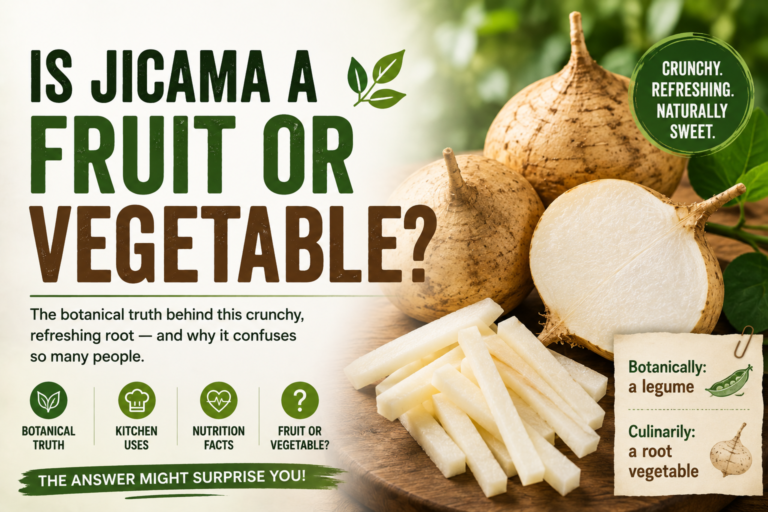
Botanically, jicama is a legume (its plant produces bean pods). Culinarily, it’s treated as a root vegetable. It is not a fruit. The edible part is the tuberous root of the Pachyrhizus erosus plant.

The Botanical Classification

Jicama (Pachyrhizus erosus) belongs to the Fabaceae family — the same family as beans, lentils, and peanuts. The plant itself is a vine that produces purple or white flowers and eventually bean pods. However, those pods and seeds are toxic and never eaten.

What we eat is the enlarged tuberous root that grows underground. Botanically speaking, roots are vegetative organs — not fruits. A fruit, by definition, develops from the fertilized ovary of a flower and contains seeds. Jicama’s edible root meets neither criterion.

How Jicama Is Used in the Kitchen

In Mexican cuisine — where jicama originates — it’s commonly served raw with lime juice, chili powder, and salt. Its crisp, slightly sweet flesh makes it a refreshing snack and a popular addition to slaws, salads, and spring rolls across Southeast Asian cuisines.

Unlike most root vegetables, jicama is rarely cooked. Its high water content and mild sweetness place it closer to water chestnuts in texture. Chefs universally categorize it as a vegetable, and it appears in the produce section alongside turnips and radishes.

Nutritional Profile

One cup of raw jicama (approximately 130g) provides about 49 calories, 12g of carbohydrates, 6.4g of dietary fiber, and a solid dose of vitamin C (44% of your daily value). It’s also a good source of potassium and contains prebiotic inulin fiber that supports gut health.

Its low glycemic index and high fiber content make it suitable for people managing blood sugar levels. The combination of crunch, hydration, and fiber makes jicama an excellent alternative to higher-calorie snacks.

So, Is Jicama a Fruit or Vegetable?

Jicama is definitively a vegetable — specifically, a root vegetable from a leguminous plant. It is not a fruit by any scientific or culinary definition. The confusion often arises because of its sweet, apple-like taste and the fact that its parent plant produces seed pods (which are inedible).

Think of it this way: we eat the root, not the fruit of the plant. Just as we call carrots and beets vegetables despite their plants producing flowers and seeds above ground, jicama earns its place firmly in the vegetable category.

dasdsad