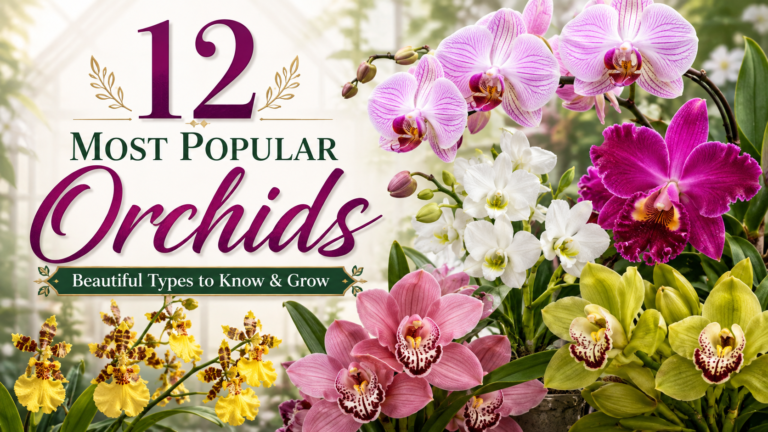
12 Most Popular Orchids: Beautiful Types to Grow at Home

A beginner-friendly guide to popular orchid types, from easy moth orchids to fragrant, dramatic and tropical varieties.

For most first-time growers, a Moth Orchid (Phalaenopsis) is the best place to begin. It handles typical indoor temperatures, needs bright indirect light, and can keep its flowers for many weeks. Choose other orchids for a specific feature—such as fragrance, showy flowers, cool conditions or a tropical challenge.

What is an orchid?

Orchids are flowering plants in the Orchidaceae family, one of the largest plant families on Earth. Many familiar houseplant orchids are epiphytes: in nature, they grow attached to tree branches rather than rooted in ordinary garden soil. That is why they are usually sold in airy bark mixes with exposed, breathing roots.

There are thousands of orchid species and countless hybrids, so one care routine does not fit every orchid flower. Light, temperature, humidity and watering needs vary widely. The useful starting point is not choosing the prettiest bloom alone, but matching an orchid to the conditions you can realistically provide. Orquídeas may look exotic, but the right variety can be very manageable indoors.

12 most popular types of orchids

Each profile gives a practical snapshot rather than a strict rulebook. Growing conditions change with hybrid, potting mix, season and home environment, so use nursery labels and trusted local guidance alongside this overview.

1. Moth Orchid (Phalaenopsis spp.)

The classic gift orchid has rounded, butterfly-like flowers in white, pink, purple and patterned shades. It prefers warm indoor temperatures and moderate humidity. Blooms often last two to four months, making it a forgiving, rewarding first orchid.

2. Cattleya Orchid (Cattleya spp.)

Known as the corsage orchid, Cattleya makes large, ruffled and often fragrant flowers with a bold lip. It likes brighter light than Phalaenopsis, warm days and a slight dry-down between waterings. A lovely choice for showy blooms.

3. Dendrobium Orchid (Dendrobium spp.)

Dendrobiums produce multiple flowers along upright canes or stems, creating an abundant display. Types vary, but many home-grown hybrids enjoy bright filtered light, intermediate warmth and good airflow. Their long sprays are popular for indoor floral displays.

4. Dancing Lady Orchid (Oncidium )

Oncidium flowers have fluttering skirts that resemble tiny dancing figures, often in cheerful yellow and brown. They like even moisture without soggy roots, medium to bright indirect light, and intermediate temperatures. Many produce generously branched flower sprays.

5. Lady’s Slipper Orchid

Paphiopedilums are instantly recognizable by their pouch-shaped lower petal, like a tiny slipper. They suit growers with gentler light and evenly moist mix. Their patterned leaves and architectural blooms make them a wonderful option for unique indoor displays.

6. Cymbidium Orchid (Cymbidium spp.)

Cymbidiums make tall spikes packed with waxy, long-lasting flowers. They appreciate brighter light and cooler autumn nights to help initiate blooms. Best for cool conservatories, sheltered patios in mild climates, or bright homes that stay relatively cool.

7. Vanda Orchid (Vanda spp.)

Vandas offer saturated blue, purple, pink and orange blooms with striking patterns. Their exposed roots need warmth, humidity, frequent watering and very bright light. They are spectacular but better suited to experienced growers, greenhouses or warm tropical conditions.

8. Pansy Orchid (Miltoniopsis spp.)

Miltoniopsis looks remarkably like a garden pansy, with broad, expressive faces and a sometimes sweet scent. It performs best with cooler temperatures, soft light and consistent moisture. Hot, dry rooms can be challenging for this beautiful orchid flower.

9. Spider Orchid (Brassia spp.)

Brassia flowers have long, narrow sepals that create their memorable spider-like silhouette. Usually green, yellow or brown-spotted, they are conversation starters for unusual collections. Give medium-bright light, intermediate warmth and moisture as the mix approaches dryness.

10. Zygopetalum Orchid (Zygopetalum )

Zygopetalums combine rich purple lips with green or brown patterned petals and are prized for fragrance. They prefer bright indirect light, cooler to intermediate temperatures and a mix that does not stay bone-dry for long. A favorite for scent lovers.

11. Epidendrum Orchid (Epidendrum )

Often called reed-stem orchids, Epidendrums carry clusters of small starry flowers in orange, red, pink and yellow. Many types tolerate warm weather and bright light well. They are useful for sunny patios in frost-free climates and warm indoor growing spaces.

12. Vanilla Orchid (Vanilla planifolia)

Vanilla is an orchid vine rather than a compact flowering pot plant. It needs warmth, high humidity, a sturdy support and plenty of space. Producing vanilla beans indoors is a long-term project requiring mature growth and hand-pollination, so it is best for dedicated tropical growers.

Popular orchid types compared

Use this table as a quick selection tool. “Easy” means relatively adaptable for an orchid, not that a plant can thrive without appropriate light, drainage and watering.

OrchidBest known forDifficultyBest for
PhalaenopsisLong-lasting moth-like flowersEasyBeginners and indoor homes
CattleyaLarge fragrant bloomsModerateShowy flower lovers
DendrobiumMany flowers per stemEasy–moderateBright indoor growers
OncidiumDancing flower spraysModerateColorful displays
PaphiopedilumSlipper-shaped bloomsModerateLower-light homes
CymbidiumTall, waxy flower spikesModerateCool bright conditions
VandaBrilliant tropical colorsExperiencedWarm humid growing areas
MiltoniopsisPansy-like flowersModerateCooler homes
BrassiaSpider-shaped bloomsModerateUnusual collections
ZygopetalumStrong fragranceModerateFragrance lovers
EpidendrumFlower clustersEasy–moderateWarm climates and patios
VanillaEdible vanilla podsExperiencedTropical vine growers

Which orchid is best for beginners?

Phalaenopsis is usually the safest first orchid because it adapts well to normal room temperatures and does not require intense light. Choose a healthy plant with firm green or silvery roots, a clean crown and an orchid pot with drainage. Dendrobium hybrids can also be approachable when given brighter light.

Which orchid has the longest-lasting flowers?

Phalaenopsis is famous for flower displays that can remain attractive for weeks or even months. Cymbidium blooms are also notably durable, especially in cool conditions. Flower life depends on temperature, light and plant health, so avoid placing blooming orchids beside heat vents or ripening fruit.

Which orchids are fragrant?

Many Cattleyas are prized for a sweet, floral perfume, while Zygopetalums can be surprisingly fragrant in a cool room. Some Oncidiums and Miltoniopsis are scented too. Fragrance is not guaranteed in every hybrid and may be stronger at particular times of day.

Which orchids grow best indoors?

Phalaenopsis, Paphiopedilum and many Dendrobium hybrids are common indoor orchids. A spot near an east window or behind a sheer curtain at a brighter window is often useful. The goal is bright, gentle light—not prolonged hot sun that can scorch leaves.

How to choose the right orchid for your home

Start with your light. A bright, filtered windowsill suits Phalaenopsis and many Dendrobiums; a cooler bright space can suit Cymbidiums and Miltoniopsis. Then consider your watering habits. Orchid bark dries faster than dense potting soil, but watering frequency still changes with season, airflow, pot size, humidity and root growth. Check the mix and roots rather than following a fixed weekly schedule.

Frequently asked questions

Are orchids difficult to care for?

Not necessarily. Some orchids are specialized, but Phalaenopsis is widely grown because it works well in many homes. Most problems come from giving the wrong light, keeping roots too wet, or choosing an orchid whose temperature needs do not match the room.

Will my orchid bloom again after the flowers fall?

Yes, healthy orchids can rebloom, although timing varies by type. After flowering, continue appropriate light, watering and feeding. Some orchids need a seasonal temperature change or rest period to trigger a new flower spike, while others may rebloom from an existing stem.

How often should I water an orchid?

There is no reliable one-size-fits-all schedule. Water when the mix is approaching dryness for your particular orchid, then let excess water drain fully. Clear pots can help: healthy Phalaenopsis roots often look green when wet and silvery when dry. Never let a pot sit in standing water.

Tooba
Tooba

Tooba is a passionate gardener and writer at Gardener Haven, dedicated to helping people bring their outdoor and indoor spaces to life. With a deep love for everything from vibrant Asiatic lilies to shade-loving impatiens, she breaks down complex plant care into simple, actionable steps. When she isn’t writing, Tooba is likely getting her hands dirty in the garden or enjoying a fresh, warm bowl of matcha.

Articles: 85
dasdsad