Lavender Main Types: How to Choose the Right Lavender

A practical guide to English, French, Spanish, Portuguese lavender and lavandin—so you can choose a plant that suits your climate, space and purpose.

For many cool or temperate gardens, English lavender is the easiest starting point. Choose lavandin for bigger plants and long stems, Spanish or French lavender for mild climates and decorative bloom, and Portuguese lavender for a wilder Mediterranean character.

What is lavender?

Lavender is a group of aromatic, sun-loving shrubs in the genus Lavandula. Most lavender plants come from dry Mediterranean-style regions, which explains their shared preference for full sun, open air and sharply drained soil.

Plant labels can be confusing because common names vary by country and nursery. Botanical names are more dependable: they tell you whether you are looking at a hardy English lavender, a larger lavandin hybrid, or a warmth-loving species that may need winter protection.

What are the main types of lavender?

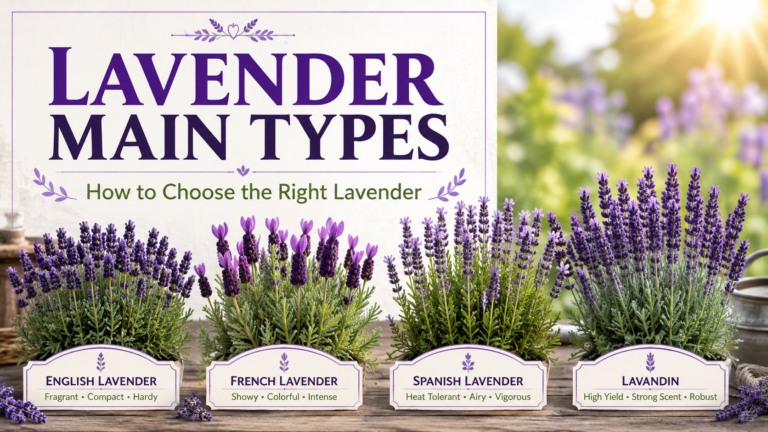
English lavender (Lavandula angustifolia)

Compact, sweetly fragrant and often among the more cold-hardy choices. English lavender is a classic for edging, herb gardens, drying and culinary projects. It usually forms a tidy mound when planted in sun and free-draining soil.

Lavandin (Lavandula × intermedia)

Lavandin is a hybrid, typically between English lavender and spike lavender. It tends to grow larger, flower later and produce longer stems than English types. Its bold fragrance and generous harvest make it popular for hedges, sachets and dried bundles.

Spanish lavender (Lavandula stoechas)

Spanish lavender is easy to spot: each dense flower head carries upright colored bracts that resemble small rabbit ears. It is an ornamental standout for warm, dry gardens and containers, but is generally less reliable in severe winter cold.

French lavender (Lavandula dentata)

French lavender is known for its softly toothed, grey-green foliage and a long flowering season where winters are mild. It makes an elegant container or patio plant. Note that the common name “French lavender” is used differently in some regions, so check the botanical label.

Portuguese lavender (Lavandula latifolia)

Often called spike lavender, this species has broader leaves and a noticeably more camphor-like aroma than English lavender. It suits sunny, warm settings and naturalistic planting. Its strong scent is useful for fragrance projects, though it is not usually the first culinary choice.

Lavender types compared

Use this as a first filter, then confirm the hardiness and mature size of the specific cultivar you are considering. Local winter wet, humidity and soil drainage can matter as much as temperature.

Lavender typeBest known forTypical climate fitTypical garden use
English lavenderSweet fragrance and hardinessCooler to temperateBorders, culinary use, drying
LavandinLarge plants and long stemsTemperate to warm, dryHedges, oil, dried flowers
Spanish lavenderRabbit-ear flower bractsWarm and mild-winterOrnamental beds, containers
French lavenderToothed foliage, long seasonMild to warmPatios, pots, landscaping
Portuguese lavenderStrong aromatic foliageWarm MediterraneanNaturalistic, dry planting

Which lavender has the strongest fragrance?

“Strongest” depends on the scent you enjoy. English lavender is often prized for a sweet floral perfume. Lavandin can smell bigger and more penetrating, especially in dried arrangements. Portuguese lavender often reads as sharper and more camphor-like.

Which lavender is best for cold climates?

English lavender is commonly the best place to begin for colder regions, especially cultivars selected for hardiness. Good winter drainage is essential: roots sitting in cold wet soil can be more damaging than frost itself. Check locally recommended cultivars for your zone.

Which lavender is best for hot climates?

Spanish, French and Portuguese lavenders are often better aligned with mild-winter, dry-summer conditions. In humid places, give every type room for air movement, avoid rich soil and water the root zone rather than wetting foliage repeatedly.

Which lavender is best for dried flowers?

Lavandin is a favorite for dried bunches because its flower stems are usually long and sturdy. English lavender is also excellent for sachets and culinary-style buds. Harvest stems when the lower flowers have opened but before the whole spike is fully spent.

Best lavender for pots

Choose naturally compact English lavender cultivars for the simplest container option, or use Spanish and French lavender where winters are mild. Use a pot with generous drainage holes and a gritty, free-draining mix. A lavender plant in a decorative pot still needs full sun and should never stand in a saucer of water.

What lavender types are grown on lavender farms?

A lavender farm may grow English lavender, lavandin, or both, depending on its climate and whether it focuses on bouquets, dried flowers, essential oil or visitor displays. Lavandin is widely valued for abundant flowers and long stems, while English lavender is prized for fine fragrance and compact habit. Farm varieties are selected for local performance, not just flower color.

Frequently asked questions

Is lavandin the same as lavender?

Lavandin is a type of lavender: a hybrid usually written as Lavandula × intermedia. It shares features with its parent species but often grows larger and has longer flower stems than English lavender.

Can I grow lavender from seed?

You can, but named cultivars are usually bought as young plants because seed-grown lavender may vary in scent, size and flower color. Starting with a healthy plant also gives you a clearer idea of its final garden performance.

Why is my lavender plant woody and sparse?

Lavender naturally becomes woody with age. Light pruning after flowering can help maintain a compact shape, but avoid cutting hard into old bare wood because many lavender plants do not reliably reshoot from it. Poor drainage, shade and overcrowding also make plants sparse.

Tooba
Tooba

Tooba is a passionate gardener and writer at Gardener Haven, dedicated to helping people bring their outdoor and indoor spaces to life. With a deep love for everything from vibrant Asiatic lilies to shade-loving impatiens, she breaks down complex plant care into simple, actionable steps. When she isn’t writing, Tooba is likely getting her hands dirty in the garden or enjoying a fresh, warm bowl of matcha.

Articles: 85
dasdsad