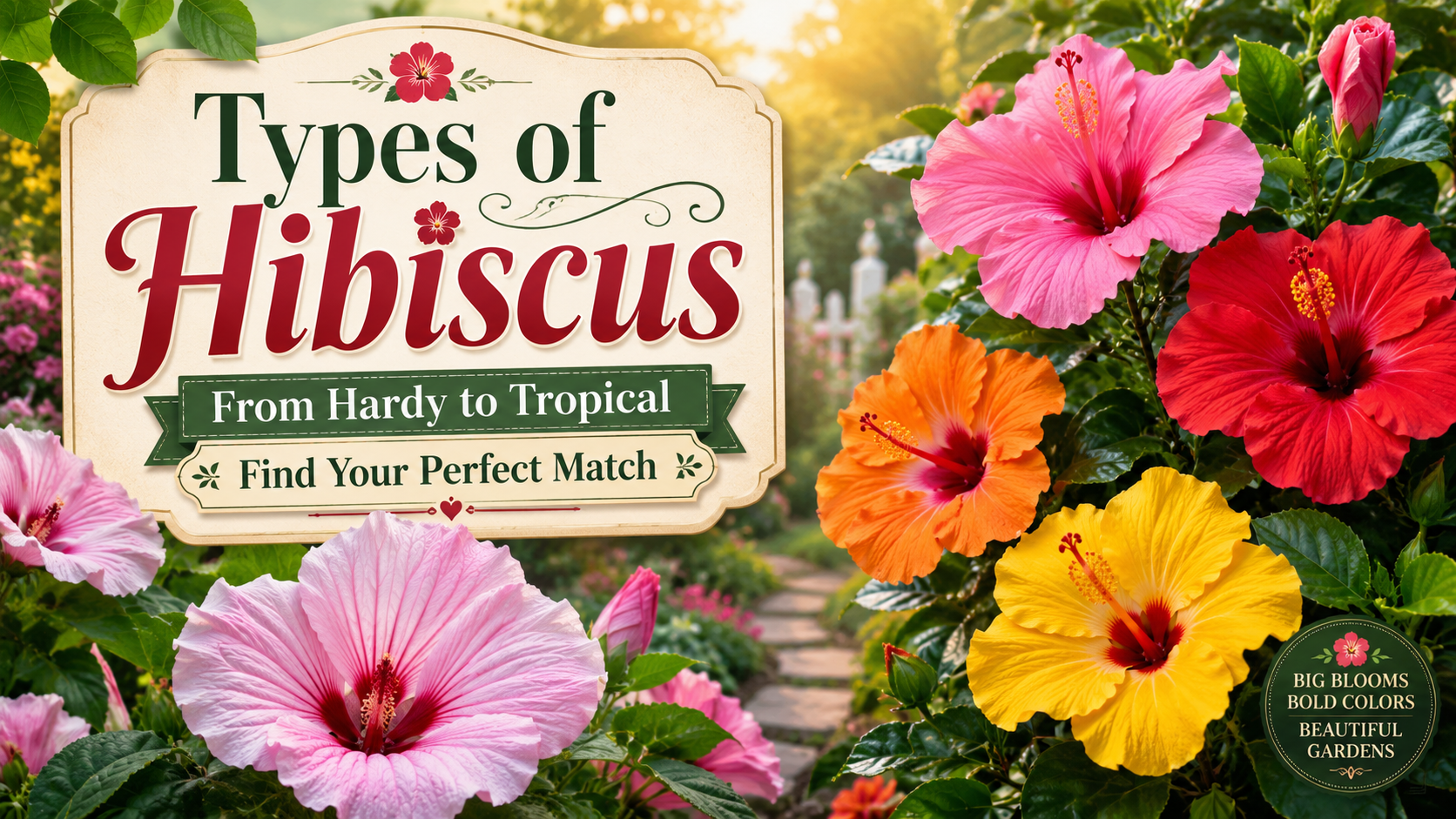

Not every hibiscus is built for the same garden. Learn the practical differences between hardy perennial hibiscus, tropical hibiscus, Rose of Sharon, and other garden-worthy types before you buy.
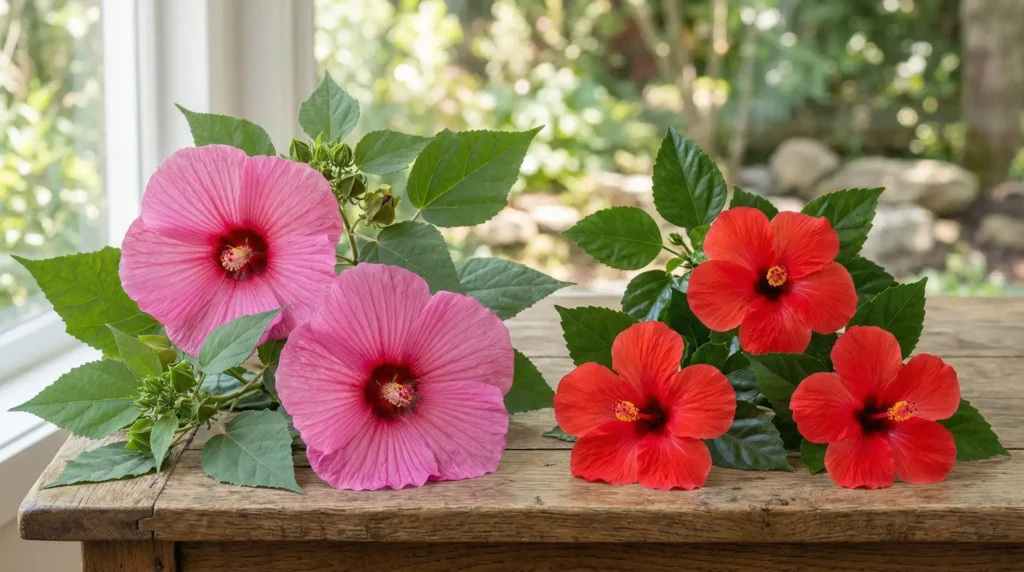
Hibiscus is a broad plant group, not one single garden plant. That is why two plants labeled “hibiscus” can have completely different winter needs, mature sizes, and growth habits. A reliable choice starts with the botanical name on the plant label, your local hardiness zone, and the space you can give it. Mature size and cold tolerance vary by cultivar, so use this guide as a starting point and verify the nursery tag before planting.
Hardy vs. tropical hibiscus at a glance
| Feature | Hardy hibiscus | Tropical hibiscus | Rose of Sharon |
|---|---|---|---|
| Growth habit | Herbaceous perennial; dies back to the ground in winter | Evergreen or semi-evergreen shrub in warm conditions | Deciduous woody shrub |
| Cold tolerance | Often hardy in USDA Zones 4–9, depending on cultivar | Damaged by frost; commonly grown outdoors year-round only in Zones 9–11 | Often hardy in Zones 5–9, depending on cultivar |
| Typical size | About 3–8 ft tall and wide | About 3–10 ft tall outdoors; smaller in pots | About 8–12 ft tall and 6–10 ft wide |
| Best use | Sunny borders, moist soils, large-flower displays | Patios, hot climates, bright indoor overwintering | Hedges, borders, screening, late-summer color |
Rose of Sharon: a tough, woody hibiscus shrub
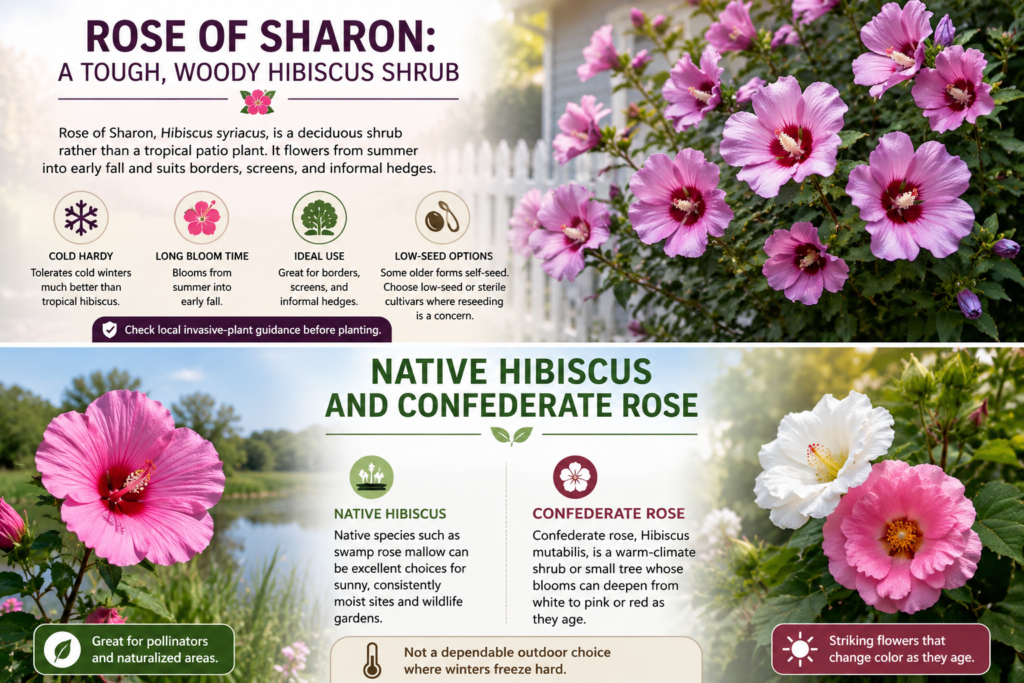
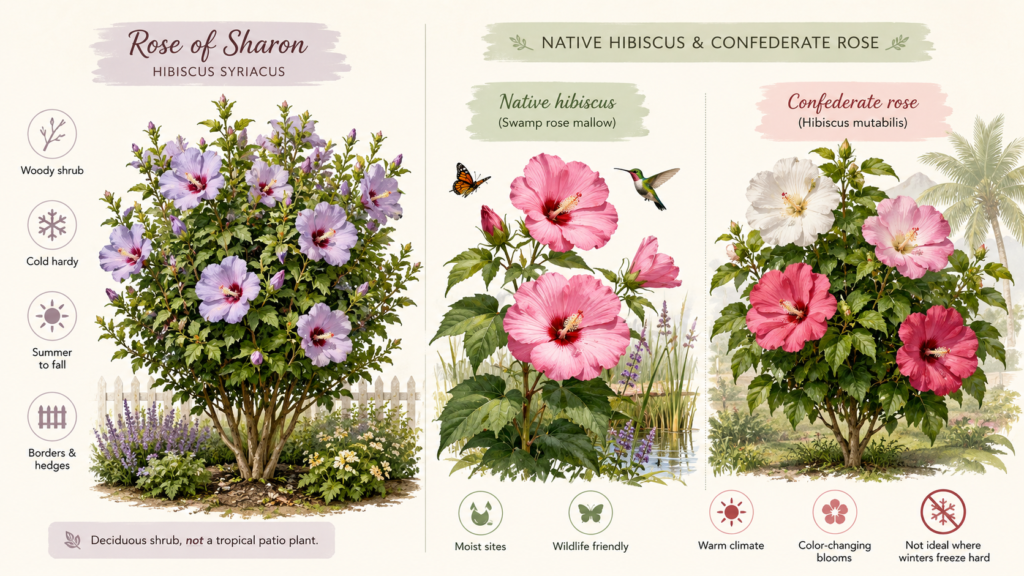
Rose of Sharon, Hibiscus syriacus, is a deciduous shrub rather than a tropical patio plant. It flowers from summer into early fall and suits borders, screens, and informal hedges. Most cultivars tolerate cold winters far better than tropical hibiscus. Some older forms can self-seed freely, so choose low-seed or sterile cultivars where reseeding is a concern and check local invasive-plant guidance.
Native hibiscus and Confederate rose
Native species such as swamp rose mallow can be excellent choices for sunny, consistently moist sites and wildlife gardens. Confederate rose, Hibiscus mutabilis, is a warm-climate shrub or small tree whose blooms can deepen from white to pink or red as they age. It is striking, but not a dependable outdoor choice where winters freeze hard.
Tropical hibiscus is the easiest match for patios and indoor wintering
For a movable summer display, tropical hibiscus is usually the most practical type. Use a pot with drainage holes, a quality potting mix, and a sunny location that is protected from harsh wind. Container-grown hibiscus dries out faster than garden plants in heat, so check moisture often. Move it inside before chilly nights, placing it in your brightest available location. Reduce watering indoors, but do not let the root ball become bone dry.
Practical tip: acclimate a hibiscus to stronger outdoor sun over several days. Moving it directly from a shaded greenhouse or indoor room into intense sun can scorch leaves.
Open hibiscus flowers can be a lively pollinator stop
Hibiscus flowers can attract hummingbirds, bees, and other visiting pollinators, especially open single-flowered forms. Native species may offer extra ecological value when matched to their natural region and soil conditions. Avoid treating all hibiscus as equally wildlife-friendly: double flowers may provide less accessible pollen and nectar, while local native-plant organizations can help identify the best regional choices.
Winter survival depends on the type, not the flower color
A plant labeled simply “hibiscus” does not tell you enough about winter survival. Hardy hibiscus is generally root hardy in suitable zones and becomes dormant. Tropical hibiscus must be protected from frost. Rose of Sharon is a woody deciduous shrub that usually stays outdoors where it is hardy. Local winter lows, wind exposure, soil drainage, and cultivar all affect outcomes.
Hardy hibiscus
After frost, stems can be cut back once they have died down. Mulch helps moderate soil temperature. Expect no winter foliage and late spring emergence.
Tropical hibiscus
Bring indoors before frost. Provide bright light, avoid cold drafts, and watch for pests such as spider mites or aphids.
Rose of Sharon
It naturally drops leaves in fall. Mulch young shrubs and water during dry autumn weather until the ground freezes.
A simple hibiscus recommendation by garden goal
For freezing winters
Choose hardy hibiscus for giant flowers on a perennial plant, or Rose of Sharon for a flowering shrub with a permanent woody framework.
For frost-free heat
Choose tropical hibiscus for colorful flowers, glossy foliage, and an evergreen shrub effect in sunny landscapes.
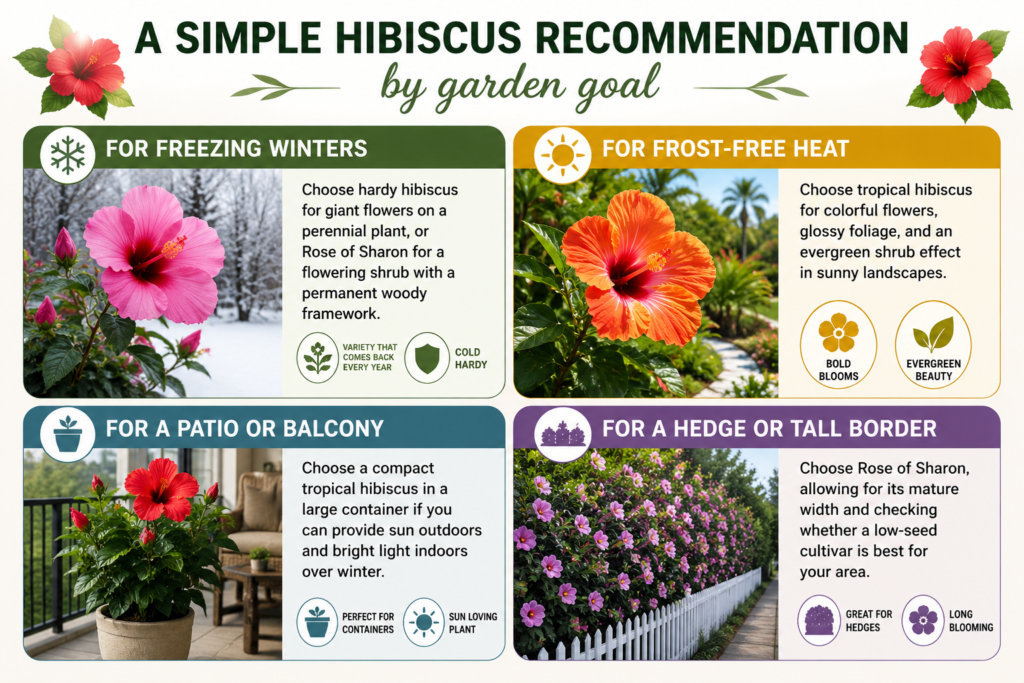
For a patio or balcony
Choose a compact tropical hibiscus in a large container if you can provide sun outdoors and bright light indoors over winter.
For a hedge or tall border
Choose Rose of Sharon, allowing for its mature width and checking whether a low-seed cultivar is best for your area.
Frequently asked questions about hibiscus
Does hibiscus come back every year?
Hardy hibiscus returns each year in climates where its roots are hardy. It dies to the ground in winter and grows again in late spring. Tropical hibiscus usually will not survive a freezing winter outdoors. Rose of Sharon also returns annually where hardy, but as a deciduous woody shrub.
Which hibiscus has the biggest flowers?
Hardy hibiscus hybrids are often the champions for flower size, with some blooms reaching dinner-plate proportions. Individual flowers may last only a day or two, but a healthy plant develops many buds and flowers over a long summer season.
How much sun does hibiscus need?
Most hibiscus flowers best with at least six hours of sun. In very hot climates, tropical hibiscus and some hardy hibiscus appreciate protection from intense late-afternoon heat. Native wetland species may have more specific moisture needs. Match the exposure recommendations on the cultivar label to your summer climate.
Can tropical hibiscus grow indoors?
Yes, tropical hibiscus can overwinter indoors, but it needs very bright light, stable temperatures, and careful watering. Lower indoor light can reduce flowering and encourage leaf drop. Inspect regularly for pests and avoid overfertilizing a plant that is growing slowly indoors.