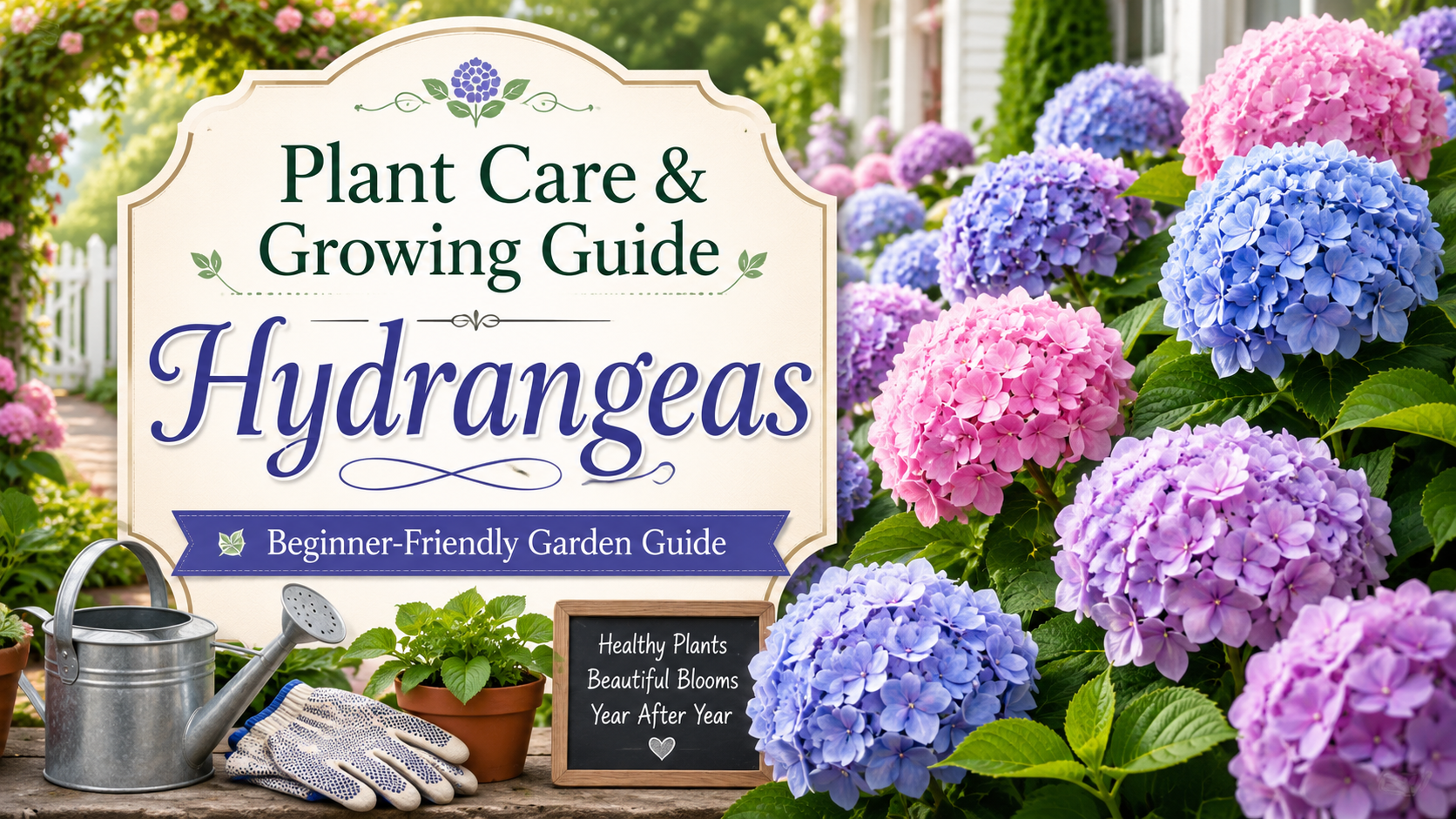

Grow a healthy, flower-filled hydrangea bush with care that matches its type. This guide explains sunlight, watering, pruning, flower color, and the seasonal details that make the biggest difference.
Hydrangeas are not one-size-fits-all shrubs. The hydrangea flower plant in a shady border may need very different pruning and winter care from a sun-tolerant panicle hydrangea in a hot patio bed. Once you match the variety to the site, hydrangea care becomes much less mysterious. Mature height and spread vary widely by cultivar, so always check the nursery label before planting.
Hydrangea care at a glance
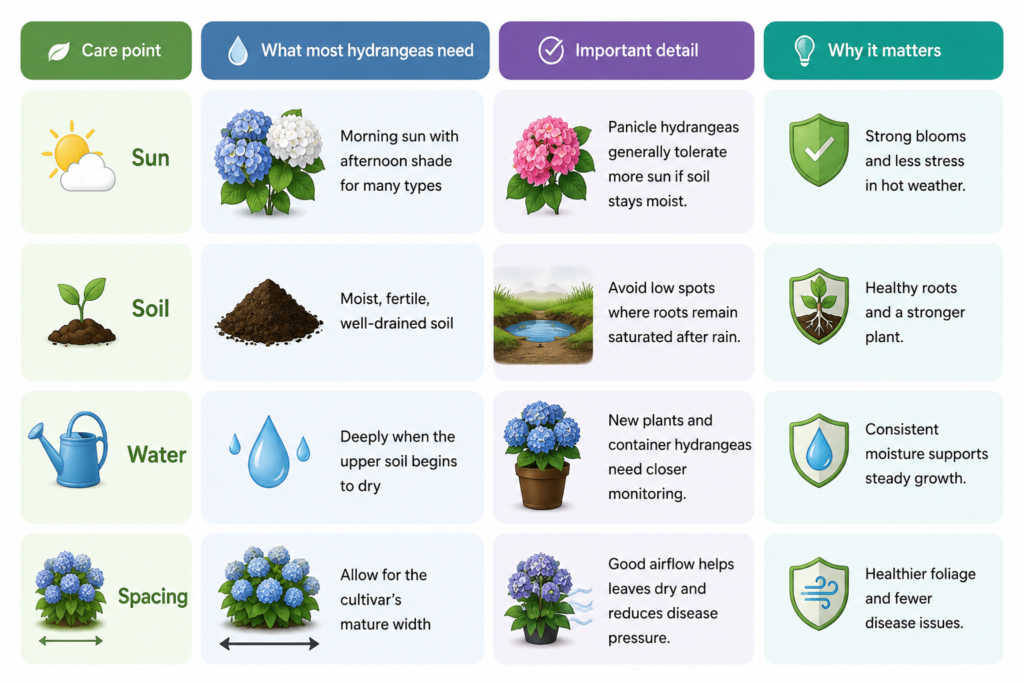
| Care point | What most hydrangeas need | Important detail |
|---|---|---|
| Sun | Morning sun with afternoon shade for many types | Panicle hydrangeas generally tolerate more sun if soil stays moist. |
| Soil | Moist, fertile, well-drained soil | Avoid low spots where roots remain saturated after rain. |
| Water | Deeply when the upper soil begins to dry | New plants and container hydrangeas need closer monitoring. |
| Spacing | Allow for the cultivar’s mature width | Good airflow helps leaves dry and reduces disease pressure. |
Know your hydrangea before you prune
Mountain and climbing hydrangeas are also valuable garden choices, but these four broad groups cover the pruning questions most home gardeners face.
Bigleaf hydrangea
Hydrangea macrophylla includes mophead and lacecap forms. Often 3–6 feet tall and wide, many bloom on old wood or both old and new wood. Their pink or blue flowers may respond to soil chemistry.
Panicle hydrangea
Hydrangea paniculata makes cone-shaped blooms on new wood. Usually 4–8 feet or more depending on cultivar, it is among the most sun- and cold-tolerant hydrangeas.
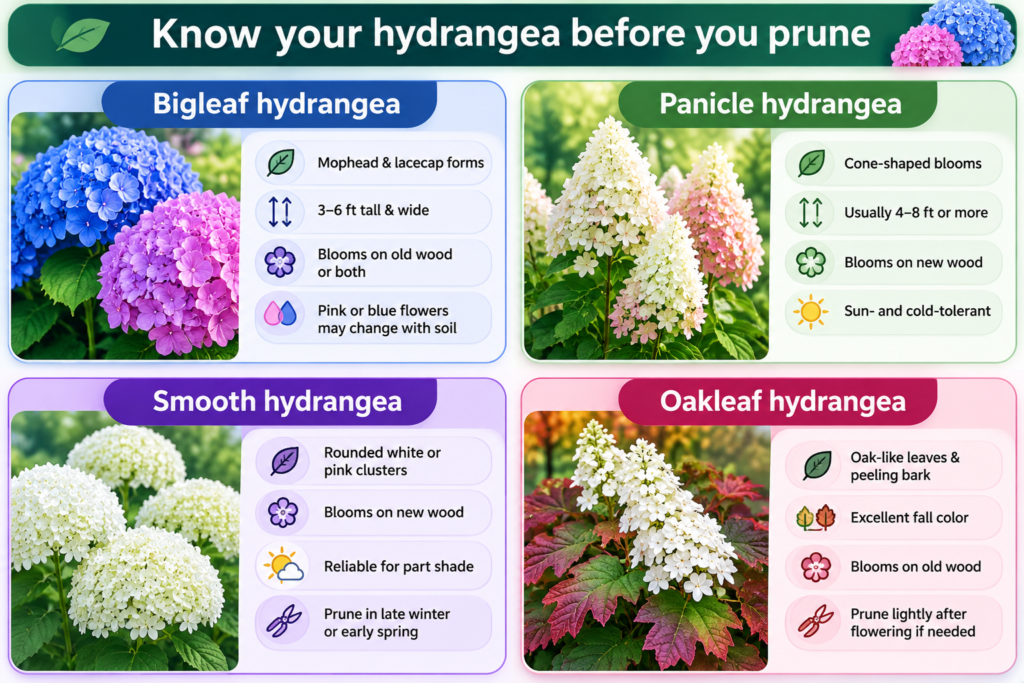
Smooth hydrangea
Hydrangea arborescens forms rounded white or pink flower clusters on new wood. It is often a reliable choice for part shade and is typically pruned in late winter or early spring.
Oakleaf hydrangea
Hydrangea quercifolia has oak-like leaves, peeling bark, and excellent fall color. It generally blooms on old wood, so prune only lightly after flowering if needed.
Old wood vs. new wood: why timing matters
Old wood means stems produced in the previous growing season. If an old-wood hydrangea is cut hard in late winter, you may remove its flower buds. New wood means the shrub flowers on growth made that year, so late-winter pruning is generally safe. Reblooming hydrangeas can flower on both old and new wood, but they still benefit from gentle rather than drastic pruning.
Pruning shortcut: prune panicle and smooth hydrangeas in late winter or early spring. For bigleaf, mountain, oakleaf, and climbing hydrangeas, remove dead or damaged wood in spring and shape lightly soon after flowering—unless your cultivar label says otherwise.
Keep roots evenly moist, not constantly wet
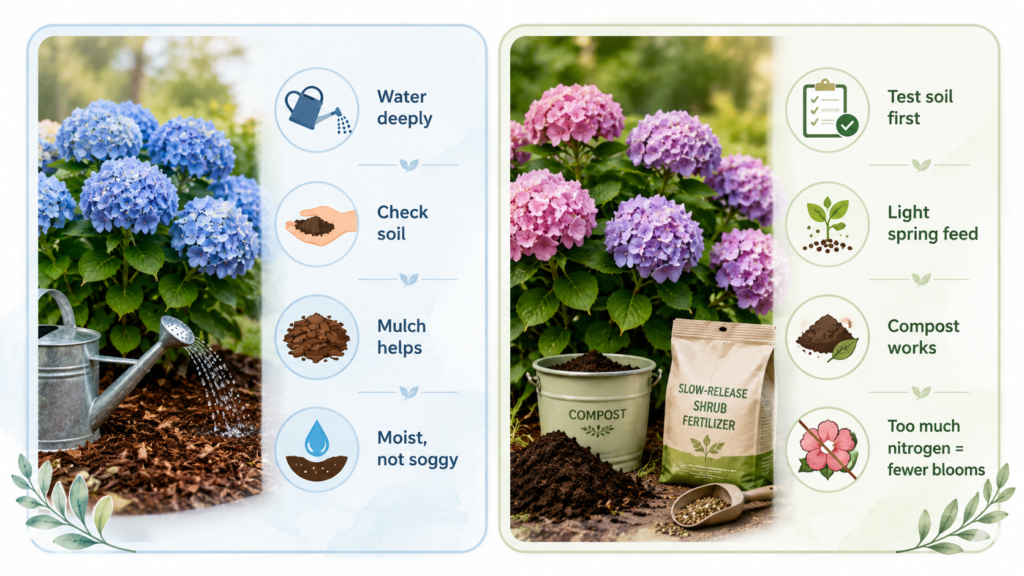
Water at the base of the plant until the root zone is thoroughly moistened. A newly planted hydrangea needs regular checks during its first season. Temporary afternoon wilting can happen in heat, even when soil is moist; check the soil before adding water. Persistent morning wilt, dry soil, crisp brown edges, or drooping leaves signal that the plant needs attention. Mulch moderates soil temperature and reduces evaporation.
Use a soil test and local guidance before adding fertilizer. In average garden soil, compost and a modest slow-release shrub fertilizer in spring are often enough. Excess nitrogen can produce lush foliage with fewer hydrangea flowers. Do not use fertilizer to solve a pruning, light, or winter-bud problem.
Simple seasonal hydrangea care
Spring: inspect and protect
Remove winter-damaged stems after buds begin to swell. Watch forecasts for late frost, especially with old-wood types, and cover tender buds temporarily when regional guidance recommends it.
Summer: water and deadhead
Water deeply during dry weather and deadhead spent blooms if you prefer a tidy look. Heavy blooms can bend after rain; a discreet support may help tall or top-heavy cultivars.
Fall: mulch, don’t rush to cut back
Keep watering until the ground begins to freeze if autumn is dry. Add mulch after soil cools. Avoid cutting back old-wood hydrangeas in fall, because stems may hold next year’s buds.
Winter: protect exposed buds
Cold winters and freeze-thaw cycles can damage flower buds. A wind-protected site, mulch, and an airy burlap leaf cage can help where locally recommended. Ask a regional extension service about suitable protection.
Can you change hydrangea flower color?
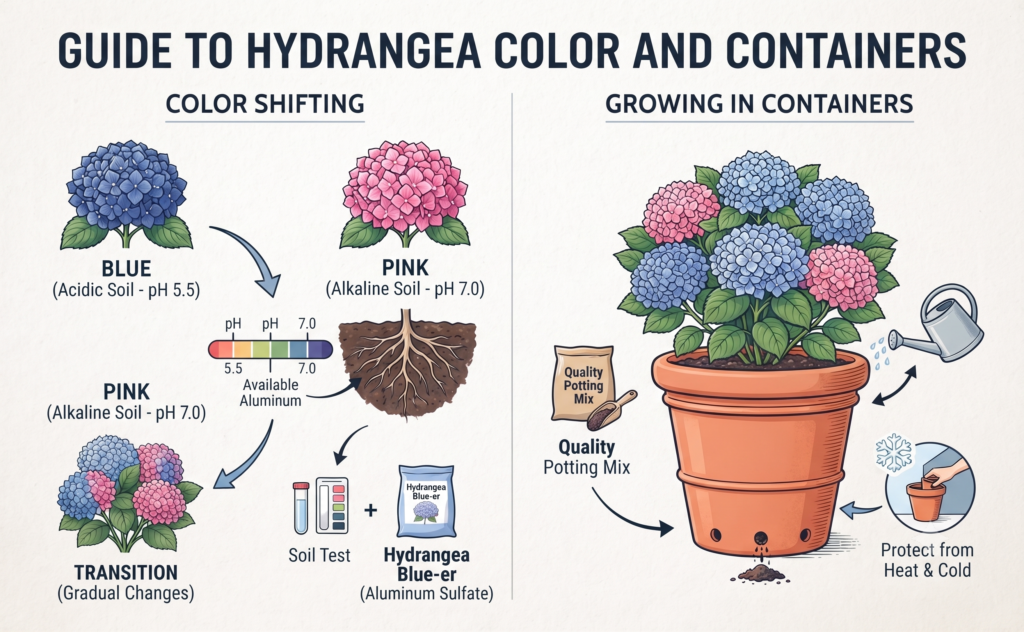
Only some bigleaf and mountain hydrangeas can shift between pink and blue. Color is influenced by cultivar genetics, soil pH, and aluminum availability. Acidic soil can make aluminum more available and encourage blue tones; less acidic soil may encourage pink tones. White hydrangeas usually stay white. Test soil before using amendments, make gradual changes, and do not expect a guaranteed color result.
Can hydrangeas grow in containers?
Yes—choose a compact cultivar, a large pot with drainage holes, and quality potting mix. Container hydrangeas dry out faster than garden-grown shrubs, particularly in wind or summer heat. Insulate or move pots to a protected place in cold climates, because roots are less protected above ground.
Why is my hydrangea not blooming—or looking unwell?
My hydrangea has leaves but no flowers
Common causes include pruning off old-wood buds, winter injury, too much shade, a young or recently transplanted shrub, and excessive nitrogen. Identify the hydrangea type first, then review its pruning date, sunlight, and winter exposure. Panicle and smooth types may also bloom poorly if cut too late in spring.
Leaves wilt or develop brown edges
Heat, dry soil, reflected heat, wind, and too much afternoon sun can all cause leaf scorch. Water the root zone deeply, refresh mulch, and consider whether the site is too hot for that variety. Do not assume every wilted afternoon leaf needs immediate watering; check soil moisture first.
Leaves are yellow or spotted
Yellow leaves can result from overwatering, nutrient issues, root stress, or natural aging. Spots may be fungal, especially during wet weather. Improve airflow, avoid wetting foliage late in the day, remove heavily affected leaves, and seek a local diagnosis before applying a treatment.
Flowers flop after rain
Large blooms absorb water and can become heavy. Use a subtle ring support early in the season, choose sturdy-stemmed cultivars, and remove a few blooms for arrangements before a major storm if desired.
Frequently asked questions
How much sun does a hydrangea need?
Many bigleaf, mountain, and oakleaf hydrangeas do best with morning sun and afternoon shade. Panicle hydrangeas can often take more direct sun, especially in cooler climates. Match exposure to the plant label and your summer heat rather than applying one rule to every hydrangea.
Should I deadhead hydrangea flowers?
Deadheading is optional. Remove faded blooms for a tidy appearance, but do not cut deeply into old-wood types after midsummer because you may remove developing buds. In cold areas, some gardeners leave dried blooms over winter for a little bud protection and trim them in spring.
How big will my hydrangea get?
Size depends on species and cultivar. Compact selections may remain around 2–3 feet, while standard panicle or climbing hydrangeas can become much larger. Use the mature height and spread on the plant tag—not the nursery pot size—to plan spacing.