

Yes—dogs can generally have a few small pieces of fresh peach flesh. But the pit, stem, leaves and seeds must stay out of reach. Here is how to serve peaches safely and what to do if your dog swallows a pit.
Dogs can eat fresh peach flesh in small amounts
A ripe, fresh peach can be a small occasional treat for many healthy adult dogs when it is washed, pitted and cut into bite-size pieces. Peach is not necessary for a balanced canine diet, and its natural sugar means it should stay a treat—not a daily snack. The important distinction is simple: the soft flesh may be suitable, while the pit, stem, leaves and seeds are not safe to offer.
How to give your dog peach safely
Keep preparation uncomplicated. The peach skin is tolerated by many dogs, but it may be harder to digest for a dog with a sensitive stomach. If your dog has never had peach before, start with one very small piece and watch for digestive upset over the next day.
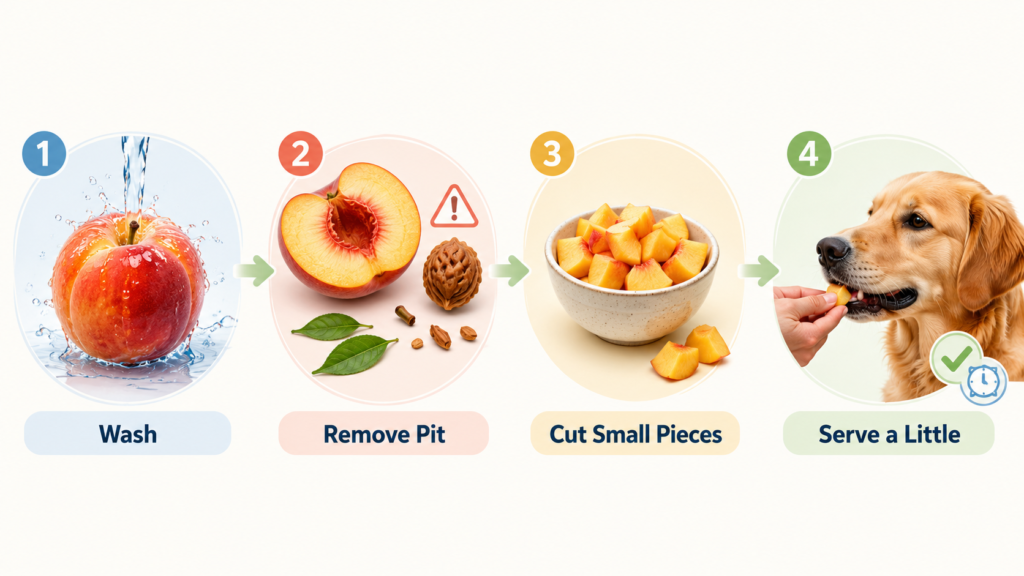
Four simple serving steps
- Wash the peach well to remove surface dirt and residues.
- Remove and securely discard the pit, stem, leaves and any seed fragments.
- Cut only the flesh into small, manageable pieces for your dog’s size.
- Offer a small amount first; stop if vomiting, diarrhea, gas or unusual discomfort develops.
Think “taste,” not a bowl of fruit
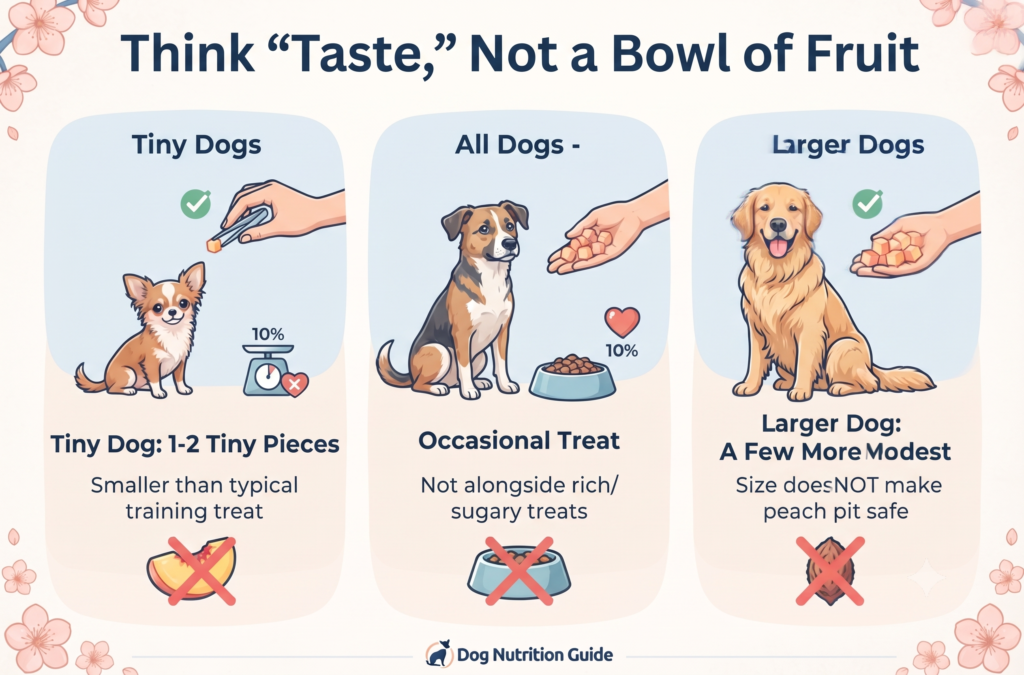
There is no single peach portion that fits every dog. Body size, calorie needs, usual diet, health history and the rest of the day’s treats all matter. As a practical starting point, use a few small pieces of peach flesh and keep all treats combined to roughly 10% or less of daily calories.
Start with 1–2 tiny pieces
Tiny dogs are more vulnerable to choking and digestive upset. Cut pieces smaller than a typical bite-sized training treat.
A few small cubes is plenty
Offer peach as an occasional topper or snack, not alongside other rich or sugary treats on the same day.
Keep portions modest
A larger dog can usually handle a few more small pieces, but a large size does not make a peach pit safe.
For dogs on a prescription diet, or dogs with diabetes, obesity, pancreatitis, recurring digestive issues or another medical condition, ask your veterinarian before adding fruit treats.
What if your dog swallowed a peach pit?
Do not try to make your dog vomit unless a veterinarian specifically tells you to do so. A pit may lodge in the throat or move into the digestive tract, where it can cause an obstruction. The risk depends on your dog’s size, the pit size, whether it was chewed, and when it was swallowed. Prompt professional guidance is the safest next step.
Call promptly and share the details
When contacting a veterinary clinic or poison-control service, be ready to explain what was eaten, approximately when it happened, whether the pit was chewed, your dog’s size and weight, and any symptoms you have noticed.
- Seek urgent help now for choking, breathing trouble, collapse, severe weakness or repeated vomiting.
- Do not give home remedies or attempt to neutralize the pit.
- Watch for abdominal pain, loss of appetite, straining, lethargy or changes in stool after ingestion.
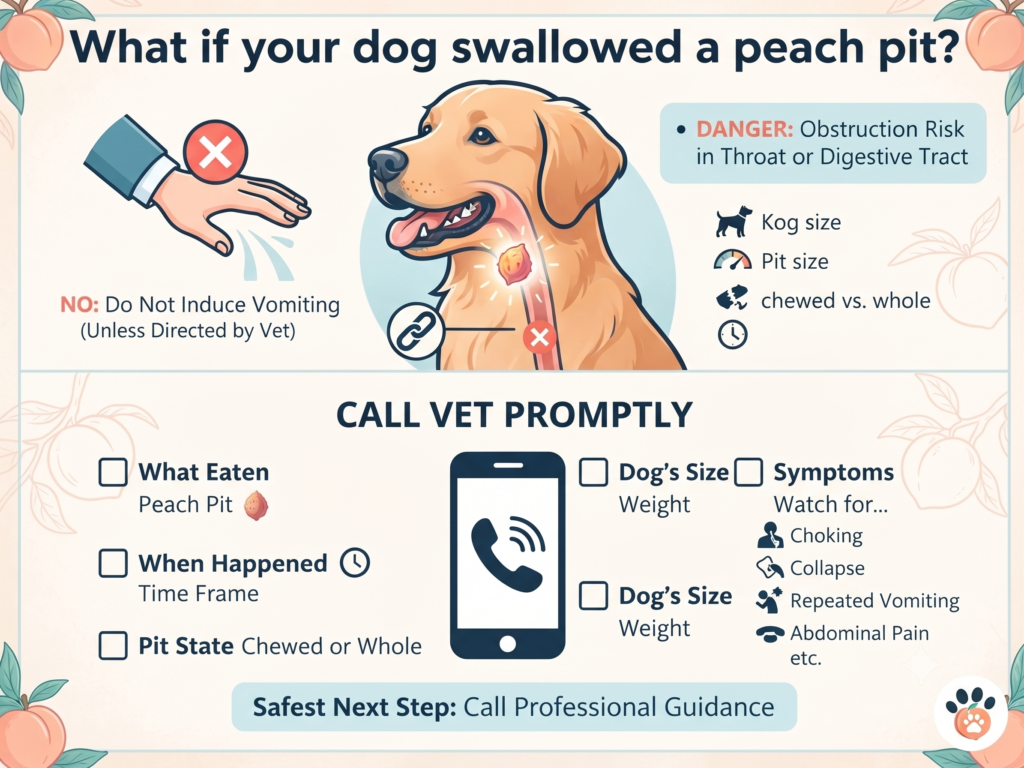
Signs that need veterinary attention
Potential warning signs after exposure to peach plant parts include trouble breathing, panting, weakness, shock, vomiting, abdominal discomfort or signs of blockage. Symptoms can have many causes, but a known pit ingestion should always be taken seriously.
If your dog is struggling to breathe, collapsing or choking, seek emergency veterinary care immediately.
Can dogs eat canned, frozen, dried or cooked peaches?
Read ingredient labels carefully. Processed peach products often add sugar, syrups, sweeteners or other ingredients that do not belong in a dog’s snack.
| Type | Can dogs have it? | What to check |
|---|---|---|
| Fresh peach flesh | Usually suitable in small amounts | Wash it; remove pit, stem, leaves and seed fragments; cut into small pieces. |
| Canned peaches | Best avoided | Often packed in syrup or juice with excess sugar. Never offer a product containing xylitol. |
| Frozen peaches | Sometimes, if plain | Thaw first, check for pits and added ingredients, then give only small pieces. |
| Dried or baked peaches | Generally not ideal | Dried fruit is concentrated in sugar and may be sticky or hard to portion. Avoid desserts and peach products with added sugar. |
Can puppies eat peaches?
A very small piece of properly prepared fresh peach may be tolerated by some puppies, but their digestive systems are more sensitive and their calorie needs are tightly tied to growth. Avoid introducing multiple new foods at once, keep pieces very small and ask your veterinarian if your puppy has digestive symptoms or is on a specific feeding plan.
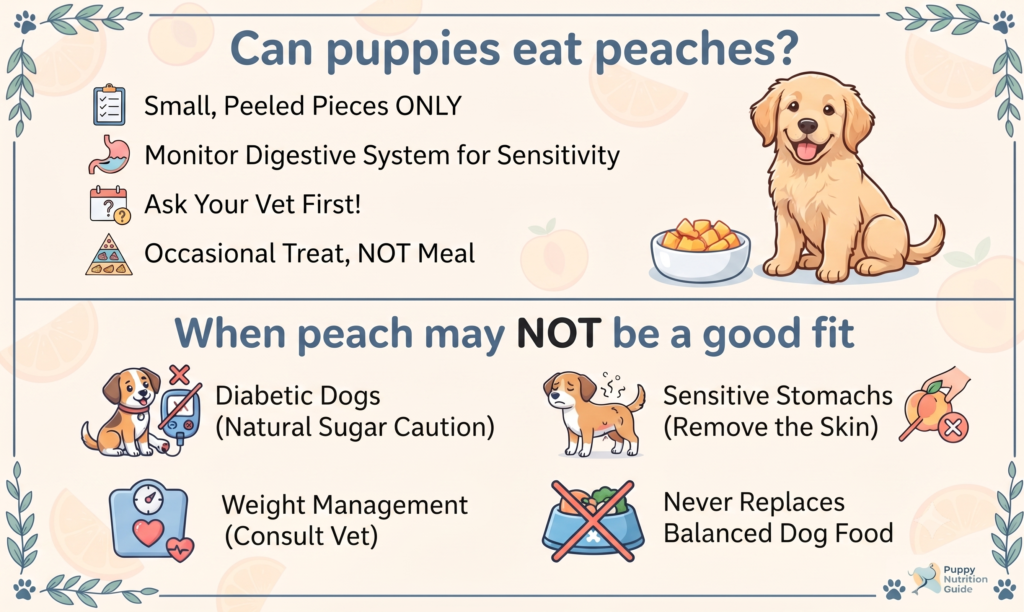
When peach may not be a good fit
Because peaches contain natural sugar, they may not suit dogs managing diabetes or weight loss without individualized veterinary advice. Dogs with sensitive stomachs may also do better without the skin. An occasional fruit treat should never replace a complete and balanced dog food.
Can dogs eat peaches? FAQ
Can dogs eat peach skin?
Many dogs can tolerate washed peach skin, but it can be harder to digest for a sensitive dog. If you are introducing peach for the first time, a small piece of peeled flesh is the gentlest option. Stop offering it if your dog develops digestive upset.
Are peach pits toxic to dogs?
Peach pits are dangerous for more than one reason. They can choke a dog or cause an intestinal blockage, and peach seeds and plant parts contain cyanogenic compounds. Treat a swallowed pit as a reason to contact a veterinary professional promptly.
What should I do if my dog ate a whole peach?
If the peach included a pit, stem or leaves, contact your veterinarian or a pet poison resource promptly. If your dog ate only a small amount of prepared flesh, monitor for mild digestive upset. A large amount of fruit can still cause diarrhea because of the sugar and fiber.
Can dogs eat nectarines instead of peaches?
Nectarines have similar considerations: the flesh may be offered in small pieces, but the pit and plant parts must be removed and secured. Use the same cautious serving approach and seek veterinary advice after pit ingestion.