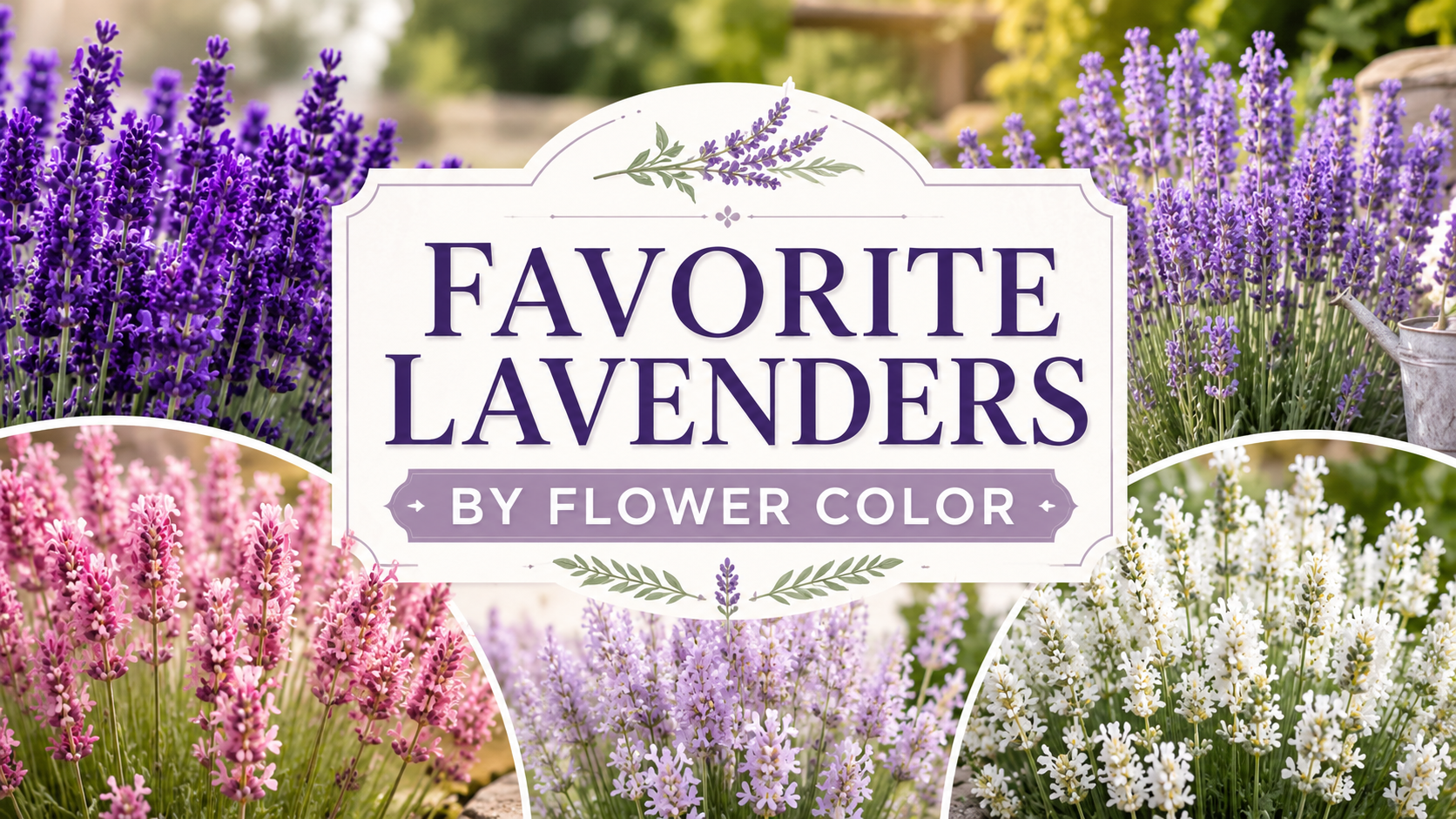

A colour-first guide to lavender cultivars for gardeners who want deep violet, blue-violet, pink or white flowers—without overlooking hardiness, mature size, drainage and climate.
Most lavender is some form of purple, violet or blue-violet, but named cultivars also offer pale lilac, pink and white flowers. Flower colour is primarily genetic; unlike hydrangeas, changing soil pH does not reliably change a lavender cultivar from one colour to another.
What colour are lavender flowers naturally?
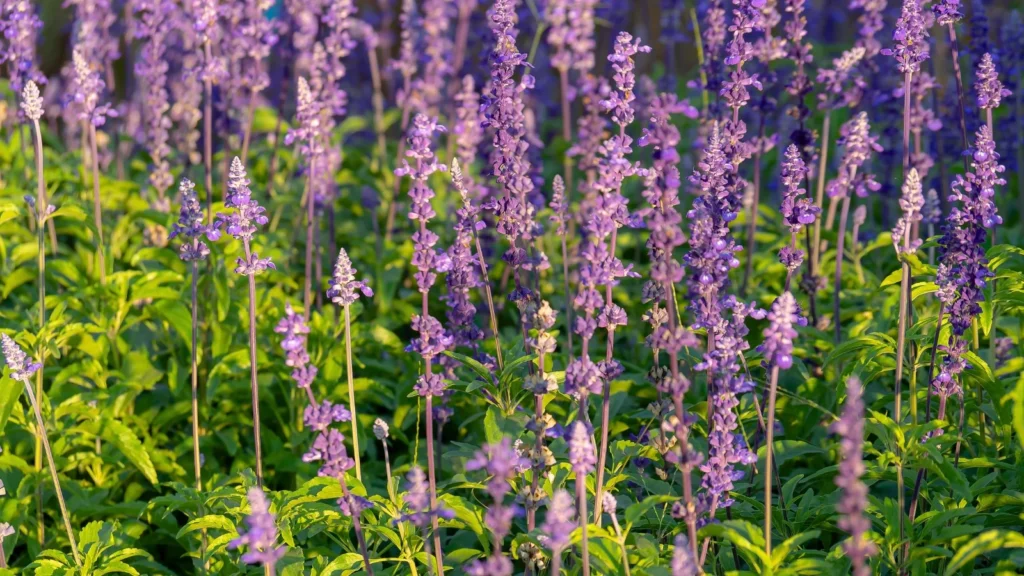
The familiar lavender colour sits between purple and blue-violet, but the genus includes a useful spectrum. English lavenders are often violet to soft purple; lavandins can read as pale lavender-blue at a distance; and selected English lavender cultivars may bloom pink or white.
With Spanish lavender, the small true flowers sit in a dense head while the showy top bracts create much of the colour effect. Nursery tags may describe those bracts as pink, purple or white, so look closely at whether a colour name refers to flowers, bracts or both.
- A cultivar is a named cultivated selection. It is more useful for predicting colour and mature size than a broad species name alone.
- Bright midday sun can make violet flowers appear bluer or paler; low-angle morning and evening light often makes purple tones look richer.
- Flower spikes commonly soften or fade as they age, especially in intense sun or prolonged heat.
- Dark flowers do not automatically mean a stronger fragrance, greater hardiness or a larger mature plant.
Five lavender choices, organised by visible flower colour
These are common horticultural descriptions, not guarantees of an identical shade in every garden. Check the full botanical name, cultivar label, local hardiness guidance and stated mature dimensions before buying.
| Lavender | Visible colour | Type | Mature habit | Best use |
|---|---|---|---|---|
| ‘Hidcote’ | Deep violet-purple | English lavender | Compact, rounded | Edging, beds, containers |
| ‘Munstead’ | Classic lavender-purple | English lavender | Compact mound | Paths and small gardens |
| ‘Grosso’ | Pale blue-violet | Lavandin | Broad, vigorous | Hedges and cutting |
| ‘Rosea’ | Soft pink | English lavender | Neat mound | Pastel borders, pots |
| ‘Nana Alba’ | White | English lavender | Compact mound | White gardens, contrast |
Mature sizes vary with cultivar, climate and pruning. A named cultivar may also be sold under slightly different descriptions by regional nurseries, so treat a plant label and a reputable local nursery as the final check.
Lavender varieties by flower colour
Botanical names are included because common names such as English, French and Spanish lavender are used inconsistently across regions. Availability also varies: pink and white forms can be more difficult to find than purple cultivars.
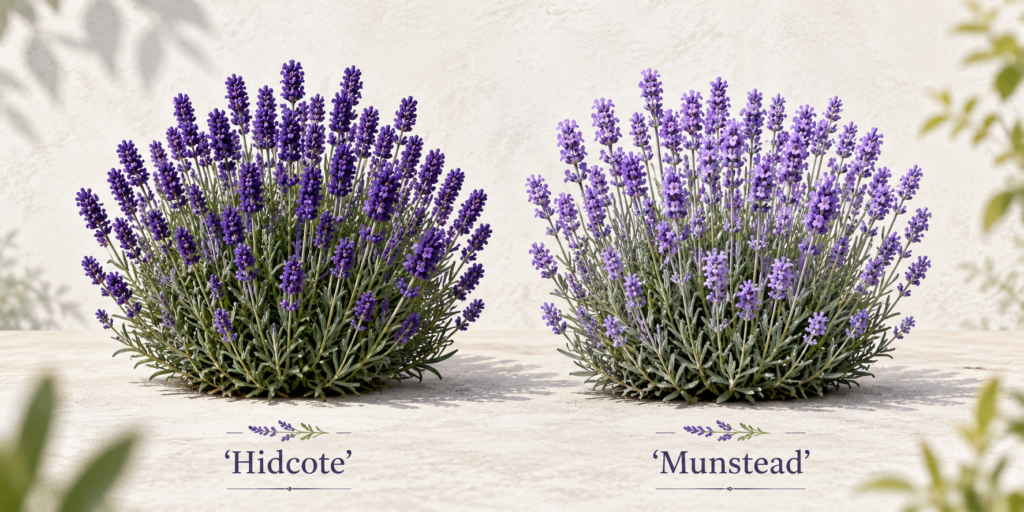
Deep violet · Lavandula angustifolia ‘Hidcote’
‘Hidcote’ is widely chosen for its comparatively deep violet-purple flower spikes and compact shape. It suits low edging, sunny borders and roomy containers where sharply drained growing media can be maintained. Its colour is strongest when blooms are fresh and can soften as spikes mature.
Flower colour
Deep violet-purple true flowers
Typical size
Often about 12–20 in / 30–50 cm tall
Classic lavender-purple · Lavandula angustifolia ‘Munstead’
For a traditional English lavender look, ‘Munstead’ offers violet to lavender-purple spikes above a compact mound. It is useful near paths, in cottage-style borders and in containers with generous drainage.
Best use
Small hedges, edging and pollinator planting
Climate note
Usually more cold-hardy than Spanish lavender
Blue-violet · Lavandula × intermedia ‘Grosso’
Often called a lavandin, ‘Grosso’ makes a larger, broader plant with long flower stems. Its flowers are frequently described as blue-violet or pale lavender-purple rather than truly sky blue. It is a strong choice for mass planting and dried bouquets where conditions are dry and sunny.
Typical habit
Larger and more vigorous than many English lavenders
Best use
Hedges, broad borders and cutting gardens
Pink · Lavandula angustifolia ‘Rosea’
Pink English lavender is a softer alternative for pale rose borders, white gardens and restrained container schemes. ‘Rosea’ is generally described as pink to blush-pink; inspect plants in person when colour matching is important.
Flower effect
Soft pink spikes; fading can be subtle
Best use
Pastel planting and containers
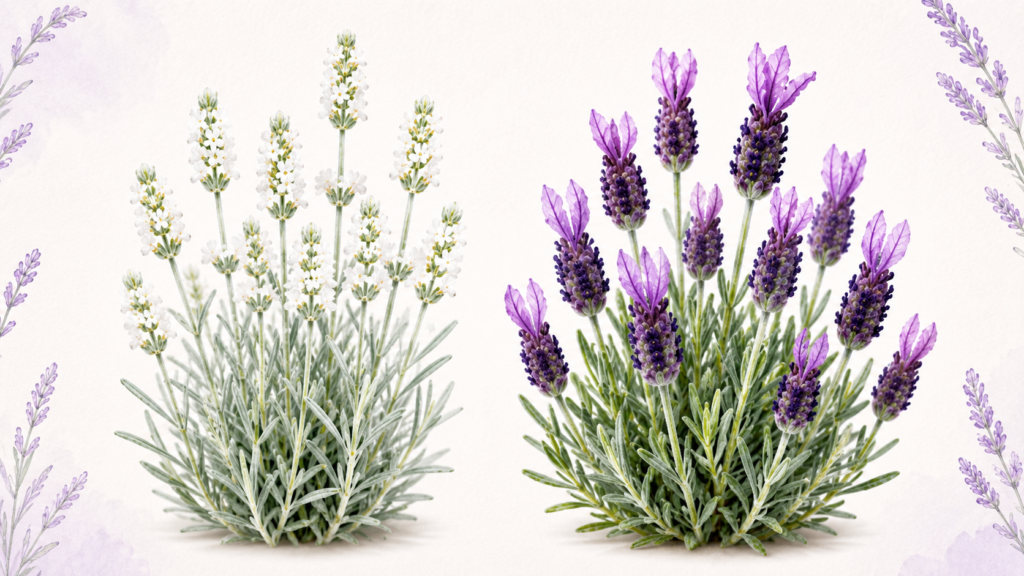
White · Lavandula angustifolia ‘Nana Alba’
White lavender offers a crisp contrast against silver foliage, dark purple cultivars and pale paving. ‘Nana Alba’ is commonly grown for a tidy, compact habit, although flowering and final size still depend on local conditions and pruning.
Flower colour
White to creamy white flower spikes
Best use
Moon gardens and dark-purple contrast
Purple bracts · Lavandula stoechas selections
Spanish lavender is especially decorative because each flower head is topped with prominent bracts, sometimes called flags. Choose it for a warm-climate pot or border where its silhouette can be seen up close, but do not assume it has the same winter hardiness as English lavender.
What you see
Small flowers plus showy contrasting bracts
Growing limitation
Often tender in cold, wet winter climates
How to combine lavender colours without a mismatched planting
Colour is most effective when plant shape and growing needs agree. Repeat one dominant lavender shade through a border, then add one quieter companion shade. Group plants with similar sun, drainage and watering preferences rather than mixing by colour alone.
DEEP & SILVERY
Pair deep violet lavender with silver artemisia, lamb’s ears and pale gravel for a crisp Mediterranean-style border.
SOFT PASTELS
Use pink or pale lilac lavender with blush roses, white flowers and grey-green foliage for a gentle cottage-garden palette.
WHITE CONTRAST
Repeat white lavender between darker purple forms to create rhythm along a sunny path or formal border.
For containers, choose compact cultivars and avoid crowding. A large pot, free-draining mix and open drainage holes matter more to lavender performance than the colour combination alone.
Keep colour clear with the right growing conditions
Lavender generally needs full sun and excellent soil drainage. Heavy, damp soil and humid conditions can shorten plant life, particularly through winter. Plant performance is shaped by species, cultivar, rainfall, winter cold, air movement and soil texture—not flower colour.
A simple lavender care routine
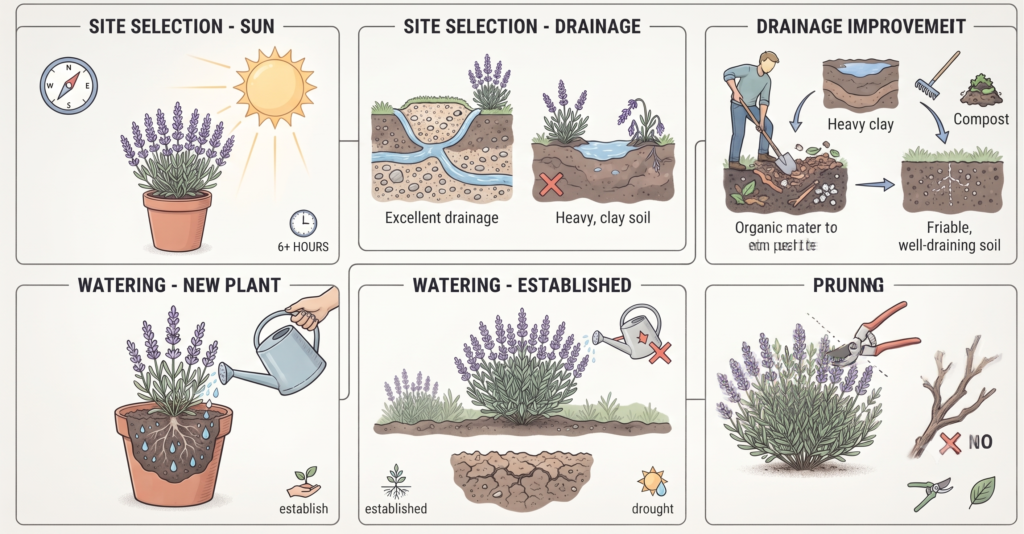
- Choose a site with at least six hours of direct sun and avoid low areas where water sits after rain.
- Improve drainage before planting if needed; gravelly or raised planting can help in heavier ground.
- Water newly planted lavender while roots establish, then avoid keeping established plants constantly wet.
- After flowering, trim lightly into leafy growth rather than cutting hard into old bare wood.
Hardiness ratings are useful but not absolute. A cultivar that survives a dry cold winter may struggle in a milder region with persistent wet soil. Ask a local nursery or extension service which lavender types reliably overwinter in your area.
Lavender colour FAQs
Are there true blue lavender varieties?
Most plants described as blue lavender are blue-violet or violet-purple rather than a clear sky blue. The effect can look bluer in certain light, against cool-toned foliage or in edited photographs.
Does soil pH change lavender flower colour?
Not in the predictable way commonly associated with hydrangeas. Lavender flower colour is mainly tied to cultivar genetics, while healthy growth still depends on suitable soil structure, drainage and nutrition.
Which lavender colours attract the most pollinators?
Flower colour alone is not a reliable measure of pollinator value. Bloom abundance, accessible flower form, local pollinator species and the surrounding planting all matter. Include a range of flowering plants where possible.
Can I plant different lavender colours together?
Yes. Combine them when their climate tolerance, mature size and drainage needs are compatible. A pink English lavender and a white English lavender are often easier to coordinate than mixing a cold-hardy English type with a winter-tender Spanish lavender in the same exposed bed.