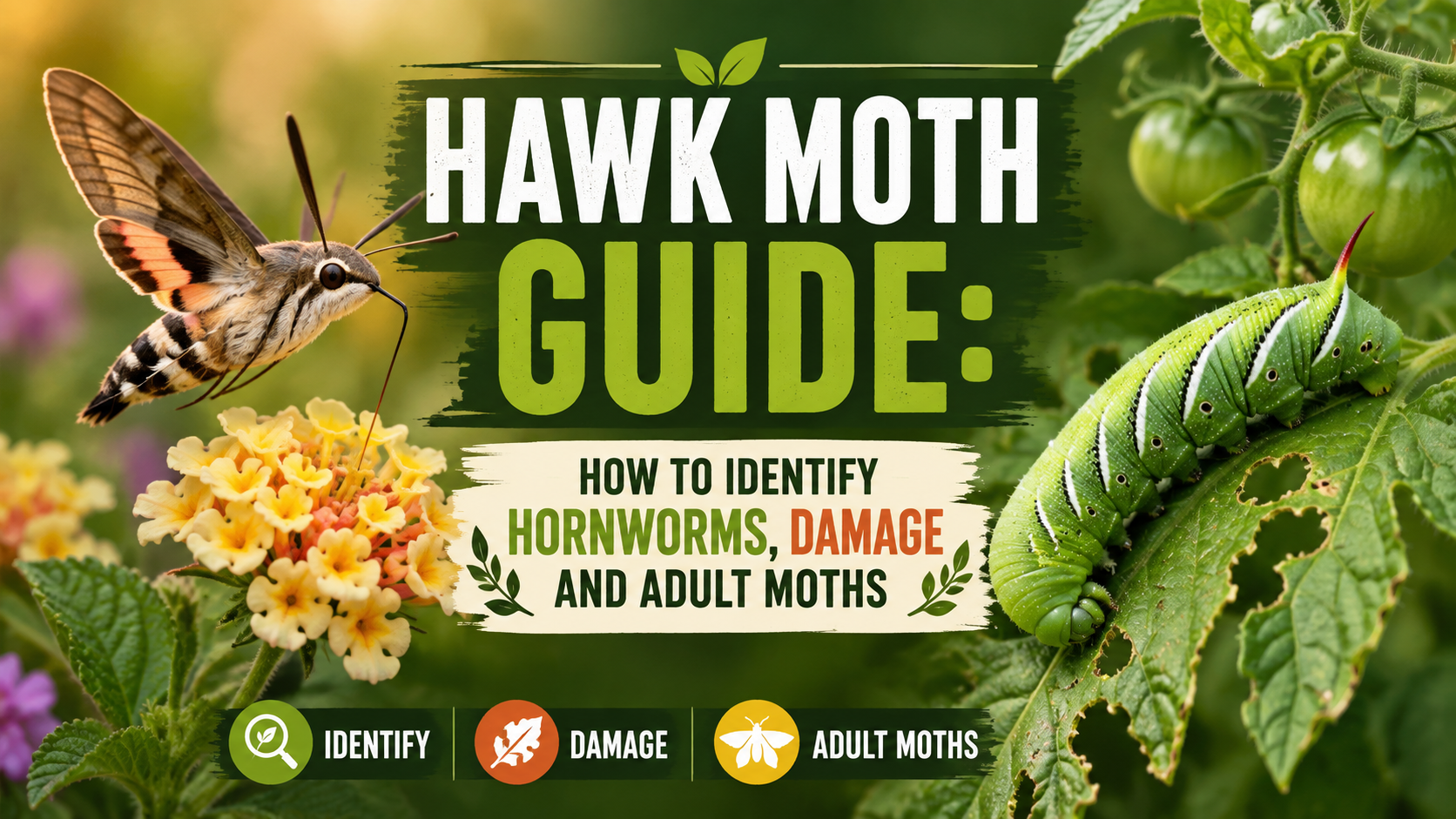

A large green hornworm and a fast-hovering hawk moth are often two stages of the same insect. Learn what to look for, when garden damage needs action, and when to leave wildlife alone.
Hawk moths, also called sphinx moths, belong to the family Sphingidae. Hornworms are the caterpillar stage of many species. Adults are harmless to people and can pollinate flowers, while a few larvae—especially tomato and tobacco hornworms—can eat enough foliage to matter in a vegetable garden.
What is a hawk moth?
Hawk moth is a common name for moths in the family Sphingidae. In North America they are often called sphinx moths; some hovering species are also called hummingbird moths. Names vary by region, so a photo, location, host plant and life stage are more reliable than a common name alone.
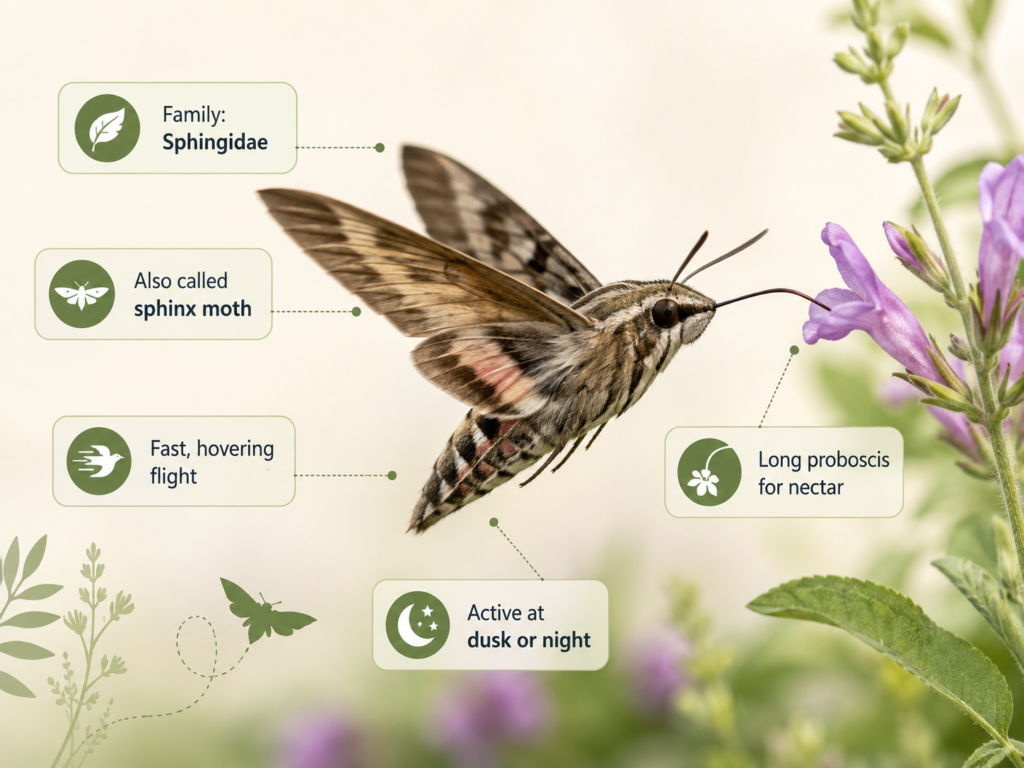
Most adults have a streamlined body, strong wings and unusually fast flight. At dusk they may pause in mid-air at tubular flowers, extending a long proboscis—the straw-like feeding tube used to sip nectar. Their hovering can resemble a small hummingbird, but they are moths.
- A sturdy, tapered body with wings held out or swept back at rest.
- Rapid, direct flight and the ability to hover steadily at blooms.
- A long proboscis used for nectar rather than a biting mouthpart.
- Frequent activity around dusk, at night, or in warm daylight depending on species.
A hawk moth cannot sting with its caterpillar horn, and adult moths do not bite people. If one is visiting flowers, observe it at a respectful distance and avoid handling it; this protects its delicate wings as well as your garden’s pollinators.
How to spot hornworms and their damage
Hornworm is a practical name for the larva, or caterpillar, of many sphinx moths. The rear projection looks dramatic, but it is not a stinger. Mature hornworms are large, well-camouflaged and easy to miss until you notice stripped leaves, clipped stems or dark pellet-like droppings beneath a plant.
Look for more than one clue
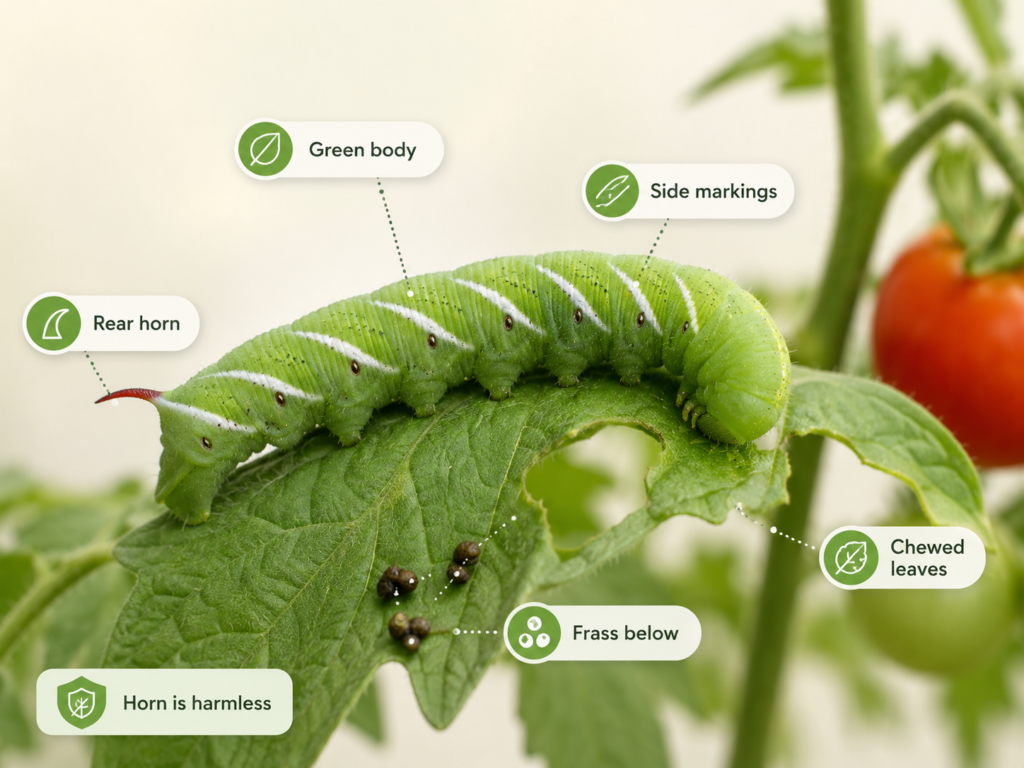
- A thick green body, often with pale diagonal or V-shaped side markings.
- A flexible horn-like projection near the rear end of the body.
- Fresh, dark frass—caterpillar droppings—on leaves or soil below feeding sites.
- Chewed foliage on tomatoes, peppers, eggplants, potatoes or related plants.
Not every green caterpillar on a tomato is a tomato hornworm, and not every hornworm feeds on crops. Confirming the host plant and side markings is especially useful. On a small vegetable plant, even one large larva can remove a surprising amount of foliage over several days.
The horn is a harmless feature of the caterpillar stage—not a weapon and not a stinger.
For an outdoor inspection, start with the newest damaged leaves and work downward. A UV flashlight can make some hornworms easier to locate after dark, but hand inspection in daylight is often enough when you follow the frass.
From egg to hornworm to moth
Hawk moths undergo complete metamorphosis: their egg, larva, pupa and adult stages look and behave very differently. Timing varies with species, temperature, season and region, so treat the sequence below as a guide rather than a universal calendar.
1 / Egg
Adults lay individual eggs on or near a suitable host plant.
2 / Larva
The hornworm eats, sheds its skin through several instars, and grows quickly.
3 / Pupa
Many species pupate in soil, leaf litter or another sheltered place.
4 / Adult
The adult emerges to feed, mate and begin another generation.
Pupae are often found when soil is cultivated or when a container plant is emptied. Unless you are certain the pupa came from a crop-damaging species in your growing area, consider leaving it undisturbed or moving it gently to nearby loose soil rather than assuming it is a pest.
Tomato hornworm vs. tobacco hornworm
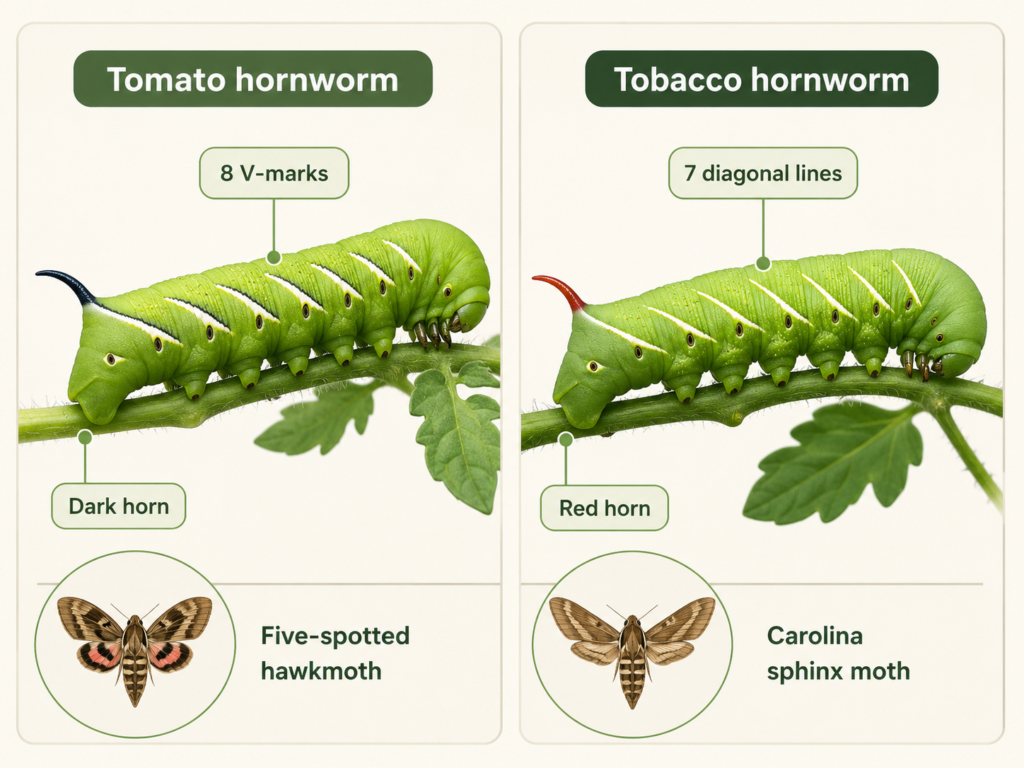
In North American vegetable gardens, the two species most often discussed are the tomato hornworm, Manduca quinquemaculata, and tobacco hornworm, Manduca sexta. Both may feed on tomato-family plants, so use several visible clues instead of relying only on the plant.
| Feature | Tomato hornworm | Tobacco hornworm |
|---|---|---|
| Scientific name | Manduca quinquemaculata | Manduca sexta |
| Side markings | Usually eight pale V-shaped marks along each side. | Usually seven pale diagonal lines along each side. |
| Rear horn | Often dark blue-black. | Often red or reddish. |
| Adult moth | Five-spotted hawkmoth. | Carolina sphinx moth. |
Markings can look less distinct in younger larvae or poor light. Regional species also differ, so a local extension service, museum database or naturalist group can help confirm a photograph when identification affects a management decision.
Manage hornworms without treating every moth as a pest
The best response depends on the plant, the number of larvae and your goals. A single hornworm on an established ornamental may be acceptable wildlife. Several large larvae defoliating young tomatoes, peppers or eggplants can justify action.
A low-impact management order
- Inspect plants regularly and hand-pick confirmed crop feeders into a container of soapy water if removal is needed.
- Check leaves and stems before spraying; physical removal is often sufficient in a home garden.
- Encourage beneficial insects with diverse flowering plants and avoid broad-spectrum insecticides where possible.
- If a product is necessary, choose one labelled for the target crop and pest, follow local guidance and read the label exactly.
Adult moths do not chew vegetable leaves. Protecting nectar plants and reducing unnecessary pesticide use can support pollinating adults while you still manage larvae that are actively damaging food crops.
What do white cocoons on a hornworm mean?
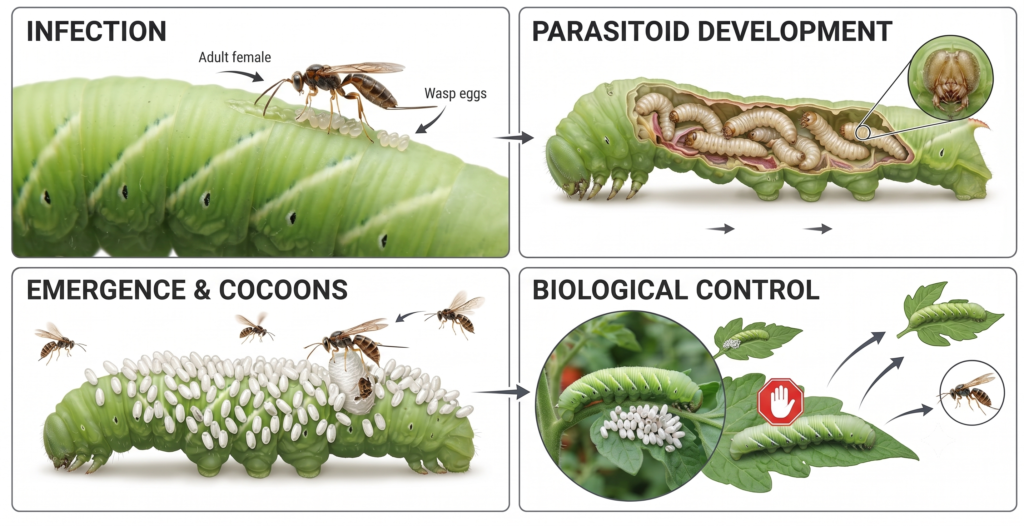
White rice-grain-like structures attached to a hornworm are often cocoons of parasitoid braconid wasps, not the caterpillar’s eggs. A parasitoid develops by using another insect as its host; in this case, the hornworm will not complete its normal development.
If biological control is welcome in your garden, leave a parasitized hornworm where it is and avoid spraying it. The adult wasps that emerge can help find future caterpillars. This is one reason to pause before removing every unusual insect from a plant.
Hawk moth and hornworm FAQs
Are hawk moths dangerous to people or pets?
Hawk moths and hornworms are not equipped to sting people. The caterpillar’s horn is not a stinger. As with any wildlife, avoid unnecessary handling and wash hands after gardening, particularly before eating.
Do hornworms become hawk moths?
Yes. Hornworm is the larval stage of many hawk moths. After feeding and pupating, the caterpillar transforms into an adult moth. The exact adult species depends on the hornworm species.
Which flowers attract adult hawk moths?
Many species visit fragrant, nectar-rich flowers, especially pale or tubular blooms that open in late afternoon or evening. Suitable plants vary by region, so native-plant societies and local pollinator guides are useful for selecting garden species.
Should I relocate a hornworm instead of killing it?
Relocation works only if you can place the caterpillar on a suitable host plant in the same local area. Moving it to an unrelated plant usually leaves it without food. When a crop needs protection, hand removal is often the most direct option.