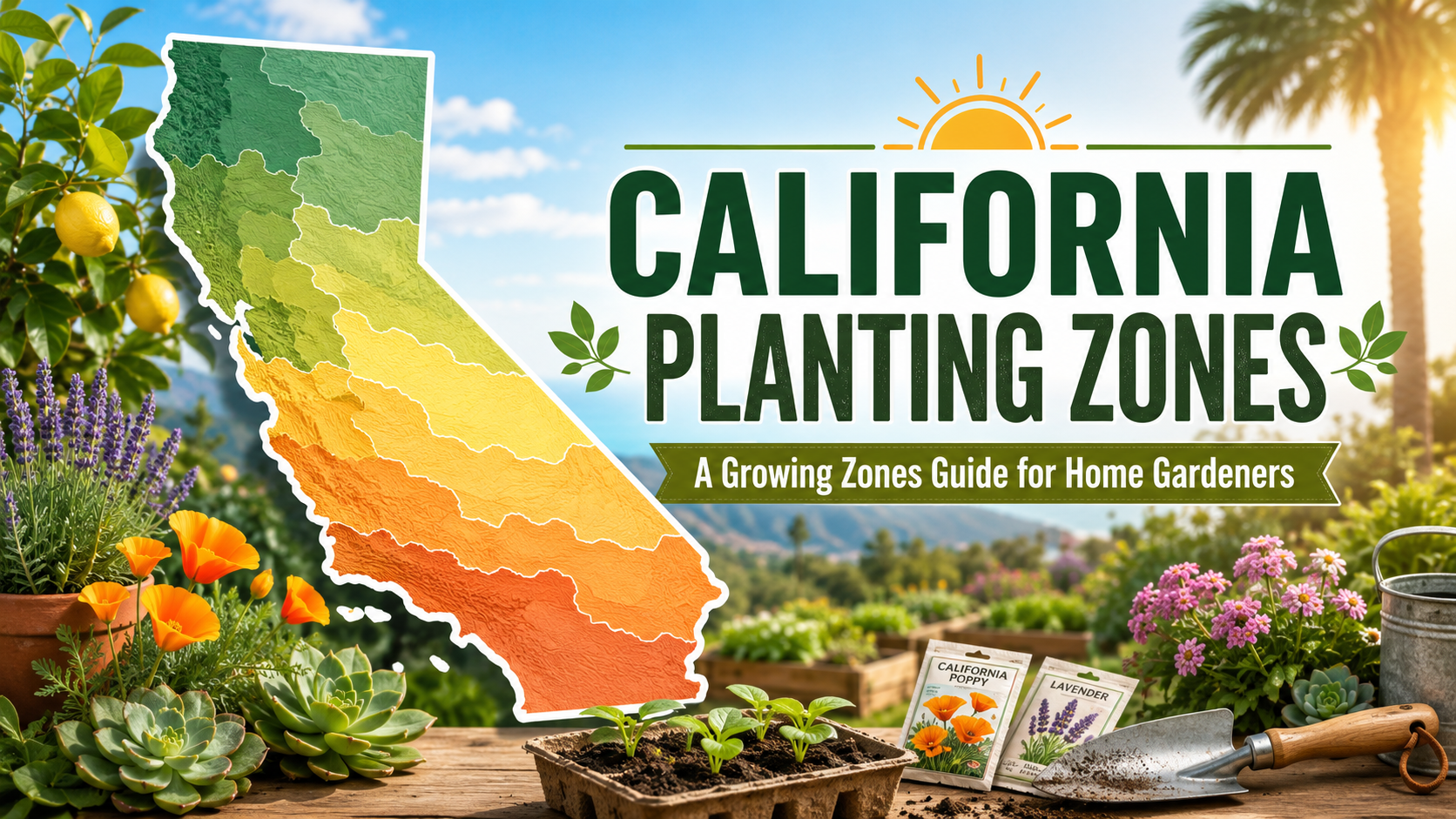

Wondering “what growing zone am I in?” Learn how California planting zones work, where the USDA map helps, and why your own backyard still tells the final story.
USDA planting zones describe the average annual extreme minimum winter temperature in a place. They help you judge whether a perennial, shrub, or fruit tree can usually survive winter—not whether it will automatically thrive through California heat, drought, wind, or poor drainage.
What gardening zone am I in—and why does it matter?
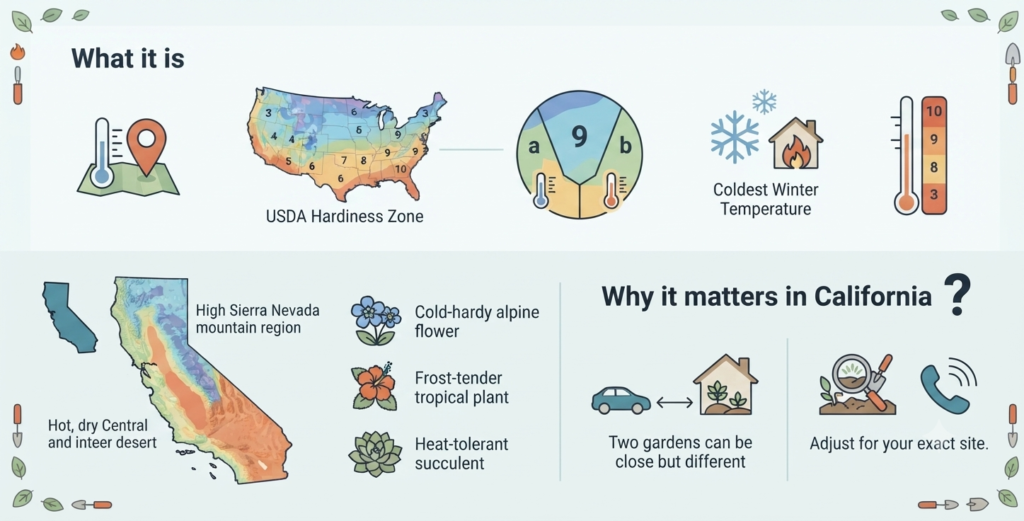
For most gardeners, “planting zones,” “growing zones,” and “gardening zones” mean USDA Plant Hardiness Zones. The current official USDA map groups locations by their typical coldest winter temperature. A higher number generally means a warmer winter; the letters a and b divide each zone into smaller temperature bands.
California spans a remarkable range of zones, from chilly mountain locations to frost-light coastal neighborhoods and hot interior valleys. That is why two gardens a short drive apart can need different plants and different planting dates. Use the zone as a first filter, then adjust for your exact site.
Find your California planting zone in four practical steps
- 1Enter your ZIP code or address on the official USDA Plant Hardiness Zone Map.
- 2Read the full zone, including the “a” or “b” subdivision when it is shown.
- 3Compare the plant label’s hardiness range with your zone—especially for perennials and woody plants.
- 4Confirm frost timing, summer heat, and irrigation needs with a local nursery, UC Cooperative Extension office, or UC Master Gardener Program.
California growing zones: city examples
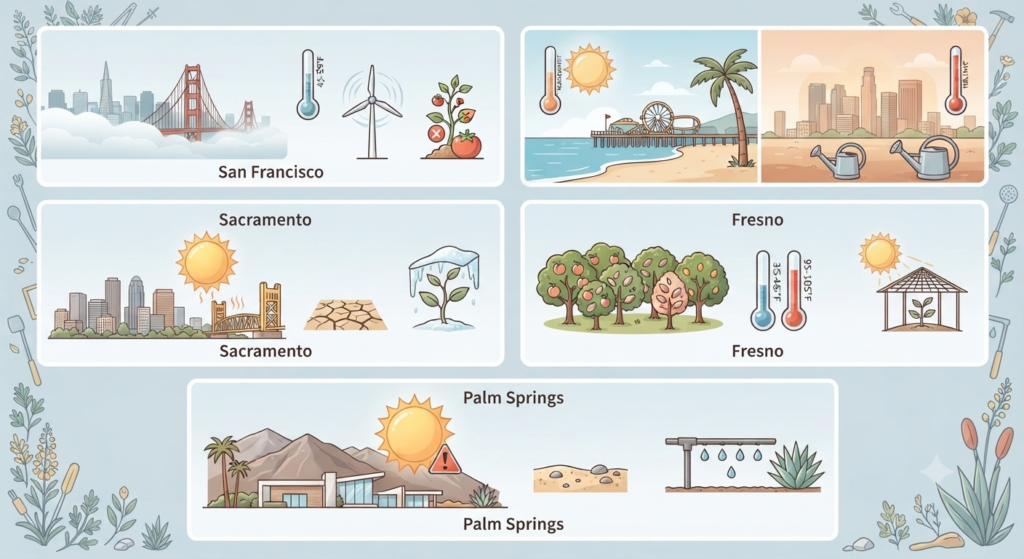
These examples are broad, approximate guides rather than guarantees. Always check your address on the USDA map; a hillside, cold-air pocket, or bay-facing neighborhood can differ from the citywide result.
| Location | Approx. USDA zone | Local growing note |
|---|---|---|
| San Francisco | 10a–10b | Cool summers, fog, and wind can limit heat-loving crops despite mild winters. |
| Los Angeles | 10a–11a | Coastal and inland neighborhoods can have very different heat and watering needs. |
| Sacramento | 9b | Hot, dry summers and periodic winter frost strongly shape the vegetable calendar. |
| Fresno | 9a–9b | Interior heat and winter chill support many fruit trees; summer protection matters. |
| Palm Springs | 10a–10b | Very hot, dry summers mean shade, irrigation, and heat tolerance are essential. |
Zone boundaries and map releases can change over time. Verify before purchasing a long-lived plant.
Use your region—not just your number
A USDA zone is only one weather clue. California gardeners make better choices by pairing it with their regional pattern and backyard microclimate.
Coastal California
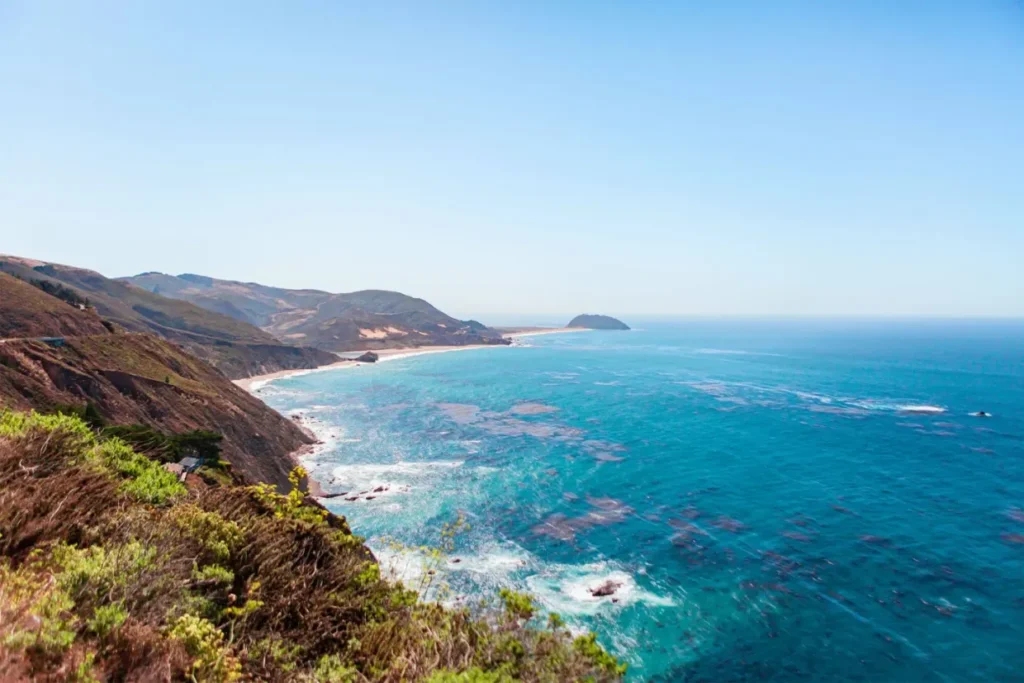
Mild winters can make tender perennials possible, but summer fog, salt air, wind, and low heat can slow tomatoes, peppers, and melons.
Valley & inland gardens
Warm summers favor many vegetables, but cold snaps, dry air, and intense afternoon sun influence what you plant and when.
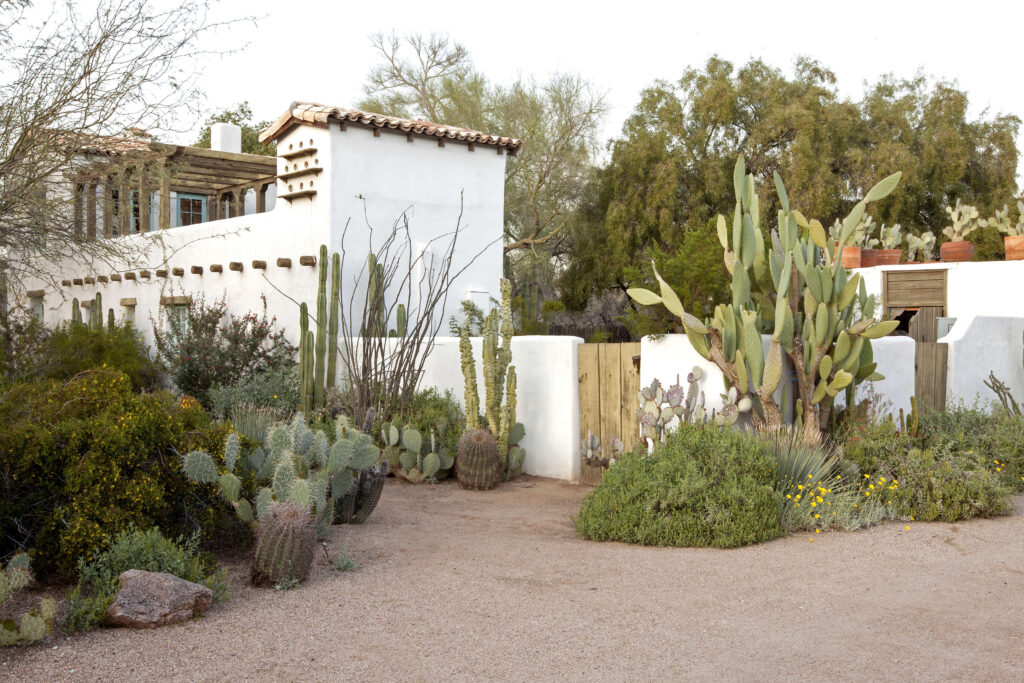
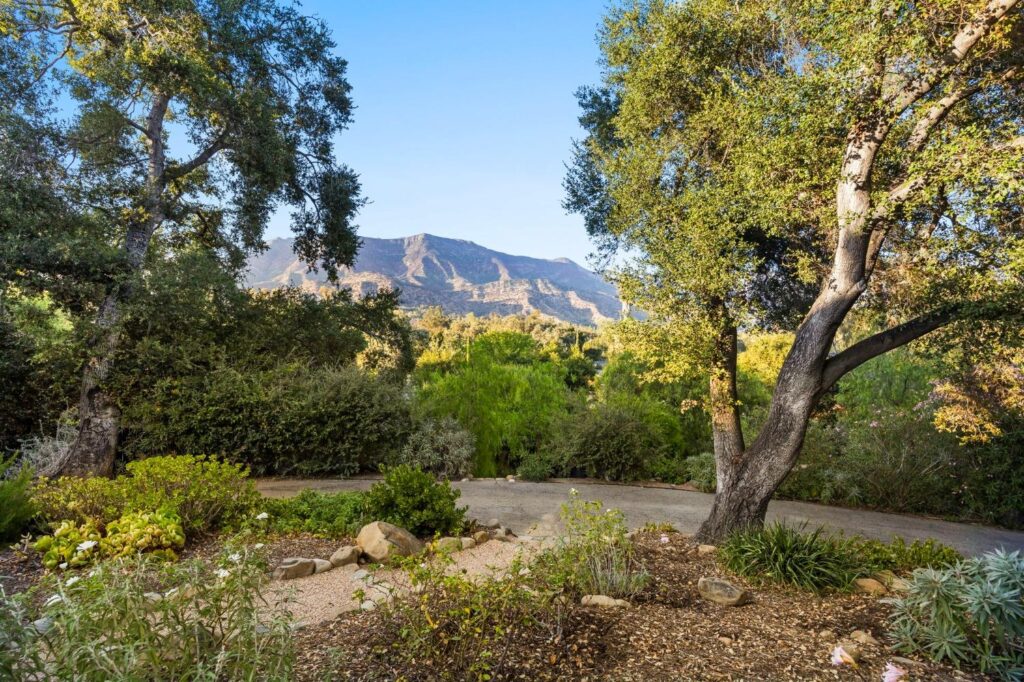
Desert gardens
Winter cold may be modest, yet high heat, low humidity, alkaline soils, and water demand can be the real limiting factors.
Foothill & mountain gardens
Elevation can bring colder winters, shorter growing seasons, late frosts, snow, and sharp day-to-night temperature swings.
USDA zone, frost date, and planting calendar are not the same thing
A hardiness zone helps with winter survival. It does not tell you the first and last frost date, the best sowing date for beans, how much summer heat a crop receives, or how much water a plant needs. For California, Sunset Climate Zones and county-level guidance can add helpful detail.
USDA zone
Average annual extreme minimum winter temperature. Best for assessing cold hardiness.
Frost dates
Typical timing of freezing temperatures. Crucial for tender annuals and vegetable planting.
Planting calendar
A local schedule built around soil warmth, daylight, rainfall, heat, and pest pressure.
A smarter way to choose plants
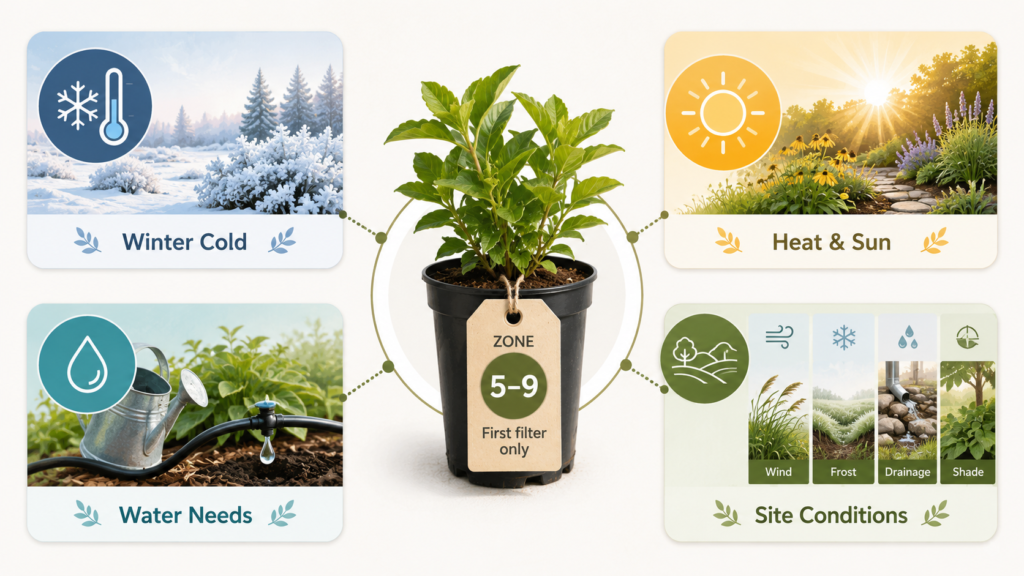
Think of a plant tag’s zone range as a winter-survival screen, not a promise. After checking the range, use these questions to narrow your choices.
- Does this plant tolerate your coldest likely winter temperature?
- Can it handle your summer heat, reflected heat, and hours of direct sun?
- Does its water requirement match your irrigation plan and local water rules?
- What does your site do differently: trap frost, collect wind, drain slowly, or stay shaded?
California planting zones: frequently asked questions
What planting zone is California?
California does not have one planting zone. It includes a broad range of USDA zones because elevation, distance from the ocean, valleys, deserts, and mountain terrain strongly affect winter temperatures.
Can I plant anything rated for my zone?
Not necessarily. The rating means the plant is expected to tolerate winter cold in that zone. It may still struggle with summer heat, insufficient chill hours, soil conditions, drought, pests, or exposure.
Where can I get local California gardening advice?
Start with your county’s University of California Cooperative Extension or UC Master Gardener Program. Local independent nurseries can also help you interpret microclimates and seasonal planting windows.