
How to grow vibrant fuchsias in baskets, pots, and shady garden spaces — plus a simple guide to fuchsia color.
Fuchsias are loved for their dangling, bell-like flowers and the dramatic pink, purple, red, and white combinations often associated with fuchsia color. They can make a shaded porch, balcony, or garden corner feel instantly more alive.
The most reliable care routine is not a rigid calendar: check soil moisture, watch the weather, and read your plant label. Species, cultivar, container size, and local climate all affect how quickly a fuchsia dries out or tolerates sun and cold.
What Is a Fuchsia Plant?
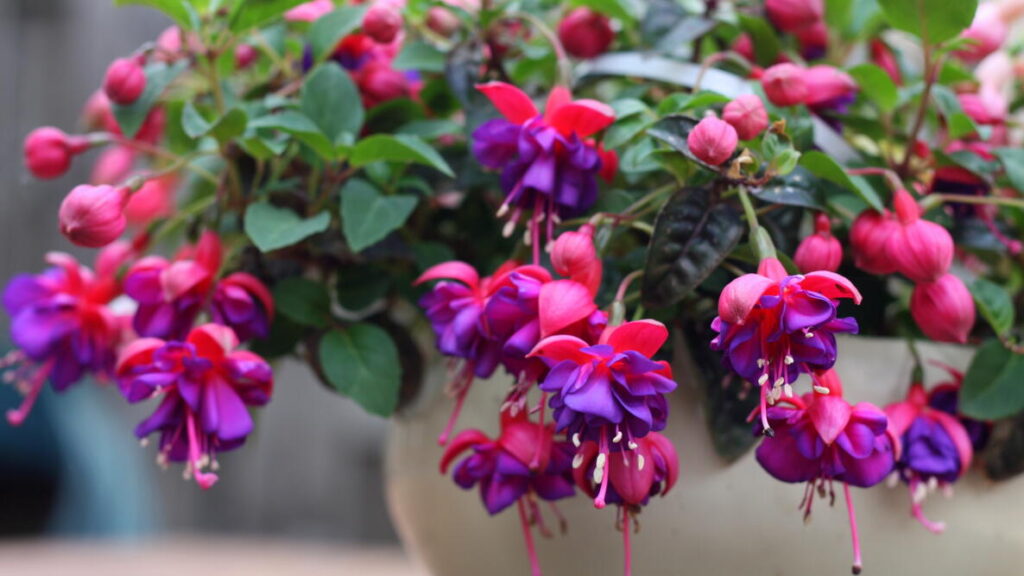
Fuchsia is a genus of flowering plants in the evening primrose family. Many garden varieties are grown for their pendant flowers, which usually have a contrasting outer tube and inner petals. Trailing types suit hanging baskets, while upright varieties can be grown in pots, borders, or trained as small standards.
Most commonly sold patio fuchsias are tender to frost, while selected hardy fuchsias can survive winter outdoors in suitable temperate climates. Check the label rather than assuming every fuchsia will return each year.
What Does Fuchsia Color Look Like?
Fuchsia color usually describes an intense pink-purple or magenta shade. Actual fuchsia flowers are much more varied: you can find red and white, lavender, pale pink, near-purple, and richly bicolored blooms. If you searched for “fuscia,” you are looking for the same plant and color; fuchsia is the standard spelling.
| Color family | How it reads | Common flower pairing |
|---|---|---|
| Classic fuchsia | Vivid pink with a purple-magenta cast | Pink sepals with purple petals |
| Soft fuchsia | Rose pink or lavender-pink | Pale pink and white bicolors |
| Deep jewel tones | Wine red, plum, or dark violet | Red tubes with dark purple skirts |
Fuchsia Care at a Glance
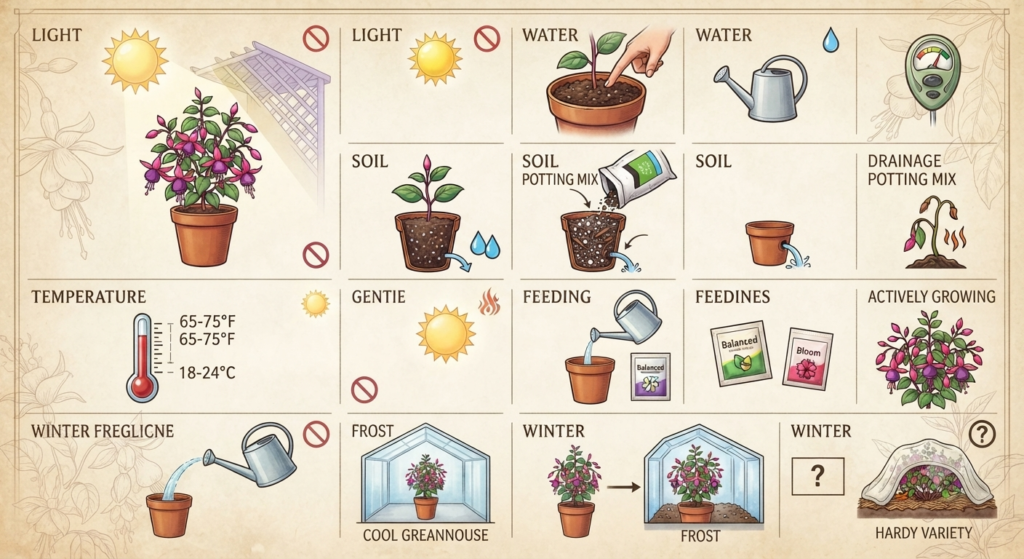
| Care area | Beginner-friendly guidance |
|---|---|
| Light | Bright light with shelter from intense afternoon sun. |
| Water | Keep evenly moist; water when the surface begins to feel dry. |
| Soil | Moisture-retentive but free-draining quality potting mix. |
| Temperature | Flowers best in mild weather; heat can slow blooming. |
| Feeding | Use a diluted balanced or bloom fertilizer during active growth. |
| Winter | Treat tender and hardy varieties differently; check the label. |
Growing Care: Light, Water, Soil, and Flowers
Light and temperature
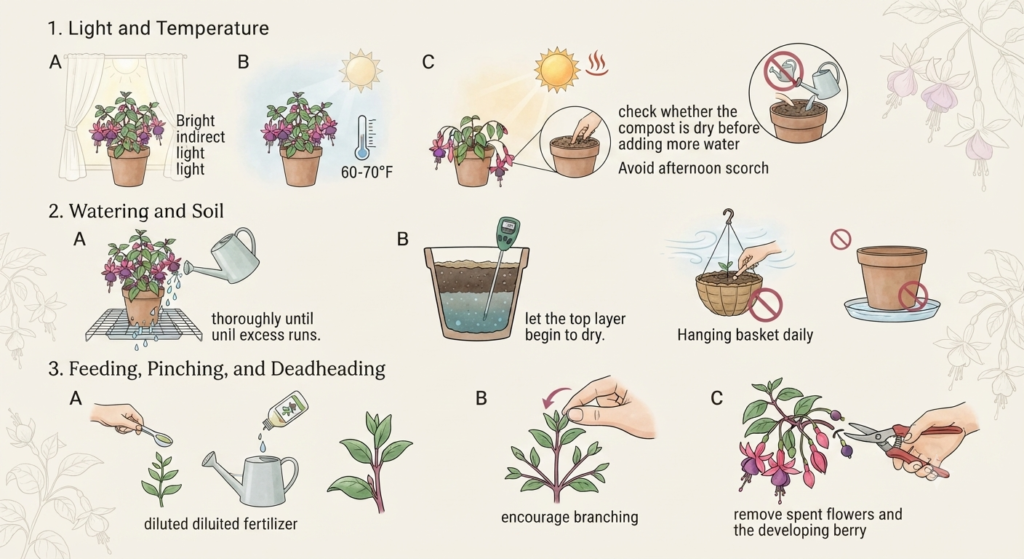
Fuchsias usually enjoy bright indirect light, gentle morning sun, or dappled shade. In cooler climates they may take more sun, but hot afternoon exposure can scorch leaves and reduce flowers. A temporary afternoon wilt can happen in heat; check whether the compost is dry before adding more water.
Watering and soil
Water thoroughly until excess runs from drainage holes, then let the top layer of mix begin to dry before watering again. Do not leave the pot standing in water. Hanging baskets can dry very quickly in warm or windy weather, so check them daily rather than watering on a fixed schedule.
Feeding, pinching, and deadheading
Feed lightly and regularly while the plant is actively growing, following the product label. Pinch the tips of young shoots early in the season to encourage branching. Remove spent flowers and the developing berry behind them to keep the plant tidy and direct energy toward fresh blooms.
Extra Care for Fuchsia Hanging Baskets
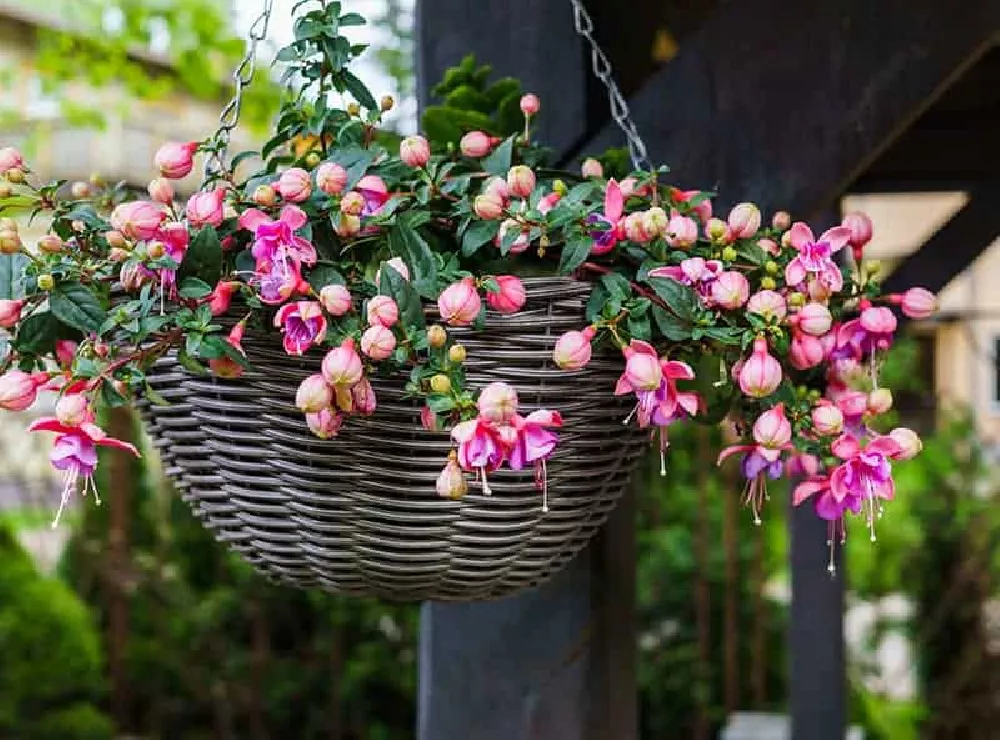
A basket gives trailing fuchsias room to shine, but it also exposes roots to more wind and heat. Use a basket with drainage, place it where it gets morning light and afternoon protection, and rotate it weekly for even growth. If the mix dries out so much that water rushes through, soak the basket briefly and allow it to drain fully.
Can Fuchsias Survive Winter?
Hardy garden fuchsias
Hardy types may die back in winter and regrow from the base in spring. In cold regions, protect the root area with mulch after frost and avoid cutting stems back too early. Hardiness varies widely, so use a local plant label or extension advice to judge whether outdoor wintering is realistic.
Tender container fuchsias
Bring tender plants under cover before frost. You can keep them growing in a bright, cool room or let them rest in a frost-free, dim space. Water sparingly during dormancy so roots do not become bone dry or waterlogged, then prune and restart regular watering in spring.
Common Fuchsia Problems and Practical Fixes
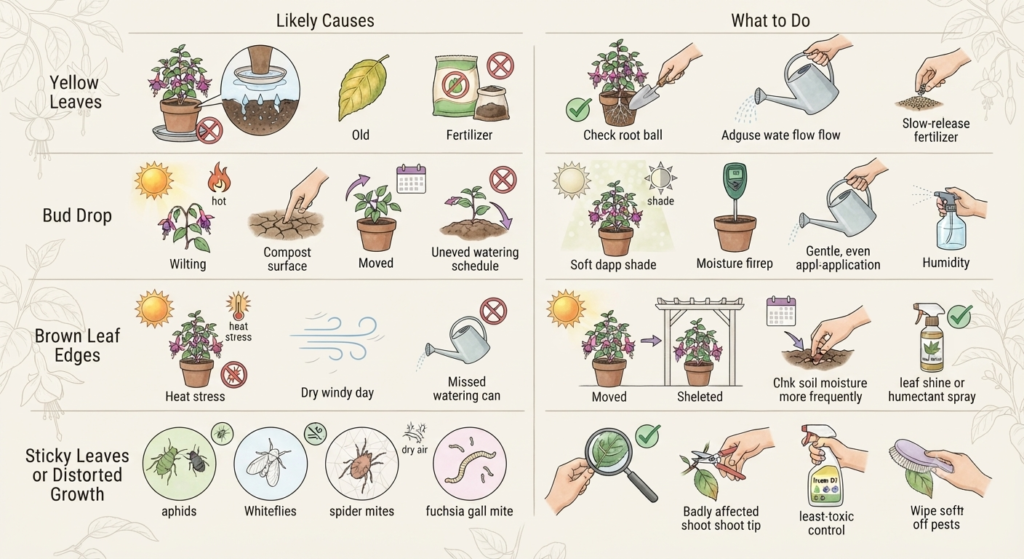
One symptom can have several causes, so inspect the plant, soil, and growing conditions before treating. For persistent pests, isolate the plant and seek local horticultural advice if you are unsure what you are seeing.
| Symptom | Likely causes | What to do |
|---|---|---|
| Yellow leaves | Overwatering, poor drainage, aging foliage, or low nutrients. | Check drainage and root health; adjust watering before feeding. |
| Bud drop | Heat, dry compost, sudden moves, or inconsistent watering. | Give steadier moisture and shade from hot afternoon sun. |
| Brown leaf edges | Heat stress, dry air, wind, or missed watering. | Move to a more sheltered spot and check moisture more often. |
| Sticky leaves or distorted growth | Aphids, whiteflies, spider mites, or fuchsia gall mite. | Inspect leaf undersides, remove badly affected growth, and use the least-toxic suitable control first. |
Pet and garden safety note
Fuchsia is generally listed by the ASPCA as non-toxic to dogs, cats, and horses. However, any plant material can cause stomach upset if eaten in quantity, and pesticide residue changes the risk. Keep treated plants away from pets and contact a veterinarian promptly if an animal seems unwell.
Frequently Asked Questions
Is it spelled fuchsia or fuscia?
Fuchsia is the correct spelling. “Fuscia” is a very common search misspelling for both the plant and the vivid pink-purple color.
Do fuchsias prefer sun or shade?
Most prefer bright light and protection from harsh afternoon sun. In cool climates they can often tolerate more direct sun than they can in hot, dry climates.
Can fuchsia plants grow indoors?
Yes, if they have bright light, cooler temperatures, and good airflow. They often perform more easily outdoors during mild weather than in a warm, dry room.
How do I keep fuchsias blooming?
Avoid heat stress, maintain even moisture, feed lightly during growth, and remove faded flowers. Flowering can slow in a heat wave and resume when temperatures become milder.
Are fuchsias suitable for hanging baskets?
Yes. Trailing cultivars are especially effective in baskets, but they need close attention because their compost dries faster than plants growing in the ground.