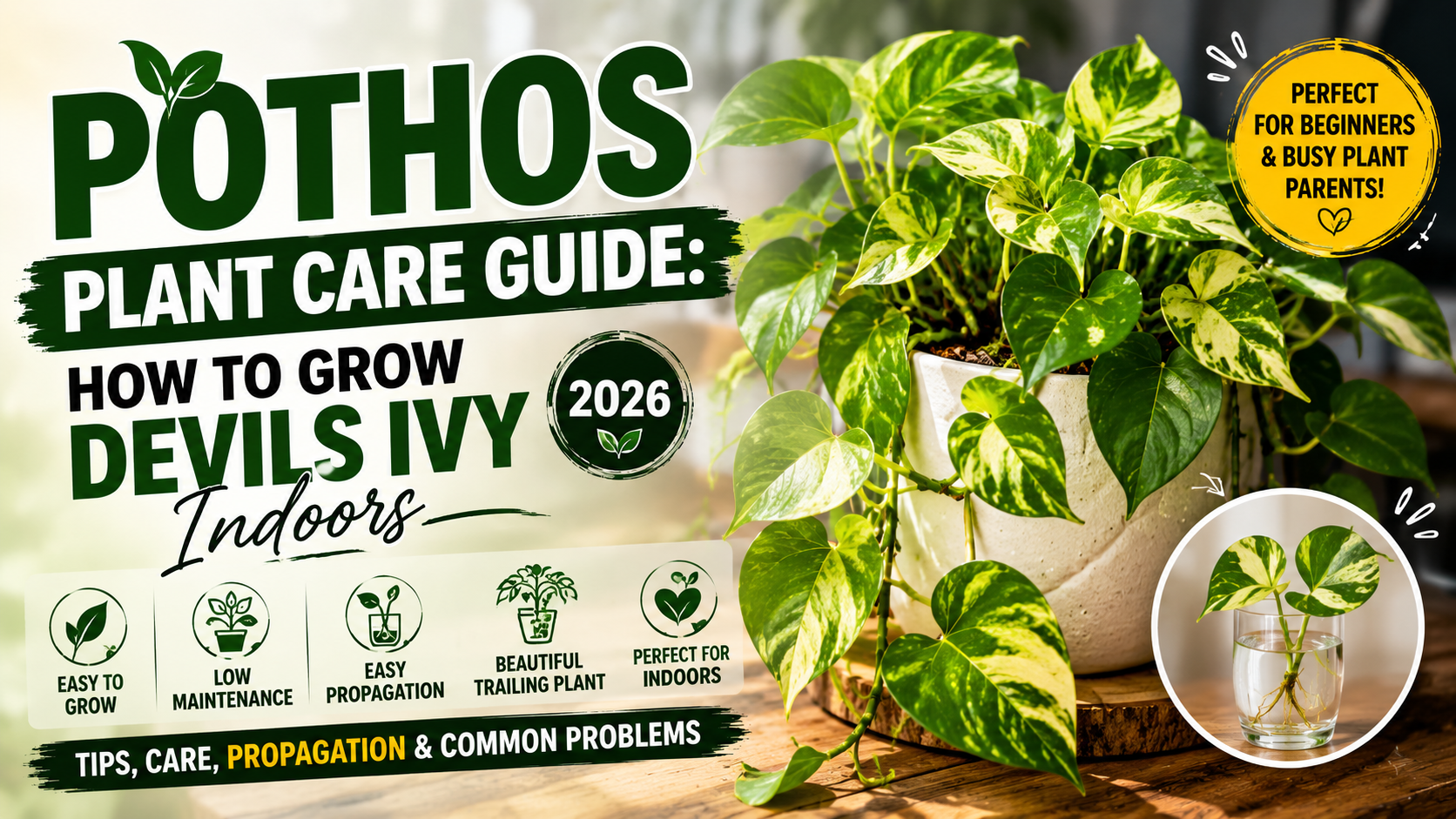

Everything you need to know about growing a healthy pothos plant — from watering and light to propagation and troubleshooting common problems with devils ivy.
What Is a Pothos Plant?
A pothos plant (Epipremnum aureum) is a fast-growing tropical vine prized for its heart-shaped leaves, trailing habit, and remarkable tolerance of a wide range of indoor conditions. Native to the Solomon Islands in the South Pacific, pothos belongs to the Araceae family and has become one of the world’s most popular houseplants.
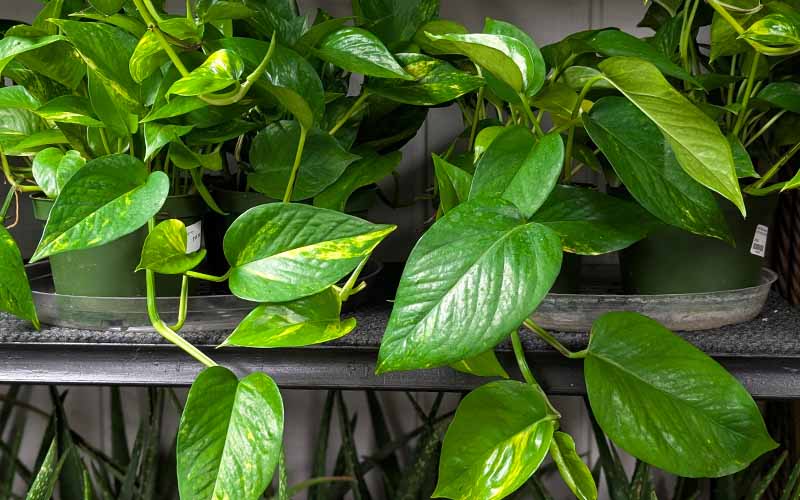
You may know this plant by its common name — devils ivy. It earned the nickname because it stays green even in near-darkness and is notoriously difficult to kill. While pothos can survive in low light, it thrives in bright indirect conditions where its growth is faster and its variegation more pronounced.
Pothos is not a philodendron, though the two are often confused. The botanical name Epipremnum aureum distinguishes it from the Philodendron genus. Understanding this difference matters because care advice and growth habits vary between the two, even though both are popular trailing houseplants.
Popular Pothos Varieties
| Variety | Leaf Color | Light Needs | Growth Rate | Best Use |
|---|---|---|---|---|
| Golden Pothos | Green & yellow | Low to bright indirect | Fast | Beginners, shelves |
| Marble Queen | White & green | Medium to bright | Moderate | Hanging baskets |
| Neon Pothos | Chartreuse | Medium to bright | Fast | Dark corners, accents |
| Jade Pothos | Solid dark green | Low to medium | Fast | Low-light rooms |
| N’Joy | White & green patches | Bright indirect | Slow | Desks, small pots |
| Pearls and Jade | Green, white, grey | Bright indirect | Slow | Terrariums |
| Manjula | Cream, white, green | Bright indirect | Slow–Moderate | Focal displays |
| Cebu Blue | Silvery blue-green | Medium to bright | Moderate | Climbing, trellises |
| Global Green | Dark & light green | Medium to bright | Moderate | Shelves, trailing |
Pothos Plant Care Guide
Light
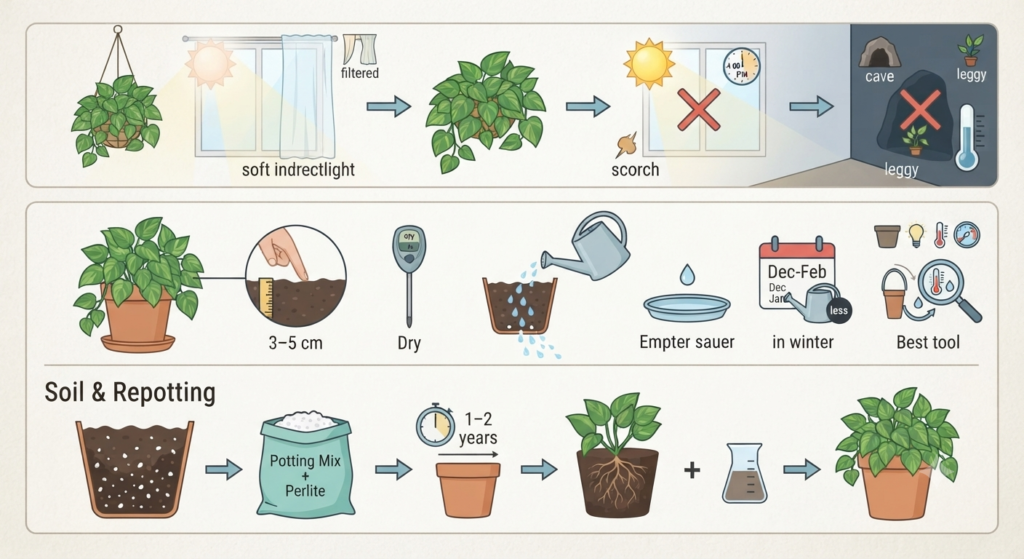
Pothos performs best in bright, indirect light — near an east- or north-facing window is ideal. It can tolerate low light, but growth will slow, leaves may become smaller, and variegated varieties will lose their markings. Avoid direct afternoon sun, which can scorch the leaves. A good rule: if you can comfortably read a book in that spot without extra lighting, your pothos will likely do well there.
Watering
There is no universal watering schedule for pothos — frequency depends on light, temperature, humidity, pot size, and soil composition. Instead of watering on a calendar, check the top 3–5 cm of soil. When it feels dry, water thoroughly until liquid drains from the bottom. In summer this might be every 5–7 days; in winter, every 10–14 days. Pothos will droop noticeably when thirsty, and it recovers quickly once watered — but repeated wilting stresses the roots over time.
Soil & Drainage
Use a well-draining potting mix. A standard indoor mix combined with extra perlite (roughly 2 parts potting mix to 1 part perlite) works well. Your pot must have drainage holes — sitting in water is the fastest path to root rot. Repot every 1–2 years in spring, moving up only one pot size. Pothos tolerates being slightly root-bound.
Temperature & Humidity
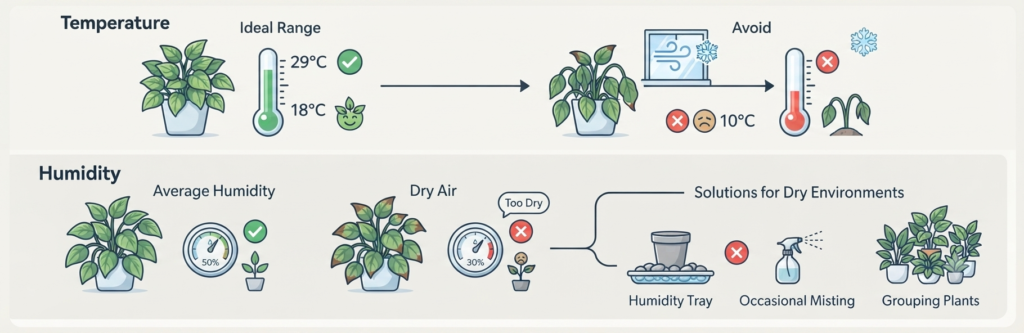
Pothos thrives in typical indoor temperatures between 18–29°C. Avoid cold drafts and temperatures below 10°C. While pothos adapts to average household humidity, brown leaf tips can indicate the air is too dry. A humidity tray, occasional misting, or grouping plants together can help in very dry environments — but misting alone is rarely enough to significantly raise humidity.
Fertilizing
Feed monthly during the growing season (spring through early autumn) with a balanced liquid fertilizer diluted to half strength. Do not fertilize in winter when growth naturally slows. Over-fertilizing causes salt buildup in the soil, which can burn roots and brown leaf tips. If in doubt, less is better than more — a healthy pothos in good light will grow well even with minimal feeding.
How to Propagate Devils Ivy
Propagation is one of the most rewarding aspects of growing devils ivy. Each vine contains multiple nodes — the small brown bumps where aerial roots emerge — and each node can produce a new plant. Here’s how to propagate pothos in water:
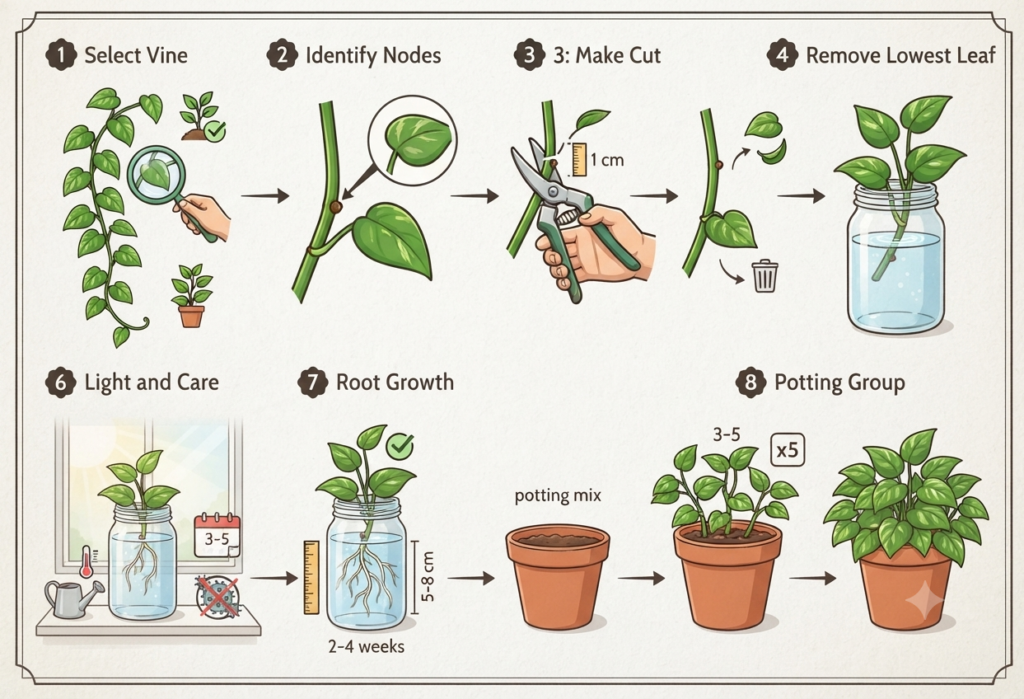
- Choose a healthy vine with at least 4–6 leaves and no signs of disease.
- Identify the nodes — small brown nubs on the stem, often opposite a leaf.
- Cut about 1 cm below a node using clean scissors or pruning shears.
- Remove the lowest leaf so the node can sit in water without submerged foliage.
- Place the cutting in a clean glass jar with room-temperature water, ensuring the node is submerged.
- Set the jar in bright indirect light. Change the water every 3–5 days to prevent bacterial growth.
- Wait for roots to reach 5–8 cm long (usually 2–4 weeks), then transfer to moist potting mix.
- Plant 3–5 cuttings together in one pot for a fuller, bushier result.
Tip: Newly transferred water cuttings may slow their growth temporarily while they adapt to soil. Keep soil consistently moist (not soggy) for the first two weeks to ease the transition.
Common Pothos Problems
Pothos plants communicate stress clearly through their leaves. A single symptom can have multiple causes — consider your full care routine and recent environmental changes before making adjustments.
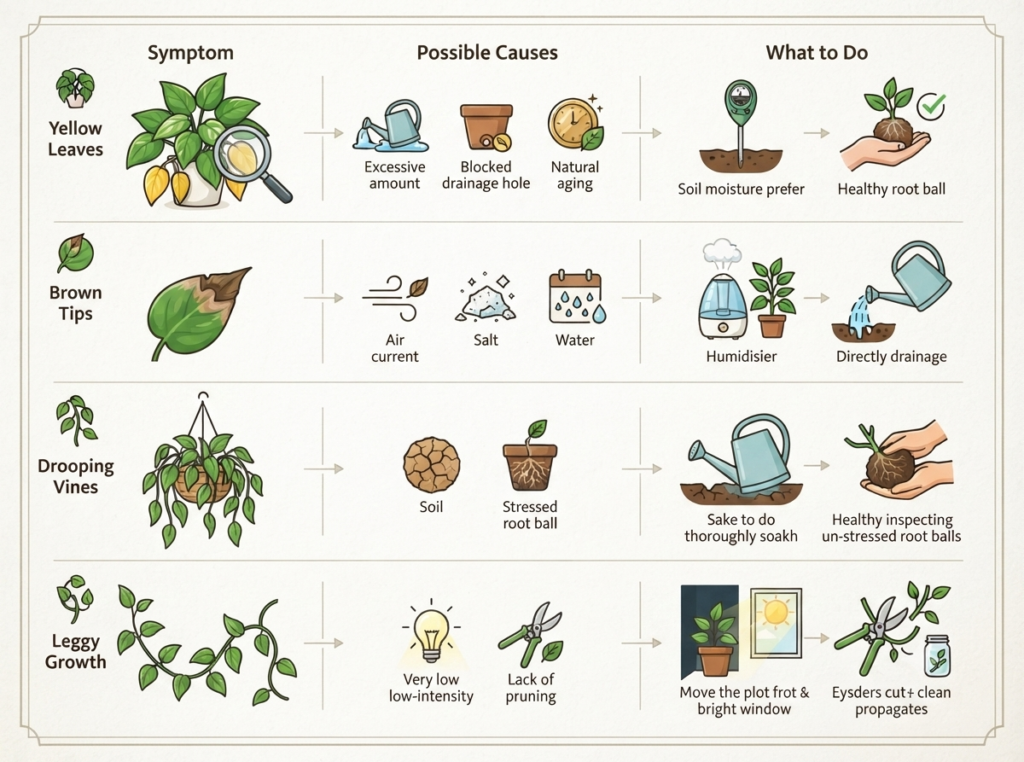
| Symptom | Possible Cause | What to Do |
|---|---|---|
| Yellow leaves | Overwatering, poor drainage, natural aging | Check soil moisture and root health |
| Brown tips | Dry air, salt buildup, inconsistent watering | Increase humidity; flush soil occasionally |
| Drooping vines | Dry soil or root stress | Water thoroughly; check roots |
| Leggy growth | Low light or lack of pruning | Move to brighter spot; prune and propagate |
| Loss of variegation | Insufficient light | Increase bright indirect light |
| Black mushy roots | Root rot from overwatering | Trim damaged roots; repot in fresh mix |
| Sticky leaves / pests | Mealybugs or scale | Wipe with rubbing alcohol; treat with neem oil |
Pothos vs Heartleaf Philodendron
These two trailing houseplants are frequently confused. Both have heart-shaped green leaves and similar care needs, but they belong to different genera. Here are the key differences to look for:
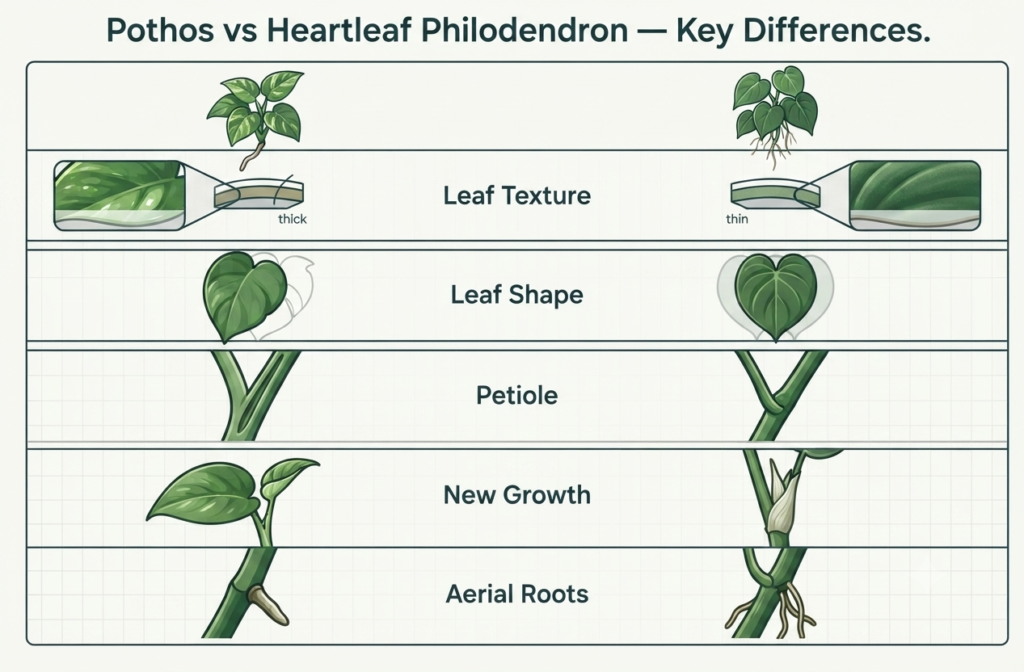
| Feature | Pothos | Heartleaf Philodendron |
|---|---|---|
| Leaf texture | Thick, slightly waxy | Thin, velvety |
| Leaf shape | Asymmetrical, broader | Symmetrical heart |
| Petiole | Grooved / indented | Round, smooth |
| New growth | Unfurls from existing leaf | Emerges in a cataphyll sheath |
| Aerial roots | One thick root per node | Multiple thin roots per node |
Pet & Child Safety
Pothos contains insoluble calcium oxalate crystals. If chewed by cats, dogs, or small children, it can cause oral irritation, drooling, vomiting, and difficulty swallowing. According to the ASPCA, pothos is toxic to both cats and dogs. Place your plant on high shelves or in hanging baskets out of reach, and seek veterinary advice if you suspect ingestion.
Pro Tip: Make Your Pothos Fuller
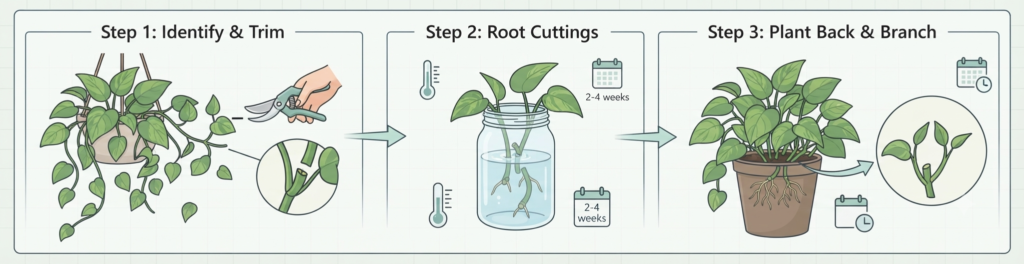
Long, leggy vines with gaps between leaves are a sign your pothos needs more light or pruning. Trim vines just above a leaf node, then root the cuttings and plant them back into the same pot. This encourages branching at the cut point and fills out the top of the pot. Repeat every few months for a lush, bushy plant rather than a single trailing strand.
Frequently Asked Questions About Pothos
Is pothos the same as devils ivy?
Yes. Pothos and devils ivy are two common names for the same plant — Epipremnum aureum. It earned the name ‘devils ivy’ because it remains green and vigorous even in very low light, making it almost impossible to kill. Other names include golden pothos, money plant, and hunter’s robe.
Can pothos grow in low light?
Pothos can survive in low light, but it won’t thrive. In dim conditions, expect slower growth, smaller leaves, longer gaps between leaves (leggy vines), and loss of variegation in patterned varieties. For healthy growth, bright indirect light is ideal. Low light does not mean no light — a windowless bathroom or dark hallway will eventually stress even a pothos.
How often should I water my pothos plant?
There is no fixed schedule. Water when the top 3–5 cm of soil feels dry to the touch. In brighter, warmer conditions this may be every 5–7 days; in cooler, darker spots it could be every 10–14 days. Always check the soil rather than relying on a calendar. Overwatering is the number-one cause of pothos problems.
Can pothos grow permanently in water?
Yes, pothos can live indefinitely in water. Change the water every 1–2 weeks to keep it oxygenated and prevent algae. Add a few drops of liquid fertilizer monthly since water alone lacks nutrients. Growth will be slower than in soil, and leaves may remain smaller, but many people enjoy pothos in glass vases as a low-maintenance display.
Why are my pothos leaves turning yellow?
The most common cause is overwatering or poor drainage leading to root stress. Other possibilities include natural aging of older leaves (normal — one or two at a time), too much direct sunlight, temperature shock, or nutrient deficiency. Start by checking the soil moisture and inspecting the roots for mushiness or dark discoloration.
Is pothos toxic to cats and dogs?
Yes. All parts of the pothos plant contain insoluble calcium oxalate crystals that cause oral irritation, drooling, and vomiting if chewed. The ASPCA lists pothos as toxic to both cats and dogs. While rarely fatal, ingestion is painful and distressing. Keep pothos out of reach of pets and children.
Which pothos variety is best for beginners?
Golden pothos is the most forgiving variety — it tolerates low light, inconsistent watering, and adapts quickly to new environments. Jade pothos (solid green) is equally hardy. If you want variegation but still want an easy plant, start with golden pothos before graduating to more light-sensitive varieties like Marble Queen or N’Joy.
Should I let my pothos trail down or climb up?
Both work well. Trailing from a shelf or hanging basket is the most popular indoor approach and requires no support. However, pothos naturally climbs in the wild, and when given a moss pole or trellis, it often produces larger leaves and faster growth. Climbing mimics its natural habit of growing up tree trunks toward light.