A complete guide to growing vibrant bougainvillea in pots, gardens, and on walls — with practical tips for every climate.
This guide is written for beginner and intermediate gardeners who want to grow healthy bougainvillea in pots or garden beds, improve flowering, and solve common care problems.
What Is Bougainvillea?

Bougainvillea is a vigorous, woody climbing plant native to South America. It is prized worldwide for its stunning display of colourful bracts that surround tiny white flowers. The plant thrives in warm, sunny conditions and can cover walls, fences, and pergolas with cascading colour from spring through autumn.
There are over 300 cultivated varieties of bougainvillea, producing bracts in shades of magenta, purple, orange, red, pink, and white. Once established, bougainvillea is remarkably drought-tolerant and low-maintenance — making it an ideal choice for gardeners in hot, dry regions.
Bougainvillea Flower: Bracts vs True Flowers
What most people call the bougainvillea flower is actually a bract — a modified, paper-thin leaf that surrounds the true flower. The real bougainvillea flower is the small, tubular white or cream bloom nestled at the centre of three bracts. It is these bracts that provide the spectacular colour display.
Understanding this distinction helps with care: the bracts last much longer than typical petals, and encouraging new growth through pruning and controlled watering promotes fresh bract production throughout the growing season.
Is Bugambilia the Same Plant?

Yes. Bugambilia is simply the common Spanish name for bougainvillea, widely used in Mexico, Central America, and Spanish-speaking communities. Whether you call it bougainvillea, bugambilia, or buganvilla, it is the same genus of plant (Bougainvillea spp.). Care requirements are identical regardless of the name used in your region.
How to Plant Bougainvillea
Follow these steps for successful planting:
- Choose a spot with at least 6 hours of direct sunlight daily — south or west-facing walls are ideal.
- Prepare well-draining soil. Mix garden soil with perlite or coarse sand. Bougainvillea cannot tolerate waterlogged roots.
- Dig a hole slightly larger than the root ball. Handle roots gently — bougainvillea roots are fragile and resent disturbance.
- Place the plant at the same depth it was in its nursery pot. Backfill and firm the soil gently.
- Water thoroughly after planting, then allow the soil to dry before watering again.

| Care Factor | Requirement |
|---|---|
| Sunlight | Full sun — minimum 6 hours direct sunlight daily |
| Watering | Water deeply but infrequently. Allow soil to dry between waterings. Overwatering causes root rot. |
| Soil | Well-draining, slightly acidic (pH 5.5–6.5). Sandy or loamy mixes work best. |
| Fertiliser | High-potassium feed every 2–4 weeks during growing season. Avoid high nitrogen. |
| Temperature | Thrives above 15°C (60°F). Frost-sensitive — protect below 5°C (40°F). |
| Hardiness | USDA Zones 9–11. Grow in pots in cooler zones and bring indoors for winter. |
| Flowering Period | Spring to autumn in warm climates. Year-round in tropical regions. |
Growing Bougainvillea in Pots and Containers
Bougainvillea grows very well in pots and containers, which is ideal for cooler climates where you need to move the plant indoors during winter. Choose a pot with large drainage holes — terracotta works well because it allows the soil to dry faster. A pot just slightly larger than the root ball encourages flowering, as bougainvillea blooms more when slightly root-bound.
Use a mix of potting soil, perlite, and coarse sand. Water thoroughly when the top 5 cm of soil feels dry, and feed with a high-potassium fertiliser fortnightly during the growing season. Rotate the pot occasionally for even growth.
Pruning and Training Bougainvillea
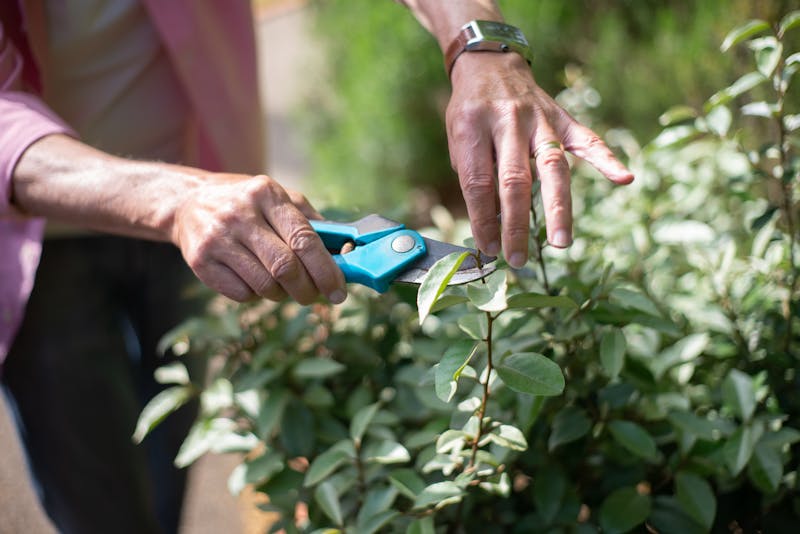
Prune bougainvillea after each flowering cycle to encourage new growth and more bracts. Cut back long shoots by about one-third, trimming just above a node. For wall-trained plants, tie new growth to supports and remove stems growing away from the structure.
Hard pruning in late winter (before new growth starts) rejuvenates overgrown plants. Remove dead, crossing, or weak stems. Shape the plant as desired — bougainvillea responds well to being trained as a standard, hedge, or espalier.
Protecting Bougainvillea from Cold Weather
Bougainvillea is frost-sensitive and can suffer serious damage below 5°C (40°F). In cooler regions, grow it in pots so you can move it to a sheltered spot — a cool conservatory, greenhouse, or bright garage works well for overwintering. Reduce watering significantly during dormancy.
For ground-planted bougainvillea in borderline zones, wrap the base with horticultural fleece and mulch heavily around the roots. Avoid pruning in autumn, as this stimulates tender new growth vulnerable to frost.
Troubleshooting Common Bougainvillea Problems

Here are the most common issues and solutions:
- No flowers — Usually caused by too much shade, overwatering, or excess nitrogen fertiliser. Move to full sun and reduce watering.
- Leaf drop — Often triggered by sudden temperature changes, overwatering, or being moved. Allow the plant to adjust.
- Yellow leaves — Typically a sign of overwatering or poor drainage. Let soil dry completely between waterings.
- Pests — Aphids, mealybugs, and caterpillars may attack new growth. Treat with insecticidal soap or neem oil.
- Root rot — Caused by waterlogged soil. Repot into fresh, well-draining mix and trim affected roots.
Frequently Asked Questions
How often should I water bougainvillea?
Water deeply when the top few centimetres of soil are dry — typically once a week in summer, less in winter. Bougainvillea prefers to be slightly drought-stressed, which actually encourages more flowering.
Can bougainvillea grow in a pot?
Absolutely. Bougainvillea is well-suited to container growing. Use a pot with drainage holes, well-draining soil, and keep it in full sun. A slightly snug pot encourages blooming.
Why is my bougainvillea not flowering?
The most common reasons are insufficient sunlight (needs 6+ hours), overwatering, or too much nitrogen fertiliser. Ensure full sun, reduce watering, and switch to a high-potassium feed.
Is the colourful part a flower or a leaf?
The colourful parts are bracts — modified leaves. The true bougainvillea flower is the small, white tubular bloom at the centre of each cluster of three bracts.