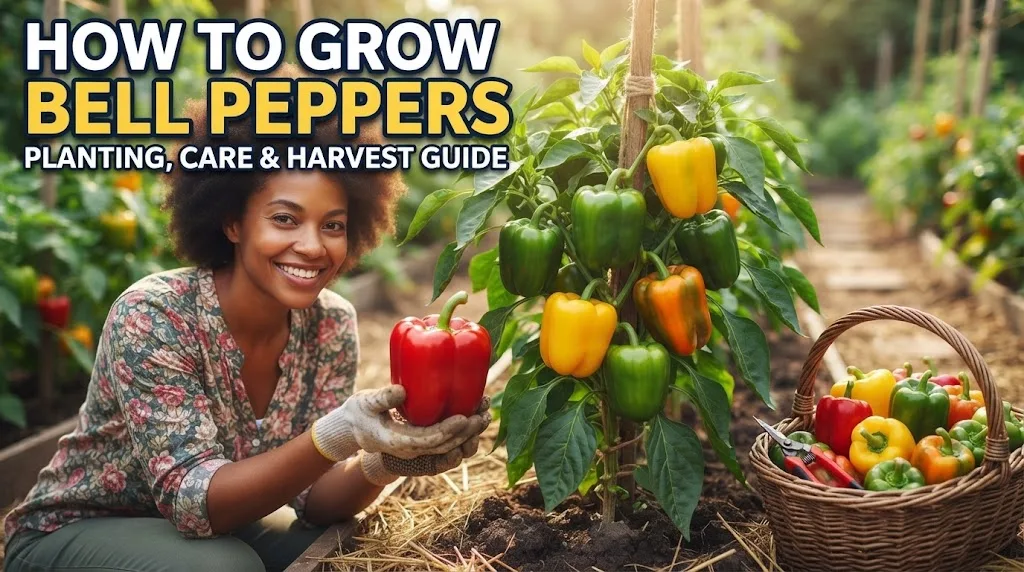

A beginner-friendly, season-long guide to growing sweet, productive bell peppers—from planting at the right time to diagnosing flower drop, watering well, and harvesting at peak colour.
When should you plant bell peppers?
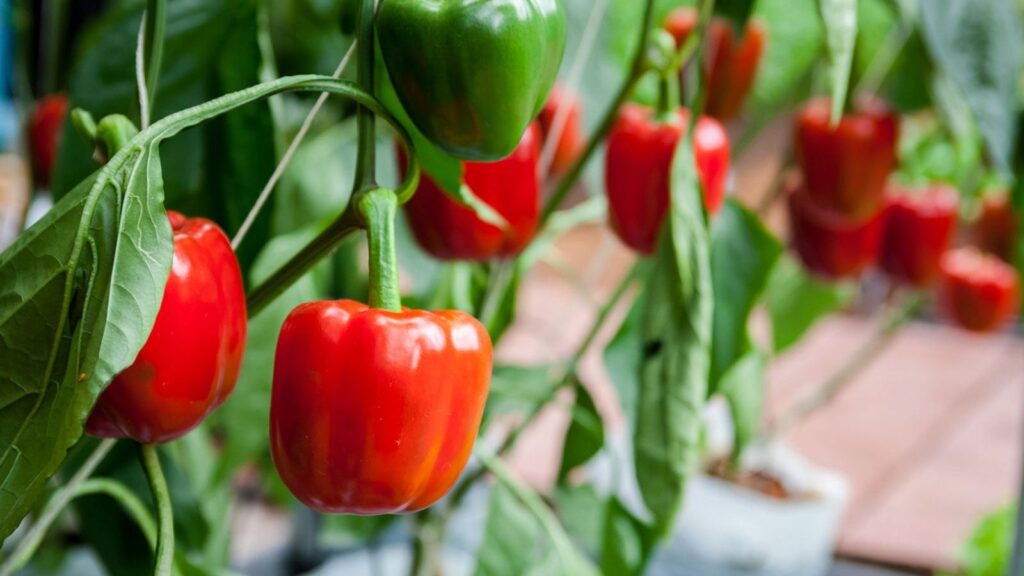
Bell peppers are warm-season plants. Set seedlings outdoors only after all risk of frost has passed and nighttime temperatures are reliably above about 55°F (13°C). Soil that feels cold and wet can stall a young pepper plant, even if daytime weather looks pleasant.
For most home gardeners, transplants are the easiest route to a long harvest. Start seeds indoors 8–10 weeks before your last expected frost if you want to grow your own, or buy compact seedlings with sturdy stems and healthy green leaves. Harden plants off gradually for about a week before planting them in the garden.
Give bell peppers warmth, sun, and well-drained soil
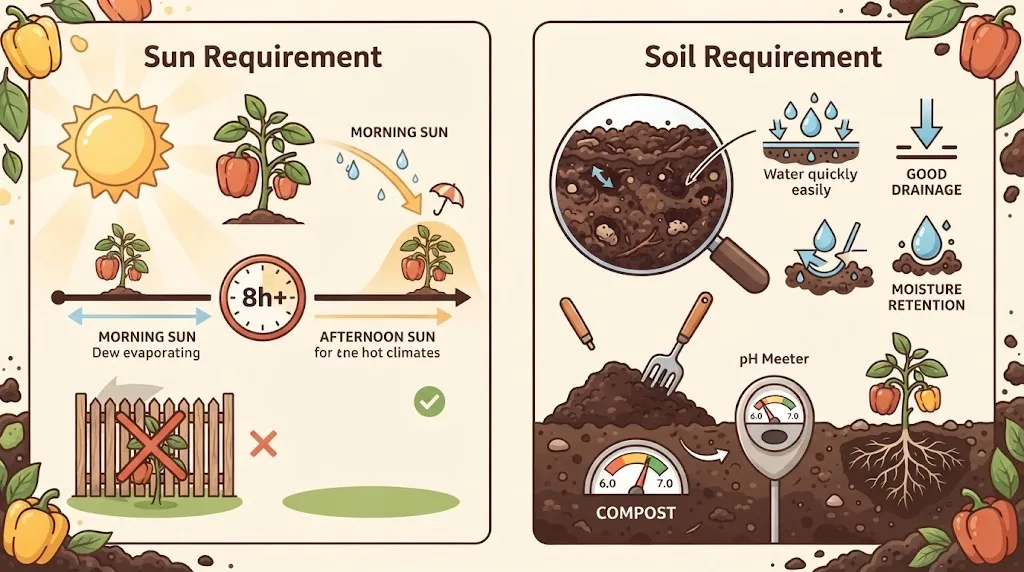
A bell pepper plant produces best in a sunny, sheltered position. Morning-to-afternoon light helps the plant make energy for fruit, while loose soil lets roots spread without sitting in water. In very hot climates, a little late-afternoon shade can reduce sunscald on exposed fruit.
Sun requirement
Aim for at least 6 hours of direct sun daily; 8 hours is ideal in cooler areas. Avoid planting beside tall crops or fences that shade the plant during the middle of the day.
Soil requirement
Use fertile soil enriched with compost that drains freely but still holds moisture. A slightly acidic to neutral pH, roughly 6.0–7.0, suits most pepper plants well.
How to plant bell pepper seedlings for a strong start
Plant bell peppers on a mild day when the soil has warmed. A little preparation at planting time makes later care easier: give every plant room for air movement, water deeply after transplanting, and protect it from a surprise cold night if one is forecast.
- Work compost into the bed or fill a container with fresh, high-quality potting mix. Make sure any pot has generous drainage holes.
- Space most bell pepper plants about 18–24 inches (45–60 cm) apart. Leave roughly 24–36 inches (60–90 cm) between rows so foliage can dry after rain.
- Set each seedling at the same depth it grew in its nursery pot. Unlike tomatoes, peppers do not need to be planted deeply along the stem.
- Water the root zone thoroughly, then add a light mulch once the soil is warm. Mulch helps keep moisture even and stops soil from splashing onto leaves.
Water steadily, feed lightly, and support heavy branches
Cultivating bell peppers is mostly about consistency. Young plants may pause after transplanting, then start growing once roots settle in. Keep moisture even, remove weeds early, and avoid chasing every slow-growth spell with fertilizer before checking the weather, soil, and root zone first.
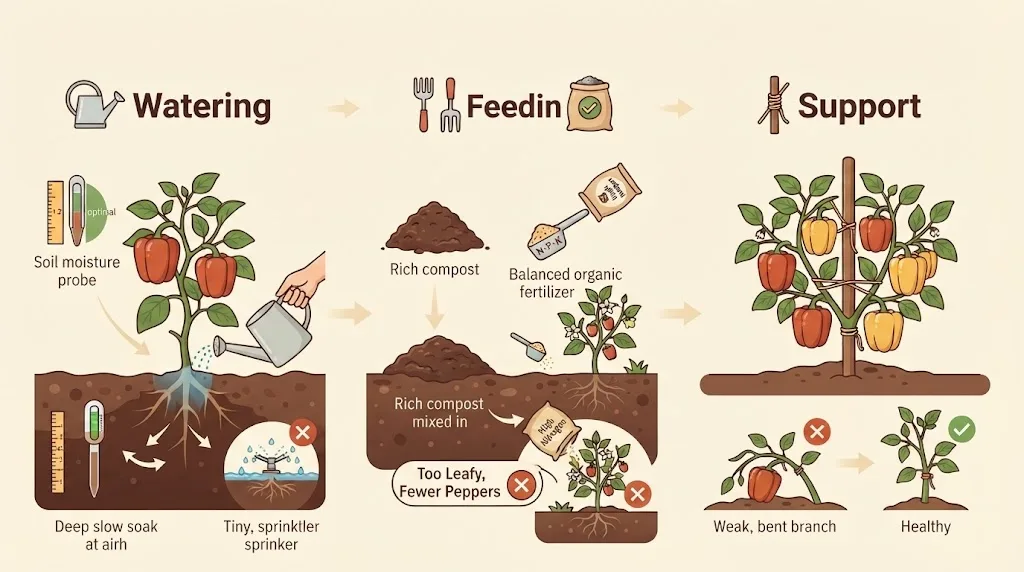
Watering
Water at the base of the plant when the top inch or two of soil is dry. Deep, less-frequent watering encourages deeper roots; shallow daily sprinkles can leave roots near the surface.
Feeding
Compost provides a useful foundation. Once flowers or tiny fruit appear, a balanced vegetable fertilizer used according to its label can help. Avoid excess nitrogen, which can create leafy plants with fewer peppers.
Common bell pepper problems and practical first checks
Before buying a treatment, look closely at the plant and soil. Sudden weather changes, uneven watering, compacted soil, and pests can produce similar symptoms. Start with the simplest explanation you can verify, then adjust one growing condition at a time.
| What you see | Likely cause | What to do |
|---|---|---|
| Flowers fall without forming peppers | Temperature stress, drought stress, or a recent transplant shock. | Maintain even moisture, mulch warm soil, and wait through weather swings. Avoid heavy feeding until conditions settle. |
| Dark patch on the bottom of fruit | Blossom-end rot, commonly linked to uneven soil moisture and calcium uptake problems. | Water consistently, mulch the root zone, and avoid letting plants swing from very dry to waterlogged. |
| Small, pale, or chewed leaves | Cool weather, nutrient stress, aphids, flea beetles, or other chewing and sap-feeding pests. | Inspect both leaf surfaces, identify pests before treating, and improve the plant’s growing conditions first. |
Know when bell peppers are ready to pick
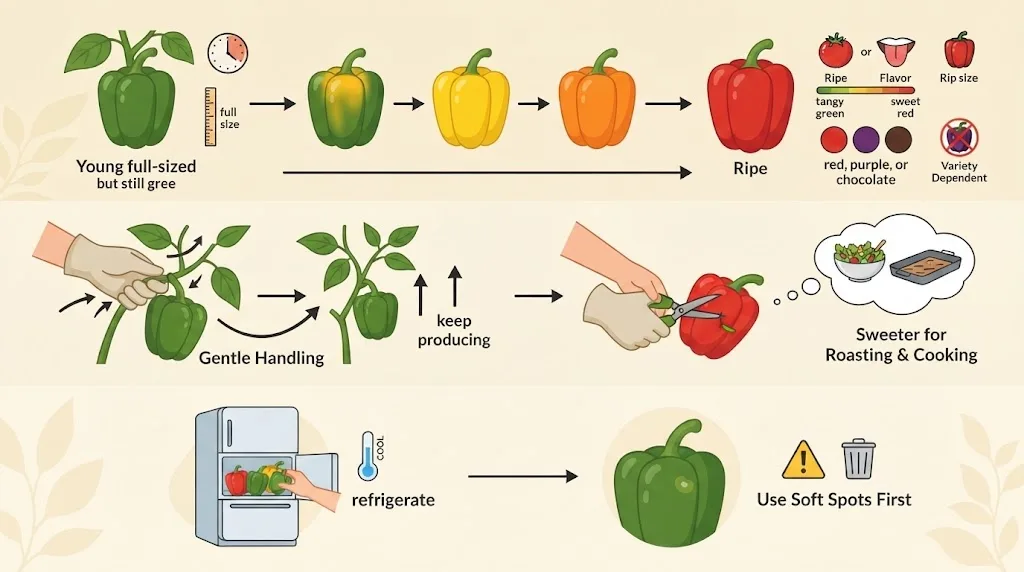
You can harvest bell peppers when they are firm, glossy, and full-sized while still green. If you leave them on the plant longer, many varieties ripen through yellow, orange, red, purple, or chocolate tones, becoming sweeter and more richly flavoured. The final colour depends on the variety not every pepper turns red.
Harvesting green peppers regularly can encourage a plant to keep producing, while allowing a few fruits to colour fully gives you sweeter peppers for salads, roasting, and cooking. Handle branches gently as fruit becomes heavy. Refrigerate picked peppers after harvest and use any fruit with soft spots first.
Four beginner mistakes worth avoiding
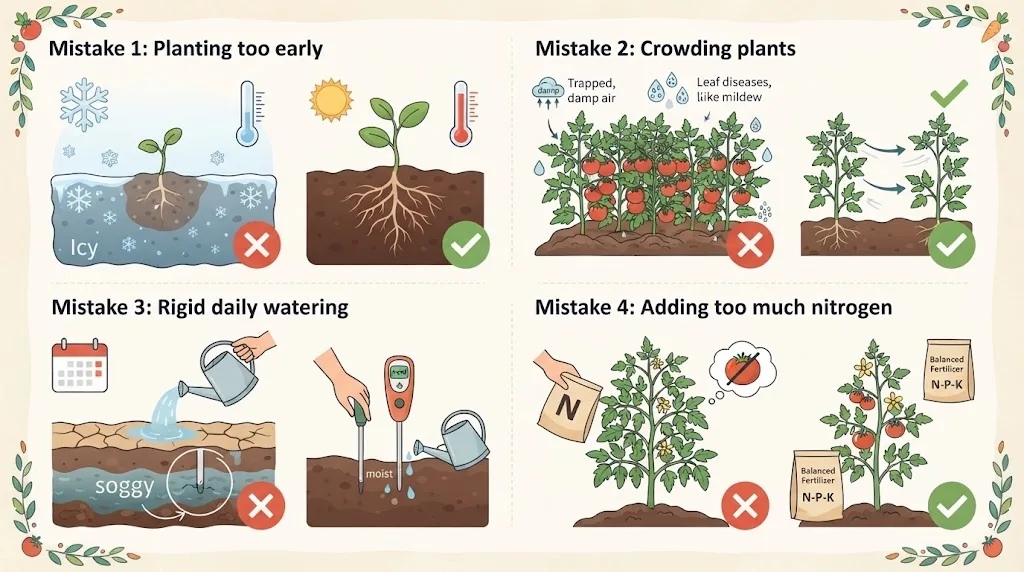
- Planting too early, when soil and nights are still cold enough to slow root growth.
- Crowding plants so closely that leaves stay damp and air cannot move through the bed.
- Watering on a rigid daily schedule instead of checking the soil beneath the dry surface.
- Adding too much nitrogen after the plant is already leafy, hoping it will solve a fruiting problem.
Bell pepper growing FAQs
Can I grow bell peppers in containers?
Yes. Choose a pot at least 12 inches wide and deep for one plant, with drainage holes and quality potting mix. Containers dry out faster than beds, so check moisture more often in warm weather.
How long does it take bell peppers to grow?
Timing varies by variety and weather, but many transplants begin producing harvestable green peppers around 60–90 days after transplanting. Coloured ripe peppers usually need additional time on the plant.
Why is my pepper plant growing leaves but no peppers?
Check sunlight, temperature, watering, and fertilizer. Too much nitrogen, cool weather, heat stress, or flower drop can delay fruit. A healthy-looking plant may simply need a stretch of milder weather before it sets peppers.