A calm, practical way to confirm whiteflies, protect your plants, and choose treatment only when it is needed.
Quick answer
Whiteflies are tiny, moth-like sap feeders. A small number is usually manageable; act sooner when you see clusters of adults, pale nymphs beneath leaves, sticky honeydew, or yellowing new growth.
How to identify whiteflies
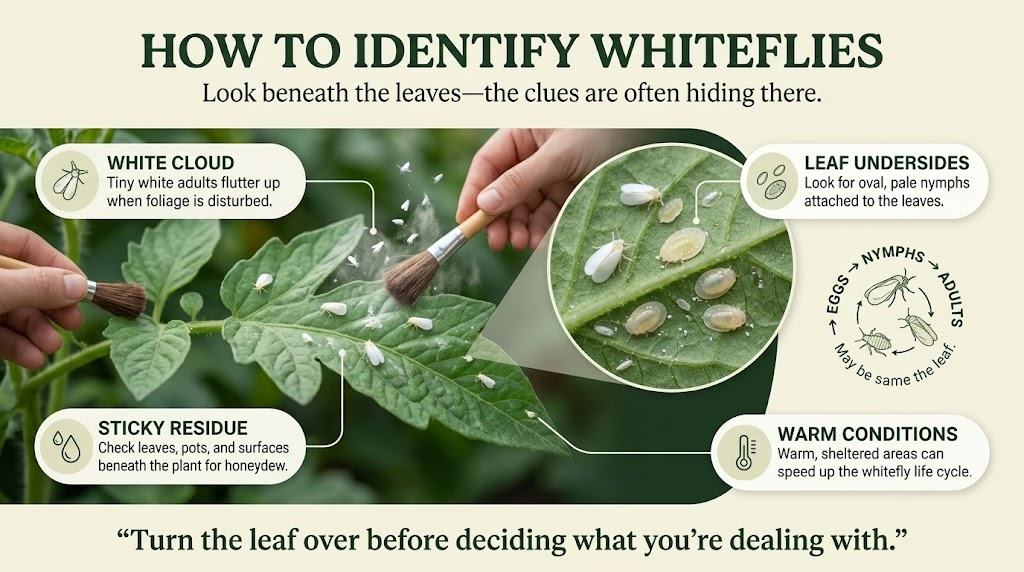
Adult whiteflies are small, powdery-white insects that rise in a little cloud when an infested plant is disturbed. Turn a leaf over: the immature stages stay put as tiny, flat, pale scales.
Field signs worth checking
- A brief flutter of tiny white adults when you brush the foliage.
- Oval, translucent-to-pale nymphs attached to leaf undersides.
- Sticky residue on leaves, pots, or surfaces below the plant.
Warm, sheltered conditions speed up the life cycle. Eggs, nymphs, and adults can overlap on the same plant, which is why a single spray rarely solves a well-established outbreak.
What damage do whiteflies cause?
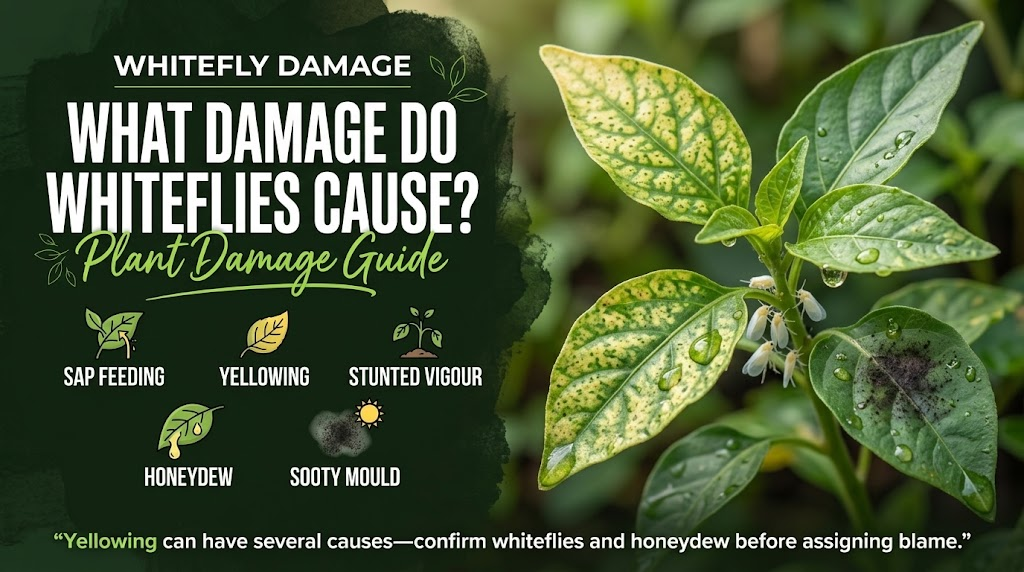
Whiteflies remove sap from foliage. Light feeding may cause little more than a nuisance, but increasing numbers can lead to pale or yellow leaves, reduced vigour, leaf drop, and sticky honeydew. Sooty mould may grow on that honeydew and block light from the leaf surface.
Plants commonly affected
Whiteflies are especially common on tomatoes, peppers, beans, brassicas, citrus, hibiscus, poinsettias, and many greenhouse or indoor ornamentals. Tender new growth and crowded, sheltered plants are often the first places to inspect.
What can look like whiteflies?
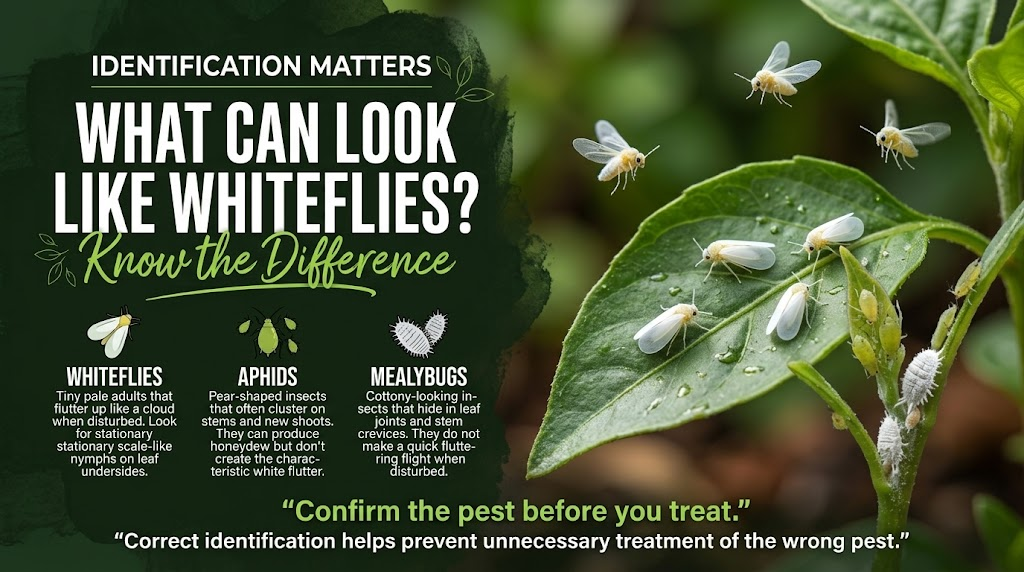
Correct identification helps you avoid treating the wrong pest. Look for the characteristic adult flutter and stationary scale-like nymphs before you intervene.
| Aphids Aphids also produce honeydew, but they are pear-shaped and usually cluster on stems or new shoots. They do not fly up like a cloud of white specks. | Mealybugs Mealybugs look cottony and tend to hide in leaf joints and stem crevices. Unlike whiteflies, they do not make a quick, fluttering flight when disturbed. |
A least-disruptive whitefly control plan
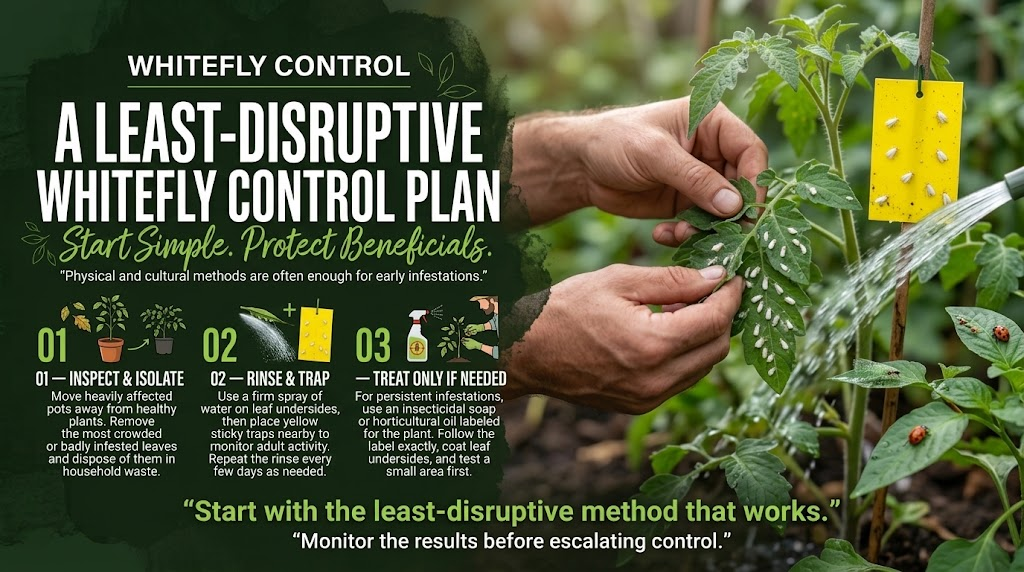
Start with physical and cultural methods. They are often enough for early infestations and are less likely to harm the beneficial insects that naturally help keep pests in check.
| 1. Inspect & isolate Move heavily affected pots away from healthy plants. Remove the most crowded or badly infested leaves and dispose of them in household waste. | 2. Rinse & trap Use a firm spray of water on leaf undersides, then add yellow sticky traps nearby to monitor adult activity. Repeat the rinse every few days as needed. | 3. Treat only if needed For persistent infestations, use an insecticidal soap or horticultural oil labelled for your plant and follow the label exactly. Coat leaf undersides and test a small area first. |
What I avoid
Avoid broad-spectrum insecticides as a first response. They can harm pollinators and predatory insects, and whitefly populations may rebound quickly when their natural enemies are removed.
Prevention and when to get more help
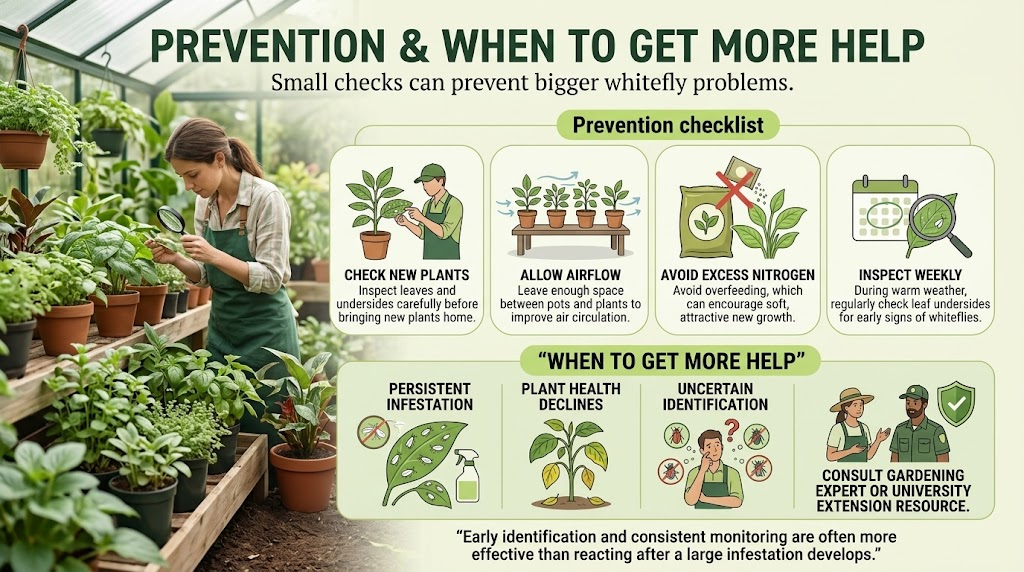
Check new plants before bringing them home, leave enough airflow between pots, and avoid overfeeding with nitrogen, which can produce especially attractive soft growth. Inspect undersides of leaves weekly during warm weather.
When to escalate
Seek advice from a local extension service, nursery professional, or qualified pest-control specialist if a valuable plant is declining rapidly, an outbreak spreads through a greenhouse, or repeated label-directed treatments have not reduced numbers.
Frequently Asked Questions
Will whiteflies kill my plant?
A small population is rarely fatal, but heavy feeding can weaken plants, cause yellowing and leaf drop, and encourage sooty mould.
How often should I treat whiteflies?
Repeat water rinses every few days while whiteflies are visible. For soaps or oils, follow the product label for reapplication.
How do I get rid of whiteflies naturally?
Start with water rinses and regular monitoring. Remove heavily infested leaves and encourage beneficial insects before considering targeted treatments