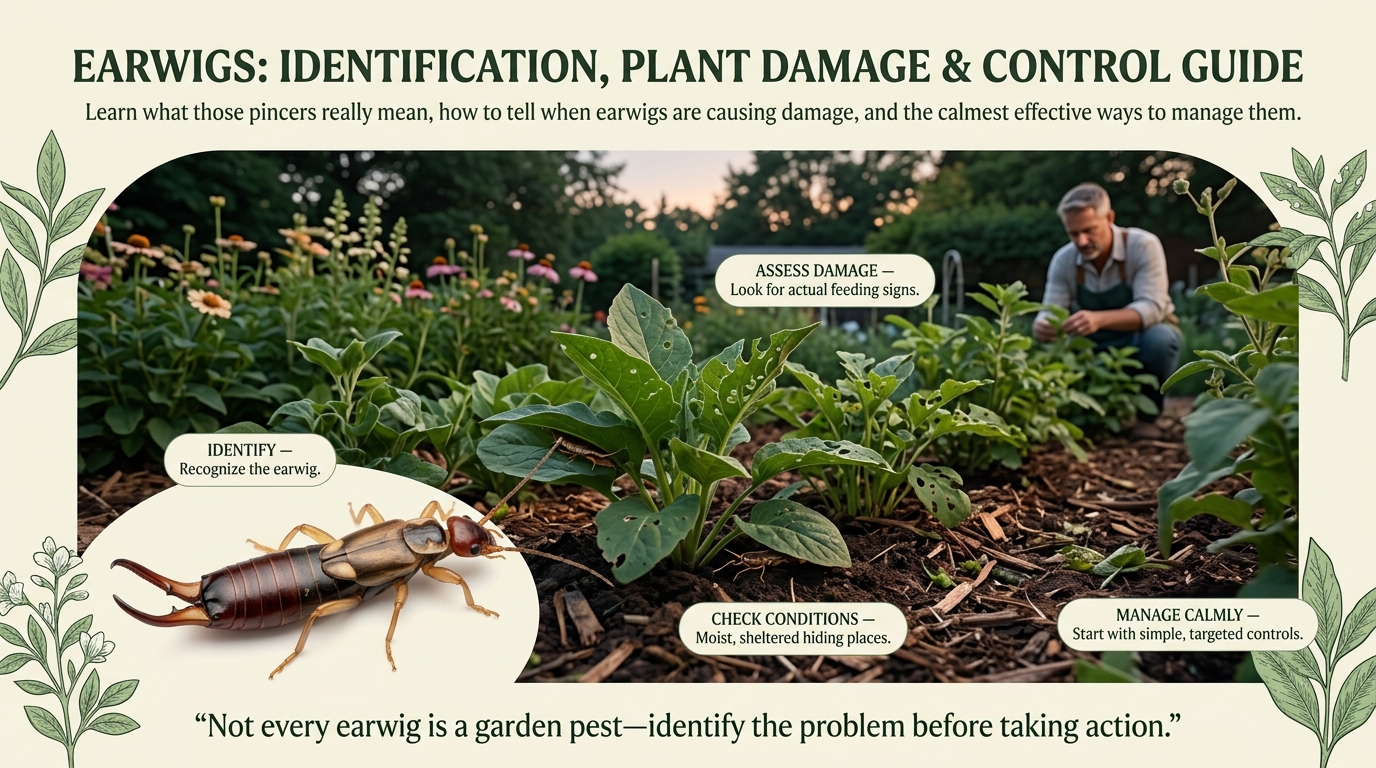

Learn what those pincers really mean, how to tell when earwigs are causing damage, and the calmest effective ways to manage them.
Earwigs can be startling: they move quickly, hide in damp places, and carry a pair of obvious rear pincers. But seeing one does not automatically mean your garden needs treatment. Earwigs are mostly night-active scavengers and can also eat small insects and decaying plant material. The useful question is not simply “Are earwigs here?” but “Are they causing meaningful, ongoing damage to plants I care about?”
How to identify an earwig
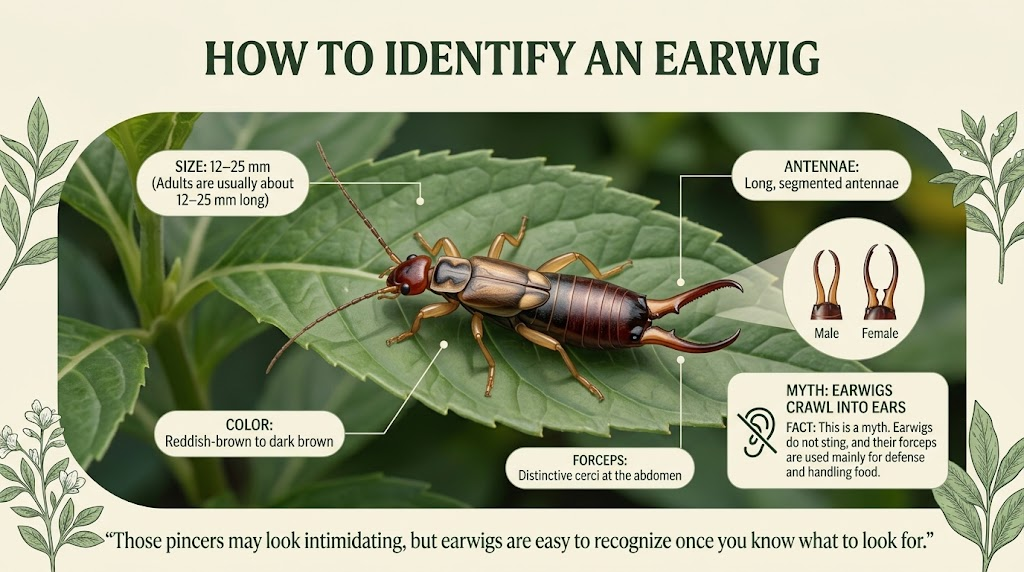
Most garden earwigs are flattened, reddish-brown to dark brown insects with long antennae and a distinctive pair of forceps, called cerci, at the end of the abdomen. Adults are usually about 12–25 mm long. The forceps are more curved on many males, but both sexes use them for defense and handling food. Earwigs do not sting, and the old story that they crawl into people’s ears is a myth.
Quick reality check: pincers do not equal danger
An earwig may pinch if handled, but it is not dangerous to people or pets. Before treating, inspect plants after dusk with a torch and look for fresh feeding alongside the insects. Earwigs found under pots, mulch, boards, or leaf litter may simply be using those places as daytime shelter.
What earwig damage looks like—and what it can be confused with
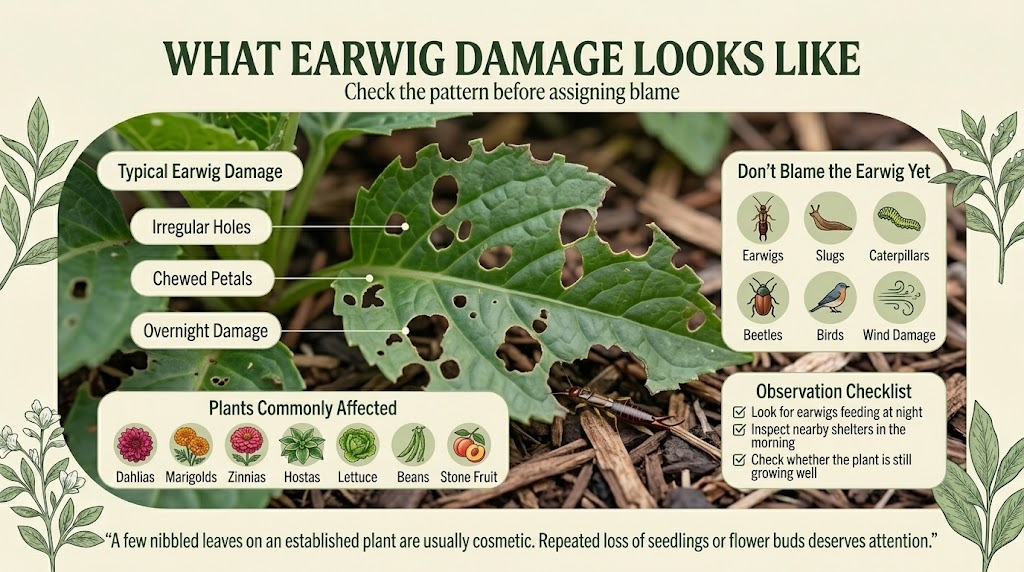
Check the pattern before assigning blame
Earwigs may feed on seedlings, soft leaves, ripening soft fruit, and flower petals. They are often associated with dahlias, marigolds, zinnias, hostas, lettuce, beans, and stone fruit—but finding damage is not proof they caused it.
- Fresh irregular holes or ragged edges on tender leaves.
- Chewed petals, especially on flowers close to moist ground.
- Damage concentrated overnight or in sheltered growth.
Slugs, caterpillars, beetles, birds, and even wind damage can leave similar holes. Look for earwigs actively feeding at night, inspect nearby shelters in the morning, and consider whether the plant is still growing well. A few nibbled leaves on an established plant are usually cosmetic; repeated loss of seedlings or flower buds deserves action.
Why earwigs gather in some gardens
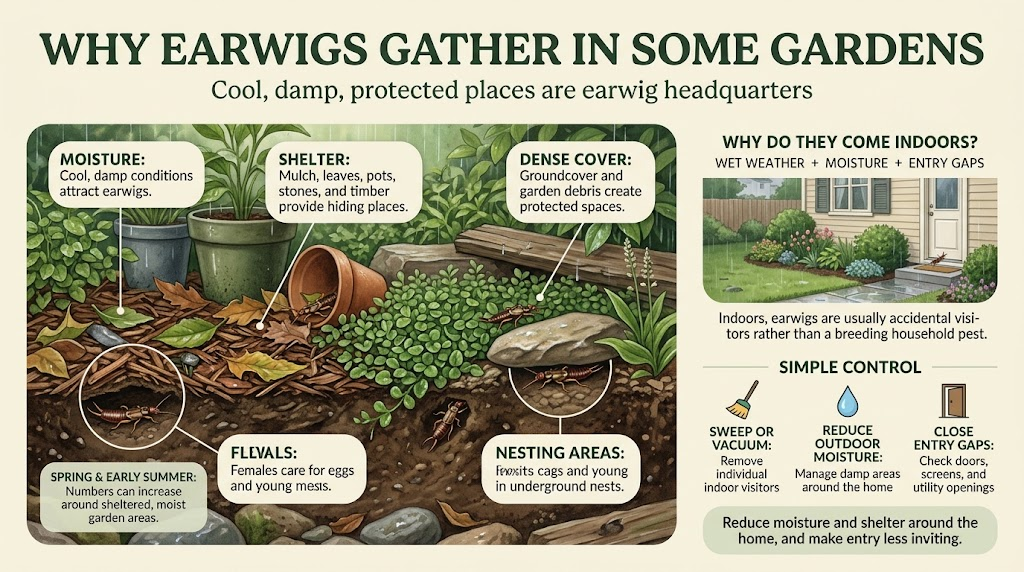
Cool, damp, protected places are earwig headquarters
Earwigs spend daylight hours under mulch, dense groundcover, fallen leaves, pots, timber, stones, and damp garden debris. Females care for eggs and young in underground nests, so numbers can rise around sheltered, moist garden areas in spring and early summer.
Their preference for moisture explains why they can appear around bathrooms, laundry rooms, or ground-level doors after wet weather. Indoors, they are typically accidental visitors rather than a breeding household pest. Vacuum or sweep up individual insects, then reduce outdoor moisture and close obvious entry gaps around doors, screens, and utility openings.
Start with the least-disruptive control that can work
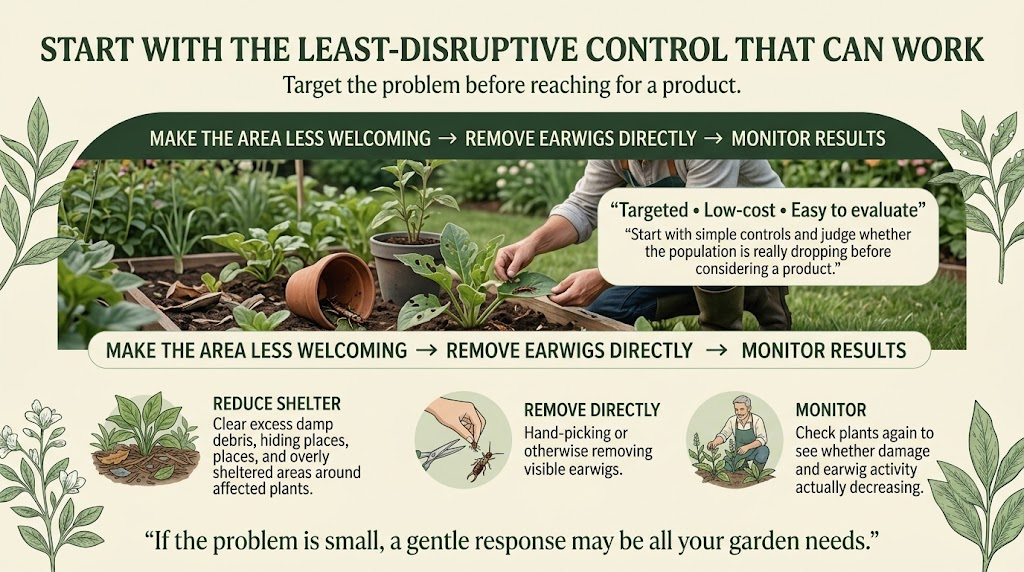
When damage is real and continuing, begin by making the immediate area less welcoming and by removing earwigs directly. These steps are targeted, low-cost, and let you judge whether the population is actually dropping before considering a product.
Reduce hiding places near vulnerable plants
Pull mulch and leaf litter slightly away from tender seedlings. Lift pots, boards, and other damp items that sit against the soil, and water early in the day so surfaces are less wet overnight. Keep compost and dense debris away from plants that are already being chewed.
Use a simple overnight shelter trap
A rolled damp newspaper, corrugated cardboard, or short length of hose gives earwigs an appealing daytime hideout. It is a practical way to monitor numbers and remove insects from a specific problem area without broad spraying.
- Place a damp rolled newspaper or short hose section near the affected plant at dusk.
- Check it early the next morning and shake earwigs into soapy water if control is needed.
Prevention is about balance, not a sterile garden
Keep mulch where it benefits soil health, but avoid piling it against susceptible seedlings. Space containers so air can circulate, repair dripping taps, and harvest ripe fruit promptly. Healthy established plants can tolerate occasional feeding, so focus your effort on the small plants, prized flowers, and fruit that are truly at risk.
When a targeted product may be justified
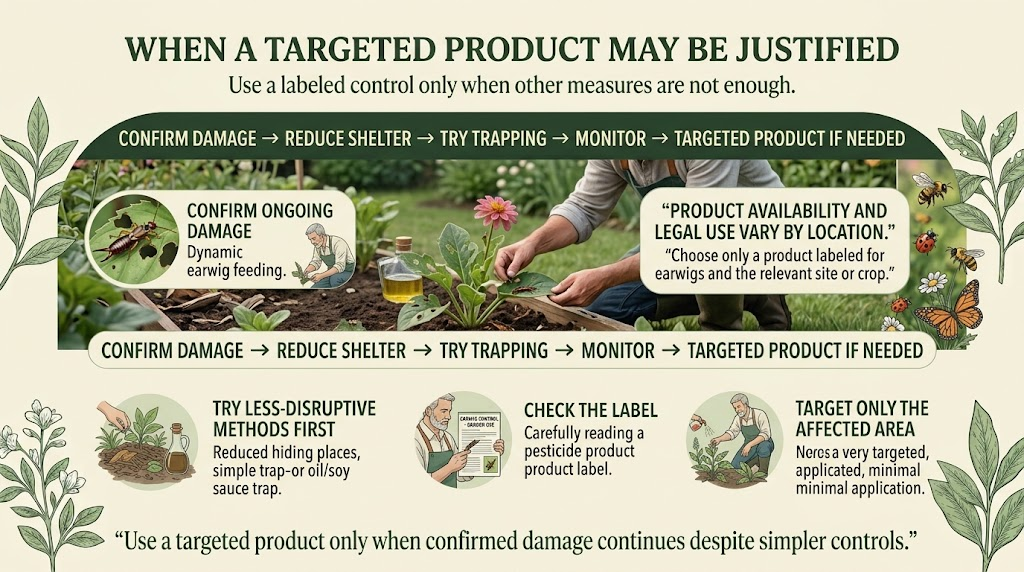
Consider a labeled control only when you have confirmed ongoing earwig damage and shelter reduction plus trapping have not protected vulnerable plants. Product availability and legal use vary by location. Choose only a product labeled for earwigs and the relevant site or crop, treat only the area described on the label, and avoid routine broad-spectrum applications that may harm beneficial insects.
Read the label—every time.
The product label is the legal instruction for safe use. Follow directions for protective clothing, mixing, timing, storage, disposal, and food-crop harvest intervals. Keep treatments away from open blooms and waterways, do not apply in wind, and seek local advice if children, pets, wildlife habitat, or edible crops are nearby.
When to seek local advice
Get help from a local university extension service, garden advisory program, or licensed pest professional if seedlings are repeatedly being destroyed, earwigs are entering the home in large numbers, or you cannot confidently identify the cause of plant damage. A local expert can account for seasonal conditions, regional species, and which products are permitted where you live.
The 5-step earwig plan for tonight
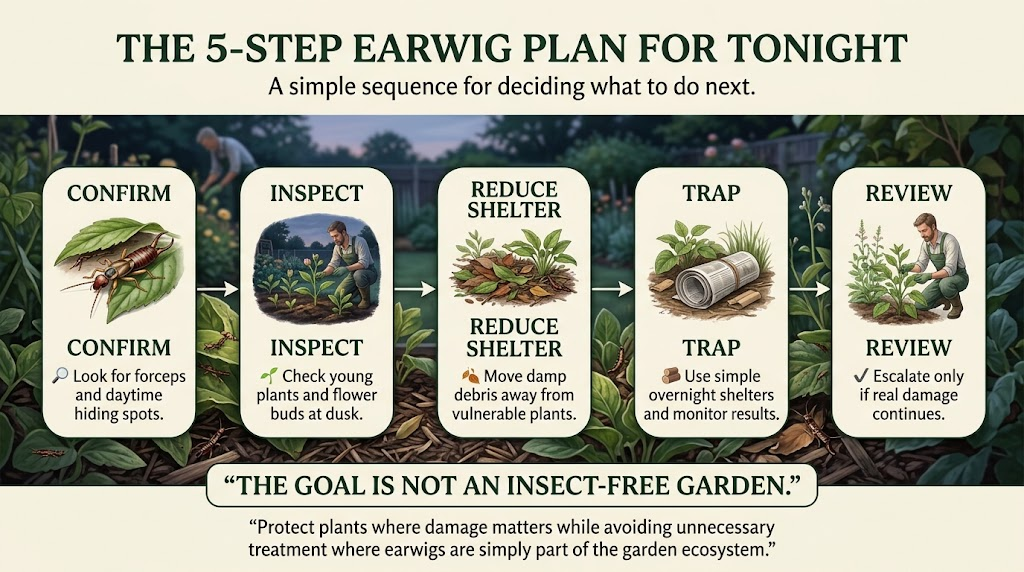
Use this sequence when earwigs are worrying you. It creates a clear next step without assuming every earwig is a serious pest.
| 1. Confirm Look for forceps and daytime hiding spots. | 2. Inspect Check young plants and flower buds at dusk. | 3. Reduce shelter Move damp debris away from vulnerable plants. | 4. Trap Use simple overnight shelters and monitor results. | 5. Review Escalate only if real damage continues. |
The goal is not an insect-free garden. It is to protect plants where damage matters, while avoiding unnecessary treatment in the many places where earwigs are simply part of the garden ecosystem.
Frequently asked questions
Are earwigs harmful to people, pets, or gardens?
Earwigs are not considered dangerous to people or pets. They can pinch if handled, but do not sting or spread disease in the way many people fear. In gardens, they can be both scavengers and occasional plant feeders, so their impact depends on numbers and what they are feeding on.
Why am I seeing earwigs inside my house?
Earwigs usually wander indoors seeking moisture or shelter, especially during hot, dry, or very wet weather. Remove individual insects, reduce damp debris around the foundation, repair leaks, and seal gaps around doors and windows. Indoor sightings rarely mean they are breeding inside.
Should I spray earwigs right away?
Usually no. First confirm they are responsible for the damage, remove damp shelter near sensitive plants, and try overnight trapping. Use a pesticide only if damage continues and a locally legal product is specifically labeled for your situation. Always follow its label exactly.