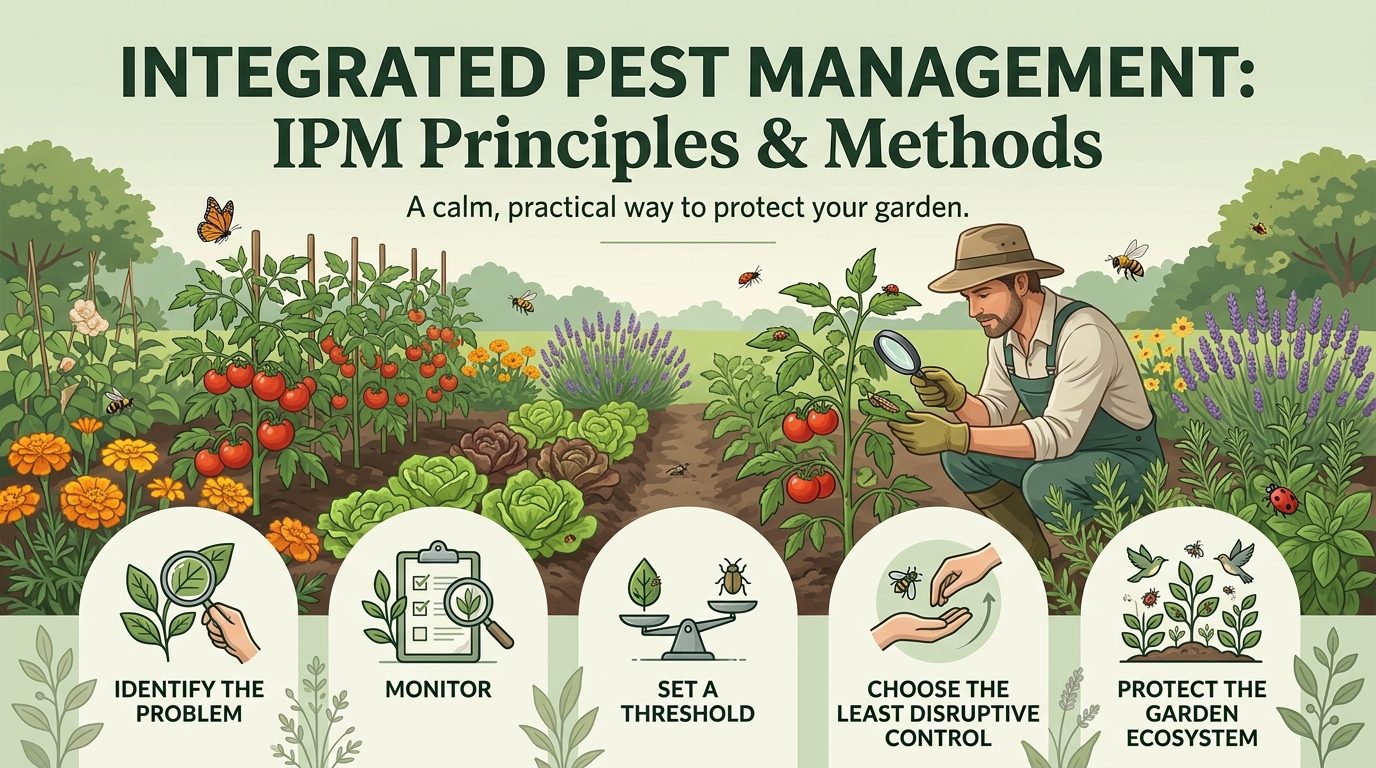

A calm, practical way to protect your garden: identify the problem, monitor what is happening, and choose the least disruptive control that will work.
When a leaf is chewed, curled, or suddenly sticky, it is tempting to reach for the fastest-looking fix. Integrated Pest Management—or IPM—asks you to pause first. It combines close observation with a sequence of sensible controls, helping you protect plants while making room for the beneficial insects and healthy growing conditions that solve many problems naturally.
What does IPM actually mean?
IPM is a prevention-first approach to pest decisions. It does not mean “never use a pesticide,” and it does not mean accepting severe plant damage. Instead, it means using accurate identification, regular monitoring, practical thresholds, and a layered set of controls. The goal is to reduce risk to people, pets, pollinators, beneficial organisms, and the wider garden ecosystem while still solving the problem in front of you.
Think of IPM as a ladder, not a single product.
Start at the bottom: grow resilient plants and prevent access. Then monitor, remove pests physically, and protect natural enemies. If a targeted product is necessary, choose the narrowest effective option and use it exactly as the label directs.
1. Monitor before you act
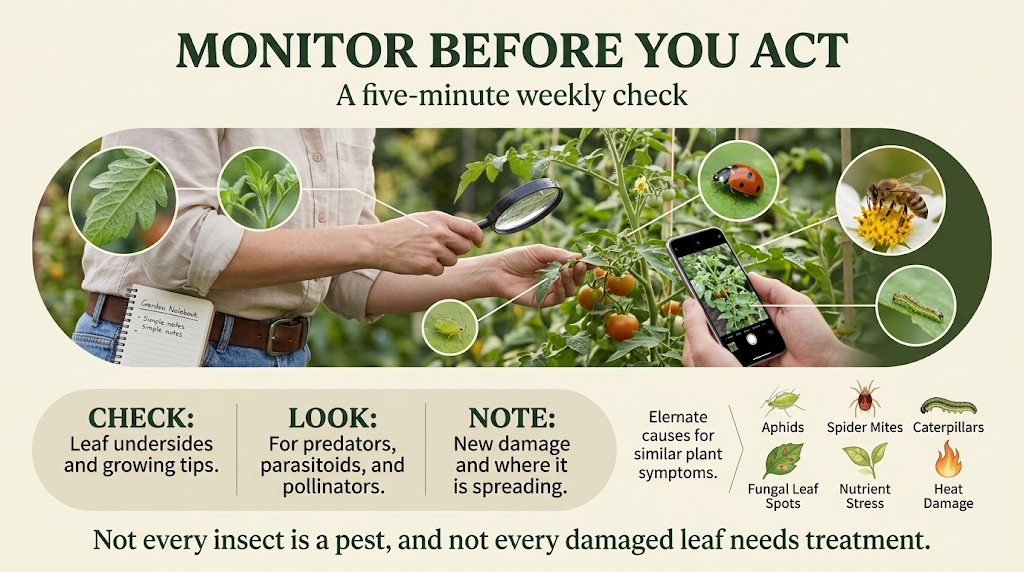
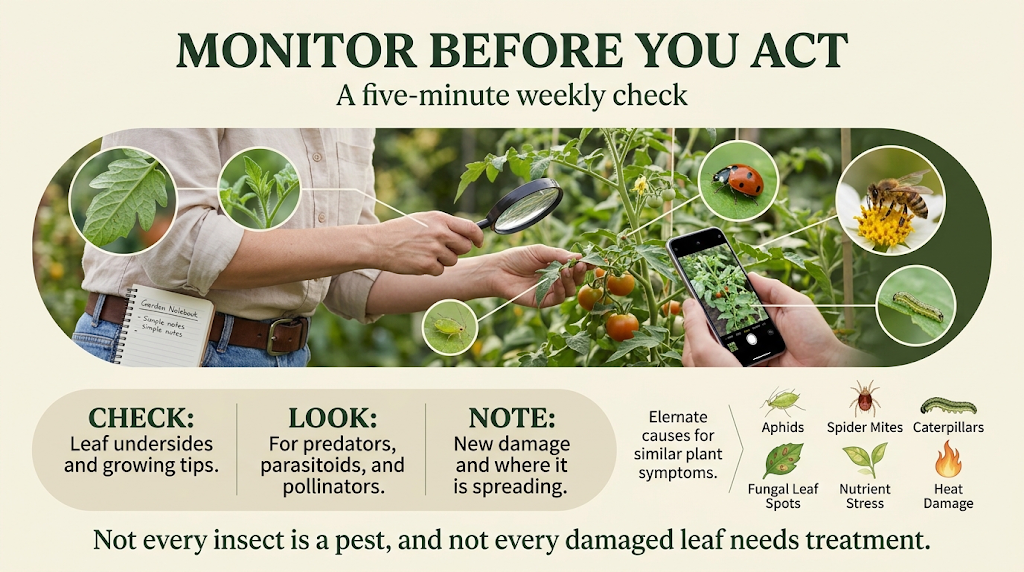
A five-minute weekly check
Walk your garden at the same time each week. A phone photo and a few notes will make it easier to spot whether an issue is growing, shrinking, or simply cosmetic.
- Check leaf undersides and growing tips.
- Look for predators, parasitoids, and pollinators.
- Note new damage and where it is spreading.
Identification matters because not every insect is a pest, and not every damaged leaf needs treatment. Aphids, spider mites, caterpillars, fungal leaf spots, nutrient stress, and heat damage can look similar from a distance. Take clear photos, note which plant parts are affected, and consult a local university extension resource if you are unsure. Local context—including season, weather, and what is growing nearby—changes the likely cause.
2. Set a threshold that fits your garden
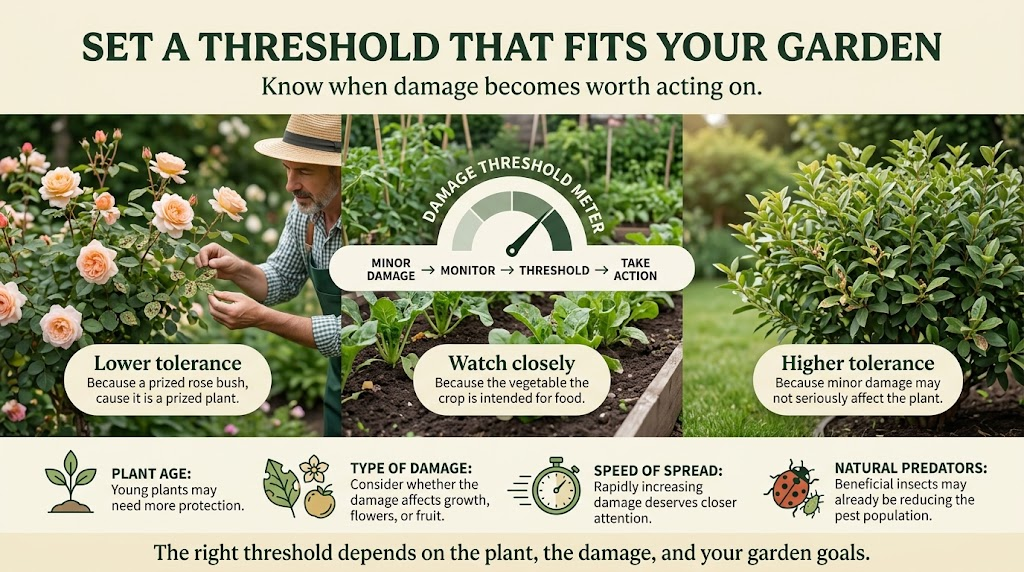
A threshold is the point where you decide the likely damage is no longer acceptable. In a home garden, your threshold may be lower for a prized rose or a vegetable you intend to eat, and higher for an established ornamental shrub that can lose a few leaves without harm. Consider the plant’s age, the type of damage, how fast it is spreading, and whether predators are already reducing the pest population.
Aphids on a young tomato plant
A few aphids on growing tips may be tolerable if you also see lady beetles, lacewing larvae, or tiny parasitoid wasps. If new growth is badly distorted and colonies are rapidly expanding, begin with a firm spray of water, remove the worst-infested tips, and recheck in two days. Escalate only if the plant continues to decline.
3. Choose the least-disruptive control first
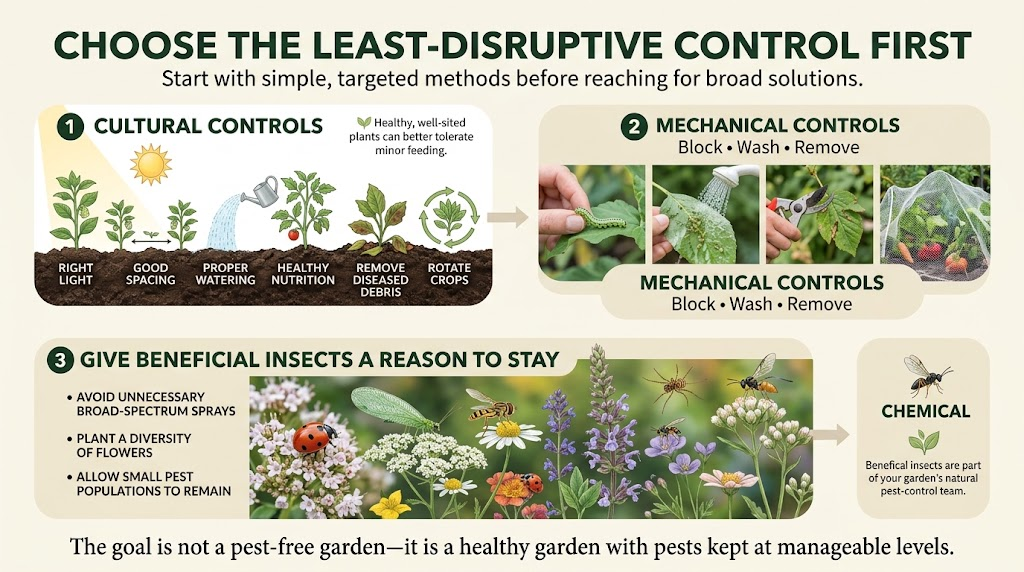
The order below is not rigid, but it helps avoid treating a small or temporary issue with a broad solution that may cause bigger problems later.
Cultural controls: make the garden less inviting
Give plants appropriate light, spacing, water, and nutrition. Remove diseased plant debris, rotate annual crops when practical, and choose varieties suited to your climate. Healthy, well-sited plants are often better able to tolerate minor feeding.
Mechanical controls: block, wash, or remove
Give beneficial insects a reason to stay
Lady beetles, lacewings, hoverflies, spiders, and tiny parasitic wasps are part of your garden’s pest-control team. Avoid unnecessary broad-spectrum sprays, provide a diversity of flowering plants, and accept that a small pest population is often what keeps beneficial insects nearby.
4. When a targeted chemical option is justified
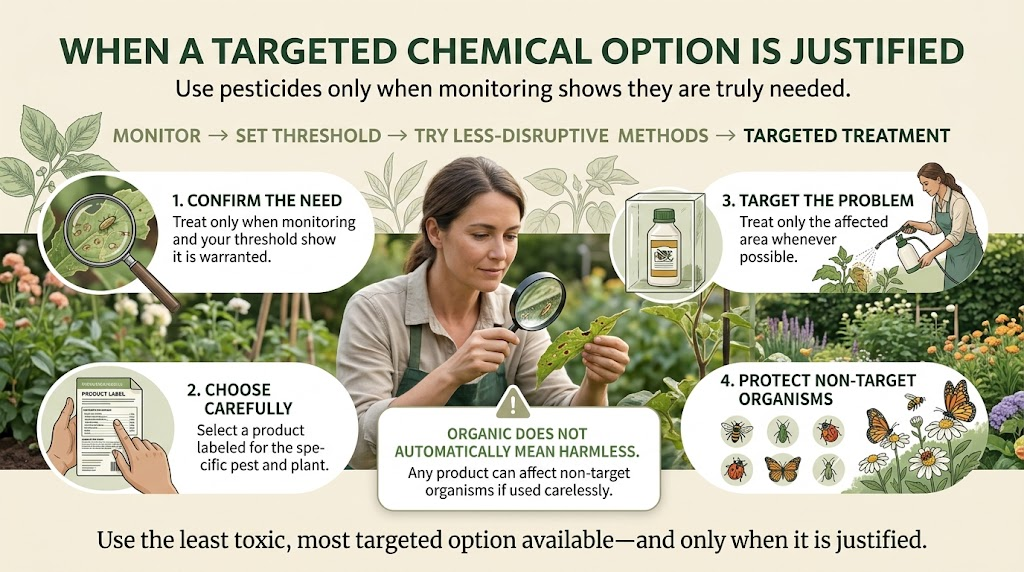
Use a pesticide only when monitoring and your threshold show it is warranted—and after less disruptive tactics are not enough. Select a product labeled for the specific pest and plant, favour the least toxic and most targeted formulation available to you, and treat only the affected area. “Organic” does not automatically mean harmless: any product can affect non-target organisms if used carelessly.
Read the label—every time.
The label is the legal instruction for safe use. Follow directions for protective clothing, mixing, timing, storage, disposal, and food-crop harvest intervals. Avoid applying products to open blooms or when bees are active, and never spray on windy days. If you have children, pets, ponds, or wildlife habitat nearby, take additional care and seek local advice when needed.
The 5-step IPM plan for your next pest problem
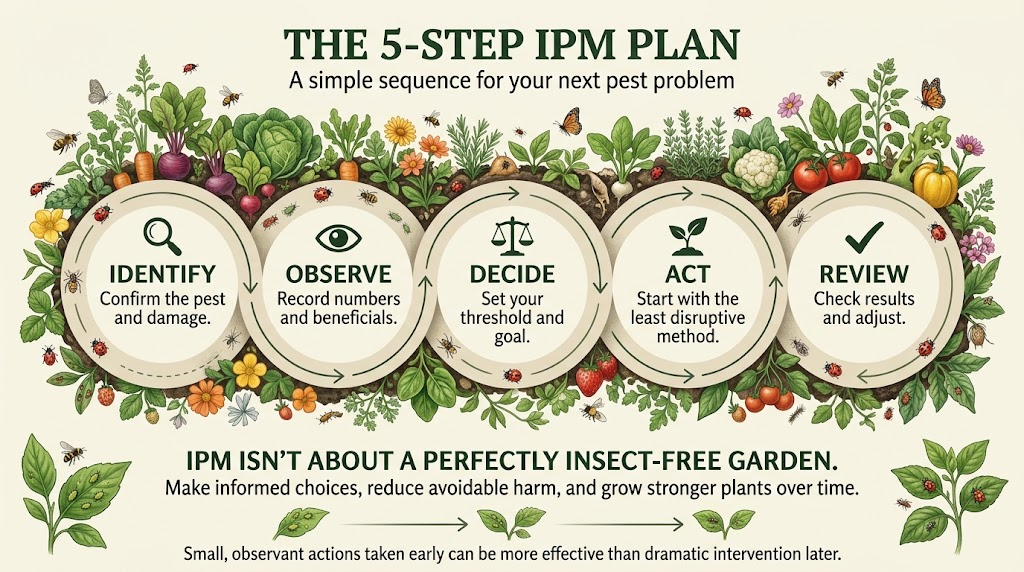
Use this simple sequence whenever you notice a problem. It turns a stressful moment into a repeatable garden habit.
| 1. Identify Confirm the pest and damage. | 2. Observe Record numbers and beneficials. | 3. Decide Set your threshold and goal. | 4. Act Start with the least disruptive method. | 5. Review Check results and adjust. |
IPM is not about achieving a perfectly insect-free garden. It is about making informed choices, reducing avoidable harm, and growing stronger plants over time. Small, observant actions taken early are usually more effective than a dramatic intervention taken late.
Frequently asked questions
How do I know whether an insect is actually a pest?
Look at the plant, the pattern of damage, and the insect’s role together. Check whether the population is increasing, whether the plant is being harmed, and whether predators or pollinators are present before deciding to intervene.
When should I use a spray?
Use a spray only when the pest is correctly identified, the damage has reached your threshold, and less disruptive options are not enough. Choose a product labeled for the specific plant and pest, then follow every label direction.
How can I protect beneficial insects?
Keep flowering plants available, avoid broad-spectrum treatments, spray only affected areas when possible, and avoid applying products when bees are actively visiting blooms. A small pest population can help beneficial insects remain in the garden.