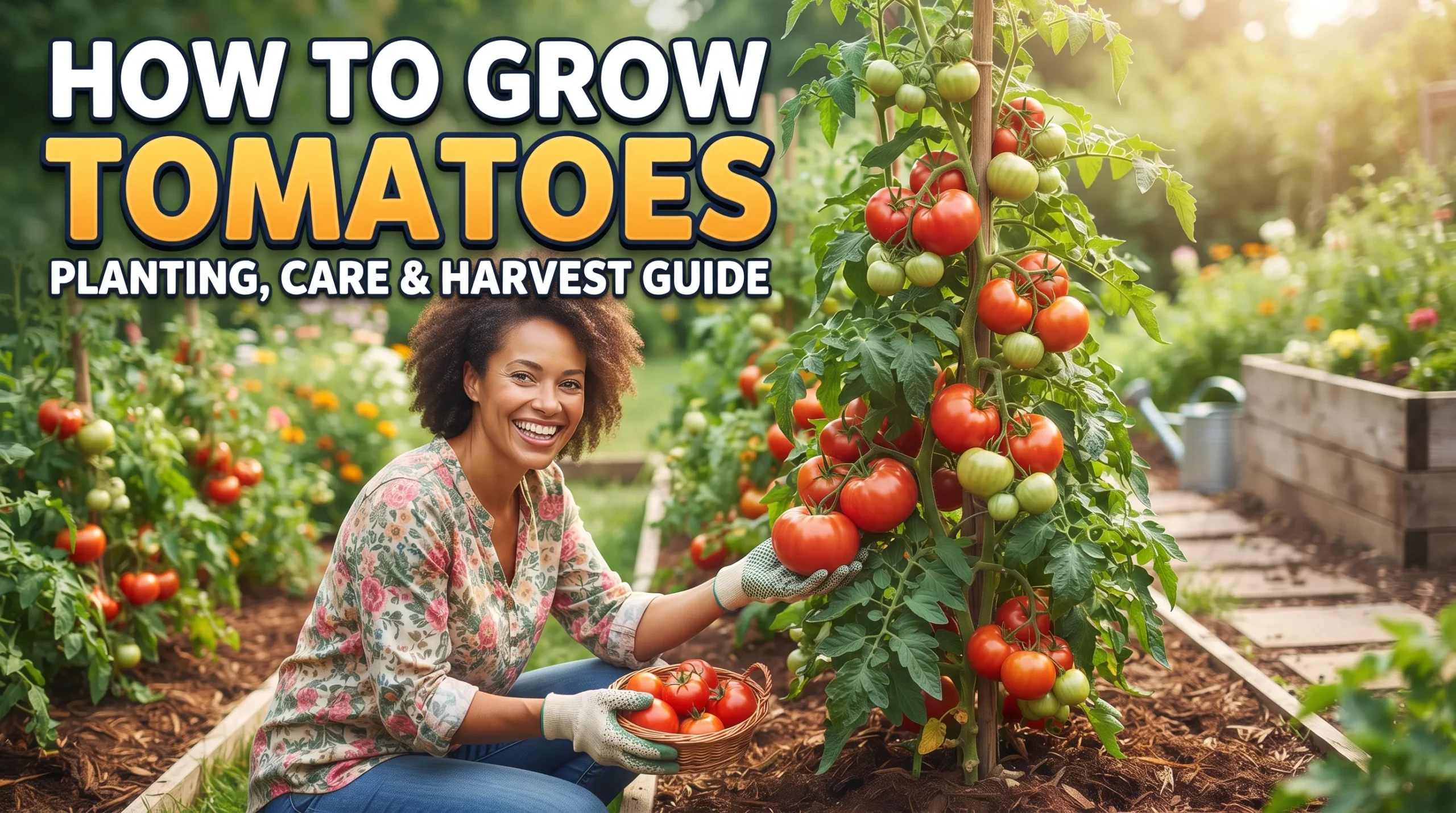

A clear, season-long guide to raising productive tomato plants at home, from the right planting moment to the first perfectly ripe fruit.
When should you plant tomatoes?
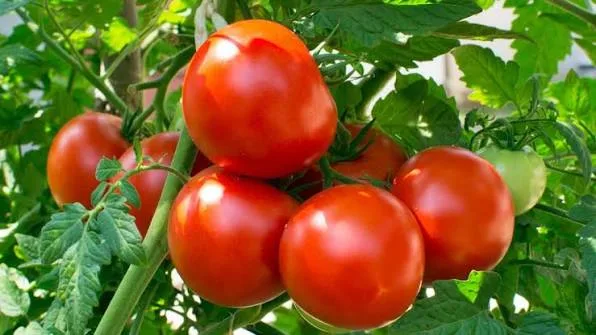
Tomatoes are warm-season plants. Set seedlings outdoors only after the risk of frost has passed and nighttime temperatures are reliably mild. A useful starting point is to wait until soil feels warm rather than cold and wet; tomato roots grow slowly in chilly ground.
Your exact calendar depends on your local climate and variety. If you are growing from seed, start indoors about 6–8 weeks before your usual final frost date. If you are buying a tomato plant, choose a stocky, green seedling with no flowers or fruit needed yet.
Give tomatoes sun, warmth, and open soil
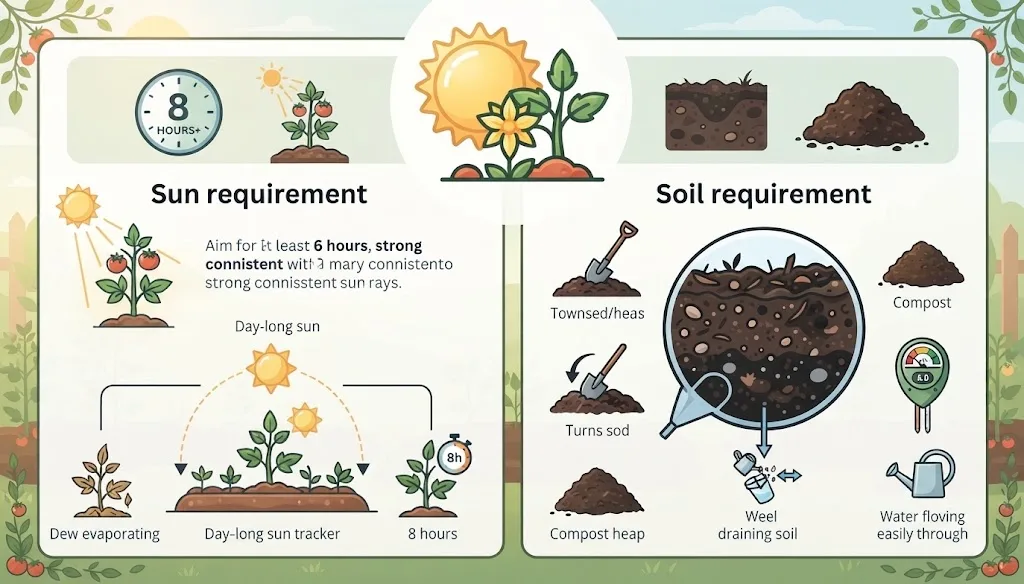
A tomato plant can cope with an imperfect garden, but it is far more productive with a sunny, airy home. Before planting, watch where sunlight lands across your space for a day.
Sun requirement
Aim for at least 6 hours of direct sun, with 8 hours ideal in many climates. Morning-to-afternoon sun helps leaves dry after dew or rain.
Soil requirement
Use loose, well-draining soil enriched with compost. A slightly acidic to near-neutral pH, around 6.0–6.8, is a useful target for most gardens.
How to plant a tomato plant for strong roots
Unlike many seedlings, tomatoes can form roots along a buried stem. Planting them a little deeper than they sat in the pot gives them a sturdier foundation, especially when the seedling is tall or leggy.
- Harden off indoor-raised seedlings for about a week by gradually exposing them to outdoor conditions.
- Dig a hole deep enough to bury the lower portion of the stem, removing any leaves that would be below soil level.
- Space plants about 45–60 cm (18–24 in) apart for compact types, and more generously for large indeterminate varieties. Check the plant label for its recommendation.
- Water deeply after planting and install a stake, cage, or trellis now, before roots spread and make later installation difficult.
Water consistently, feed moderately, and support early
The core of tomato plant care is consistency. Big swings between drought and soaking can lead to split fruit, blossom-end rot, and stressed plants. Check the soil rather than following a rigid watering schedule.
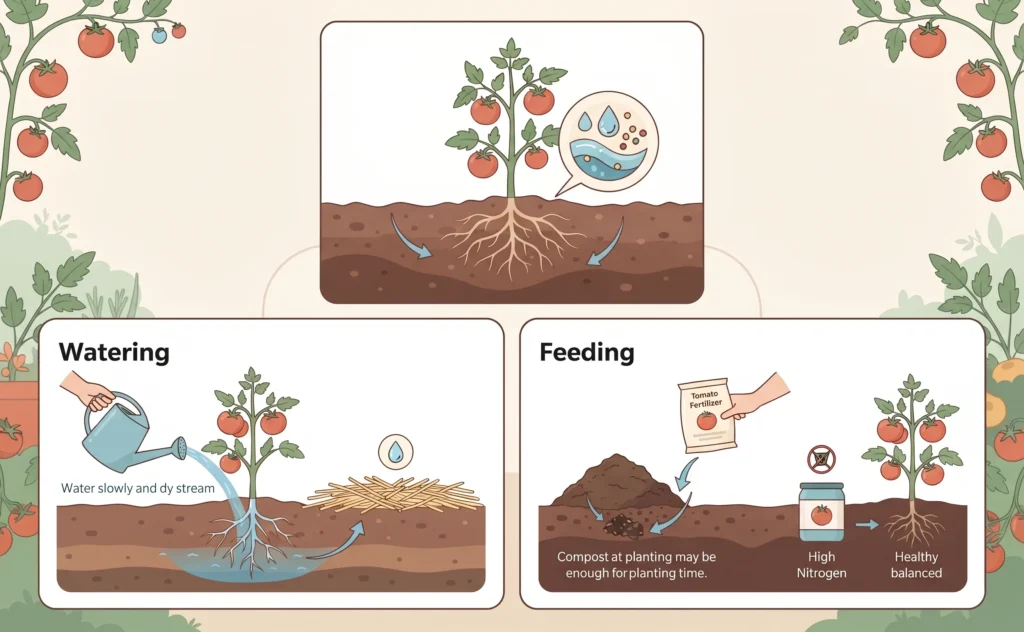
Watering
Water slowly and deeply when the top few centimetres of soil feel dry. Mulch with clean straw, leaves, or compost to hold moisture and reduce soil splash.
Feeding
Compost at planting may be enough for rich soil. If needed, use a tomato fertiliser according to its label; too much nitrogen can create lots of leaves and fewer fruits.
Support matters: Tie stems loosely with soft plant ties as they grow. Indeterminate tomatoes benefit from regular tying and light pruning for airflow; compact determinate types usually need less pruning.
Common tomato problems and practical first steps
Look closely before treating a problem. Weather, water stress, pests, and disease can produce similar symptoms. Removing badly affected leaves and improving airflow are often sensible first actions.
| What you see | Likely cause | What to do |
|---|---|---|
| Black, leathery patch on fruit bottom | Blossom-end rot, often linked to uneven moisture and calcium uptake. | Keep watering even, mulch soil, and avoid damaging roots. Check soil pH before adding calcium products. |
| Leaves with holes or chewed edges | Caterpillars, beetles, slugs, or other chewing pests. | Inspect leaf undersides and around the plant at dusk. Hand-remove visible pests and use local, crop-appropriate controls only when needed. |
| Yellowing lower leaves with spots | Leaf disease, crowded growth, or normal ageing of older foliage. | Remove affected leaves, water at the base, improve spacing, and avoid composting severely diseased material. |
Know when tomatoes are ready to pick
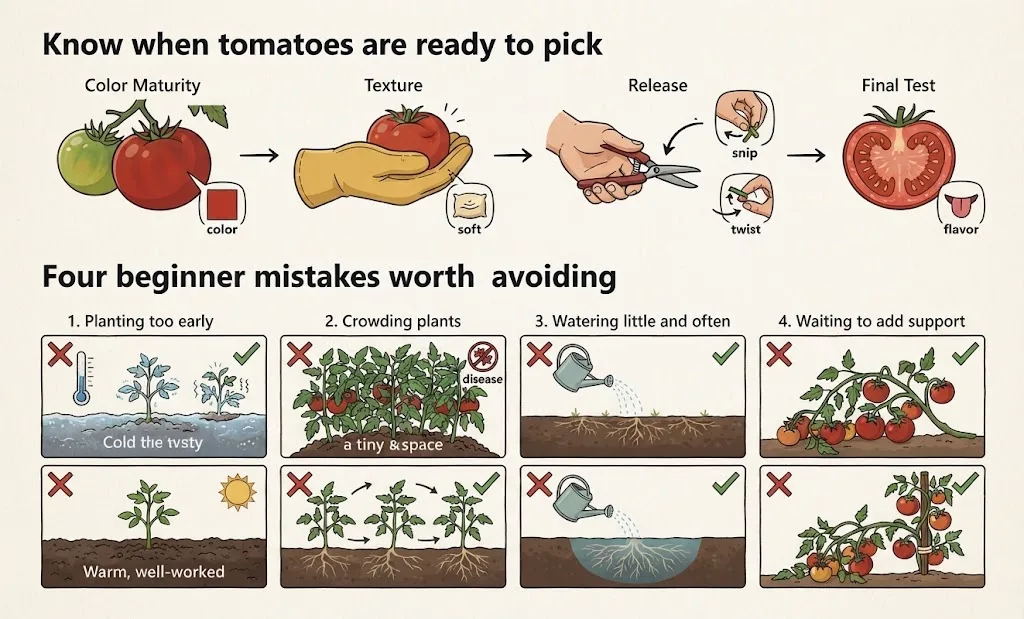
Harvest timing depends on the variety, but ripe tomatoes usually show their full mature colour, feel slightly soft under gentle pressure, and release with a small twist or snip. Taste is the best final test.
Four beginner mistakes worth avoiding
- Planting too early, when cold soil and nights slow growth and leave plants vulnerable.
- Crowding plants, which reduces airflow and makes it easier for leaf diseases to spread.
- Watering little and often instead of deeply enough to encourage resilient roots.
- Waiting to add support until plants are already sprawling or carrying heavy fruit.
Tomato growing FAQs
How often should I water tomato plants?
Water deeply when the top few centimetres of soil feel dry, adjusting for heat, rain, soil type, and container size. Consistent moisture is more important than following a fixed daily schedule.
Can tomatoes grow in containers?
Yes. Choose a large container with drainage holes, use fresh quality potting mix, and select a compact or patio variety when space is limited. Containers usually need more frequent watering than garden beds.
Why are my tomato leaves turning yellow?
Older lower leaves can yellow naturally, but widespread yellowing may point to overwatering, poor drainage, nutrient stress, or disease. Check soil moisture, airflow, and affected leaves before treating.