
Everything you need to know about this beautiful, low-maintenance ground cover — from planting to controlling its spread.
Key Takeaway
Periwinkle is a tough, spreading ground-cover plant that performs well in partial shade and well-drained soil. Its vigorous trailing stems root as they grow — excellent for covering difficult ground, but plan where you plant it and manage its edges regularly.
What Is Periwinkle?
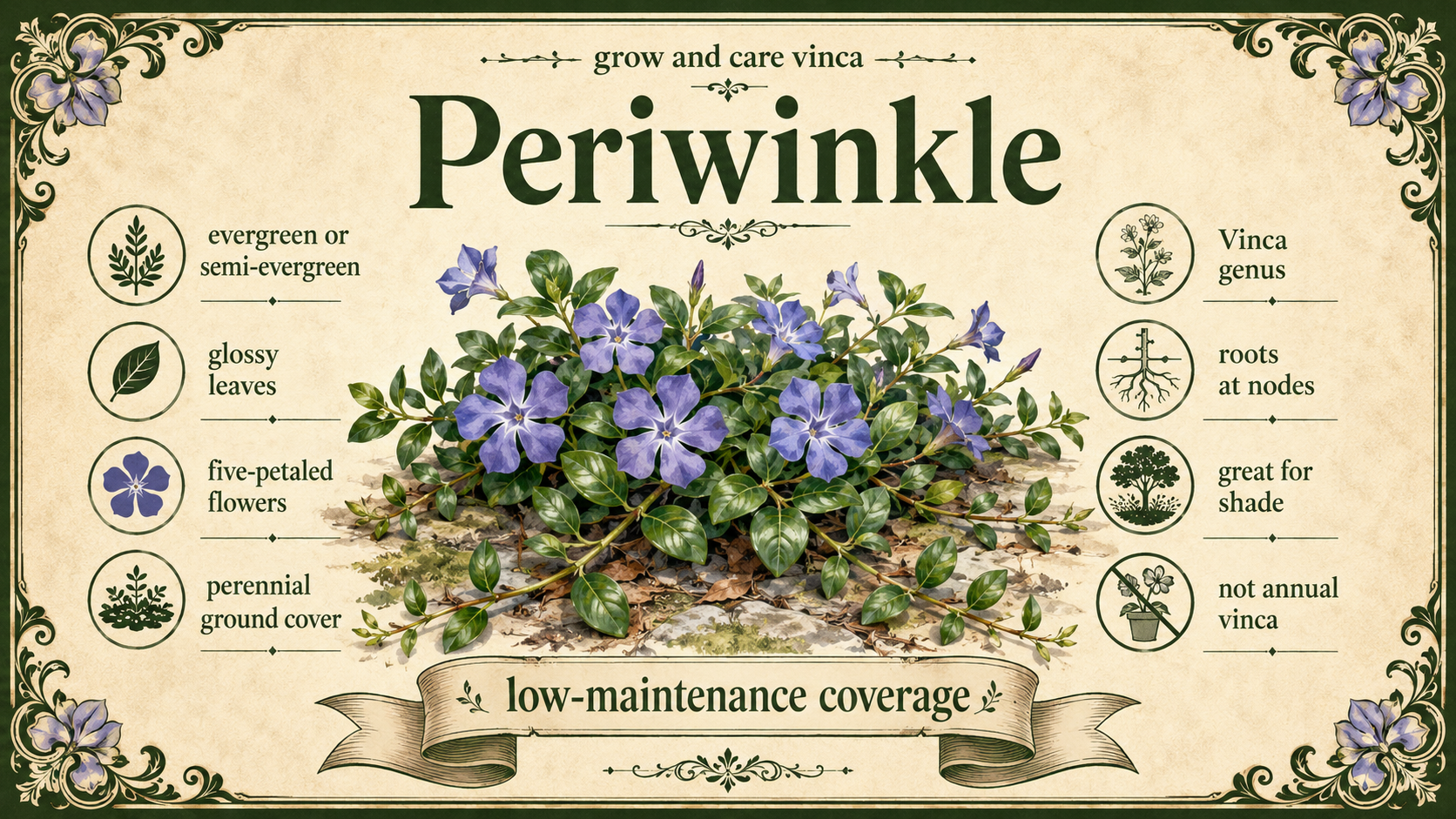
Periwinkle (genus Vinca) is an evergreen or semi-evergreen trailing plant prized for its glossy leaves and delicate five-petalled flowers. Native to Europe and western Asia, it has been cultivated in gardens for centuries as a reliable ground cover beneath trees, along slopes, and in difficult shady spots where few other plants thrive.
The common name ‘periwinkle’ covers two main species grown in gardens: Vinca minor (lesser periwinkle) and Vinca major (greater periwinkle). Both produce trailing stems that root at the nodes, forming dense mats of foliage. They are not the same as annual vinca (Catharanthus roseus), a tropical bedding plant often sold under the same name.
Periwinkle is a perennial — it comes back every year without replanting. Once established, it requires very little attention, making it a favourite of gardeners who want attractive coverage with minimal effort.
Vinca Minor vs Vinca Major: What’s the Difference?
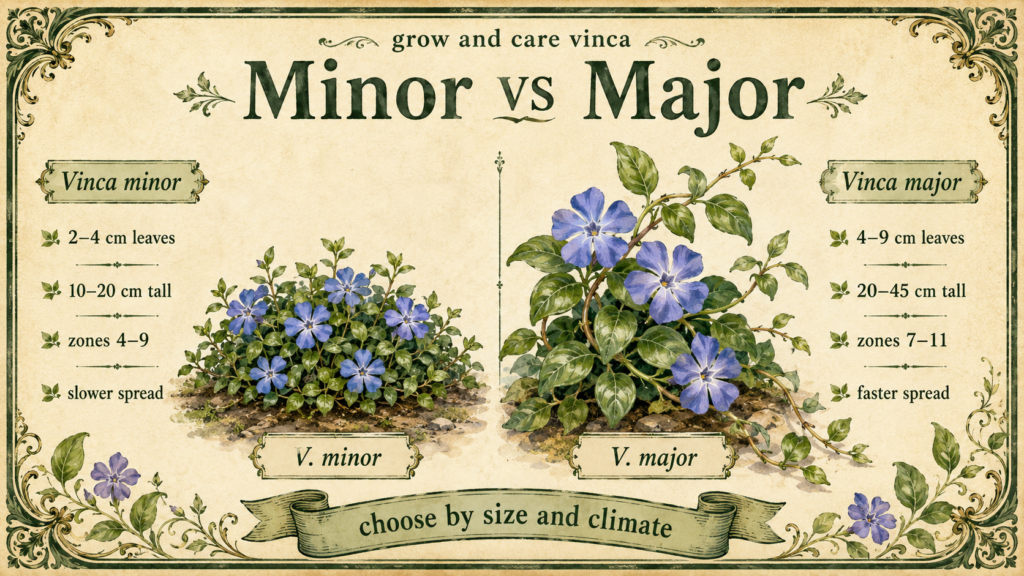
Vinca Minor (Lesser Periwinkle)
Smaller leaves (2–4 cm), neater habit, flowers in spring. Hardier (zones 4–9). Slower spreading and easier to control. Best for most garden situations. Grows 10–20 cm tall.
Vinca Major (Greater Periwinkle)
Larger leaves (4–9 cm), more vigorous, flowers spring to early summer. Less hardy (zones 7–11). Spreads faster and can become invasive in mild climates. Grows 20–45 cm tall with arching stems.
Periwinkle Care at a Glance
| Light Partial shade to full shade |
| Water Low once established |
| Hardiness Zones 4–9 (minor) |
| Soil Well-drained, any pH |
| Bloom Spring (Mar–May) |
Where and How to Plant Periwinkle
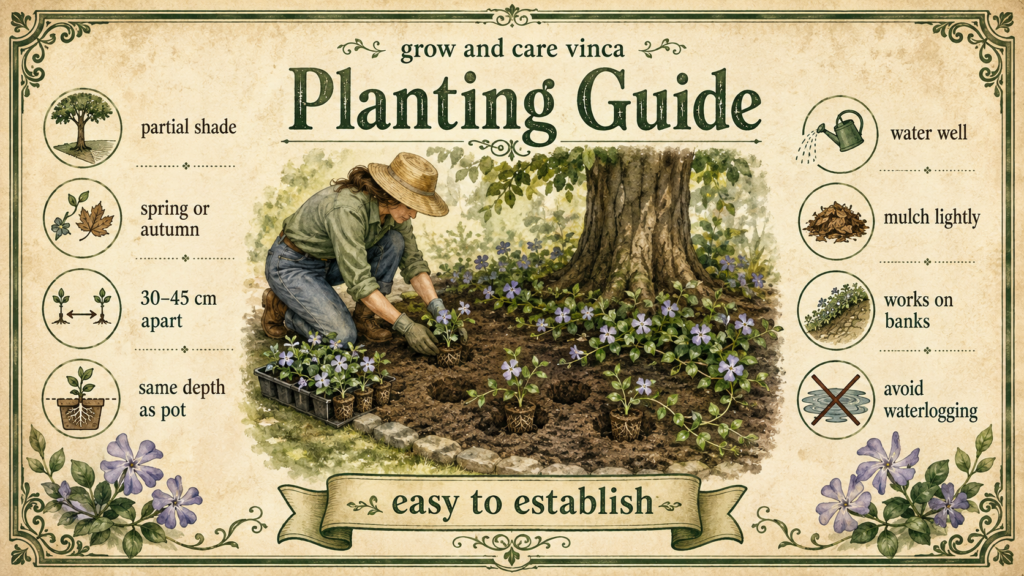
Choose a spot in partial shade — beneath deciduous trees, along north-facing walls, or on shaded banks. Periwinkle tolerates full shade but flowers more generously with a few hours of morning sun. It also handles full sun in cooler climates if the soil stays moist.
Plant in spring or autumn when the soil is workable. Space plants 30–45 cm apart for quick coverage. Dig each hole slightly larger than the root ball, set the plant at the same depth it was growing, firm the soil, and water well. A thin mulch of bark or compost helps retain moisture while roots establish.
Periwinkle is not fussy about soil — it grows in clay, loam, or sandy ground as long as drainage is reasonable. Avoid permanently waterlogged areas, which cause root rot and yellowing leaves.
Watering and Feeding
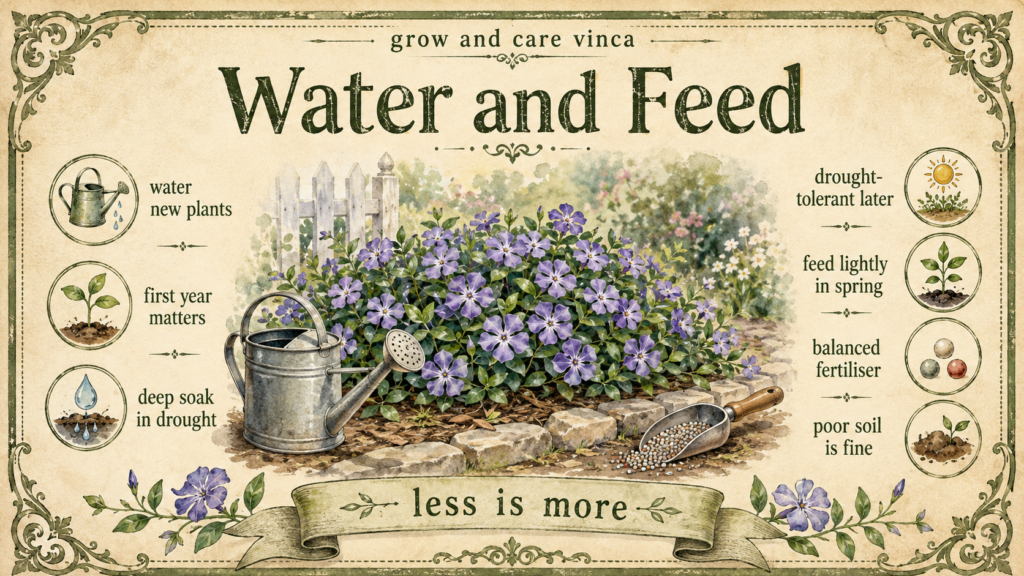
Water new plants regularly during their first growing season to encourage strong root development. Once established (usually by the second year), periwinkle is drought-tolerant and rarely needs supplemental watering except during prolonged dry spells.
Feeding is optional. A light application of balanced granular fertiliser in early spring can encourage denser growth and better flowering, but periwinkle performs well in poor soil without any feeding at all.
When Does Periwinkle Flower?
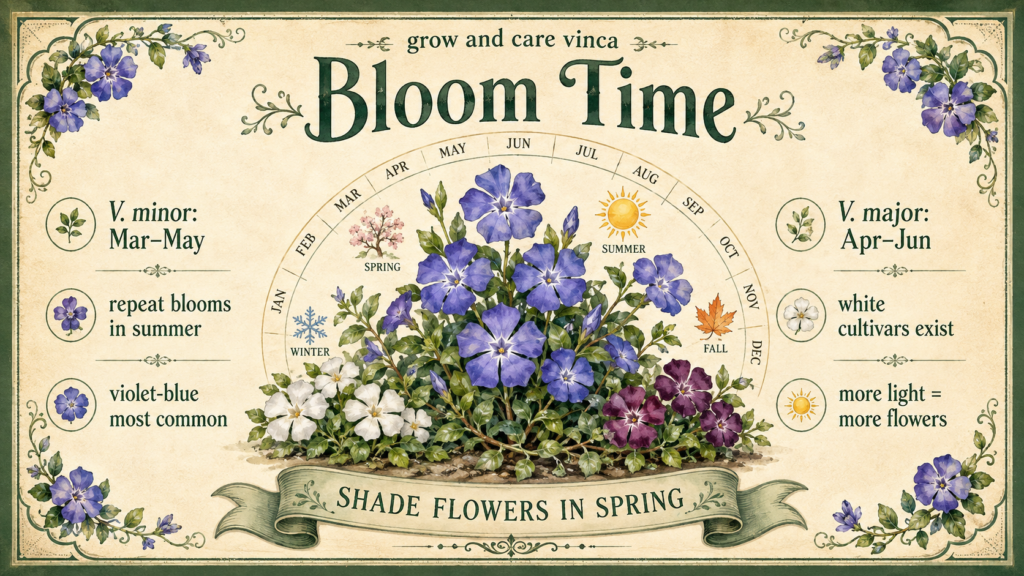
Vinca minor flowers mainly in March to May, with occasional repeat blooms through summer. Vinca major blooms from April to June. Flowers are typically violet-blue, though white and plum-purple cultivars exist. Each flower lasts several days and is followed by more over several weeks.
If your periwinkle is not flowering, the most common cause is too much deep shade. Moving to a brighter position or thinning overhead tree canopy usually solves the problem. Over-fertilising with nitrogen can also encourage leaves at the expense of blooms.
Pruning and Controlling Spread
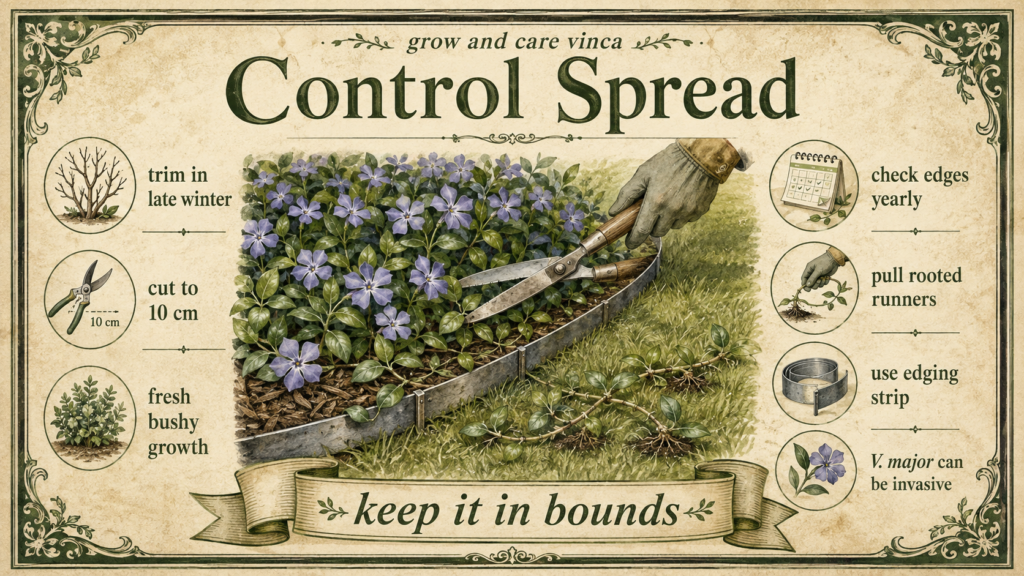
Periwinkle benefits from a hard trim in late winter or early spring — cut all stems back to about 10 cm. This removes tired foliage, encourages fresh bushy growth, and improves flowering. Use shears or a strimmer for large areas.
To prevent unwanted spread, check edges two or three times per year. Pull or cut any trailing stems that have rooted beyond the intended area. Installing a simple metal or plastic lawn edging strip creates a physical boundary that slows encroachment into paths or lawns.
In some regions (particularly parts of the eastern United States, Australia, and New Zealand), Vinca major is listed as an invasive species. Check local guidelines before planting, and consider Vinca minor as a less aggressive alternative.
How to Propagate Periwinkle
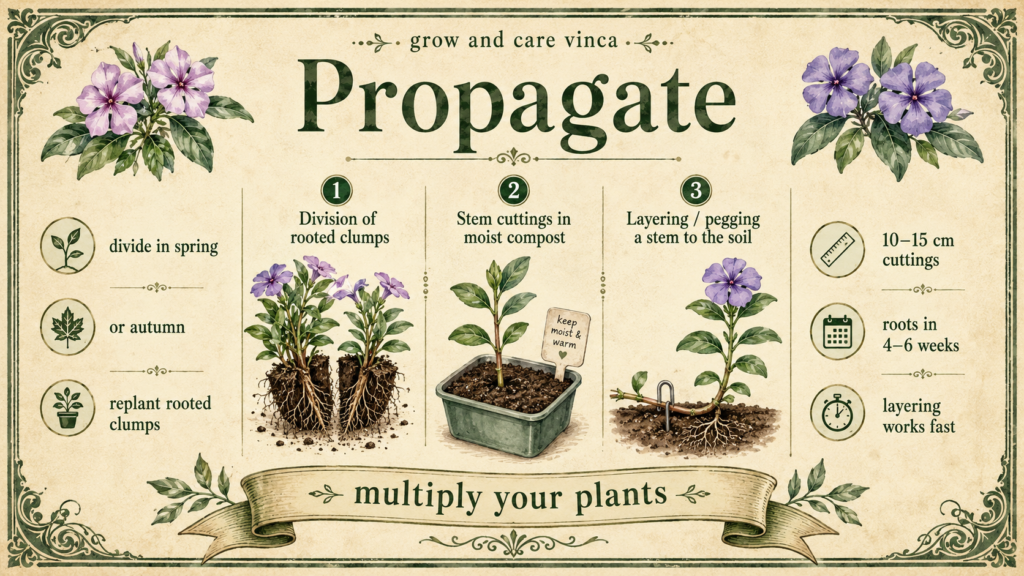
Division is the simplest method. In spring or autumn, lift a section of rooted stems with a fork, separate into clumps, and replant immediately. Water well and keep moist until new growth appears.
Stem cuttings also root readily. Take 10–15 cm tip cuttings in late spring or early summer, remove the lower leaves, and insert into pots of moist compost. Place in a shaded spot and keep the compost damp — roots typically develop within 4–6 weeks.
You can also peg trailing stems to the soil where you want new plants to establish. Once rooted (check after a few weeks), sever the stem from the parent plant.
Growing Periwinkle in Containers

Periwinkle makes an excellent trailing plant for containers, hanging baskets, and window boxes. Its cascading stems soften edges beautifully. Use a pot at least 25 cm wide with drainage holes and fill with multi-purpose compost.
Container-grown periwinkle needs more frequent watering than ground-planted specimens — check weekly and water when the top 2 cm of compost feels dry. Feed monthly with a liquid fertiliser during the growing season. Trim back leggy stems in spring to keep plants bushy.
Common Problems and Troubleshooting
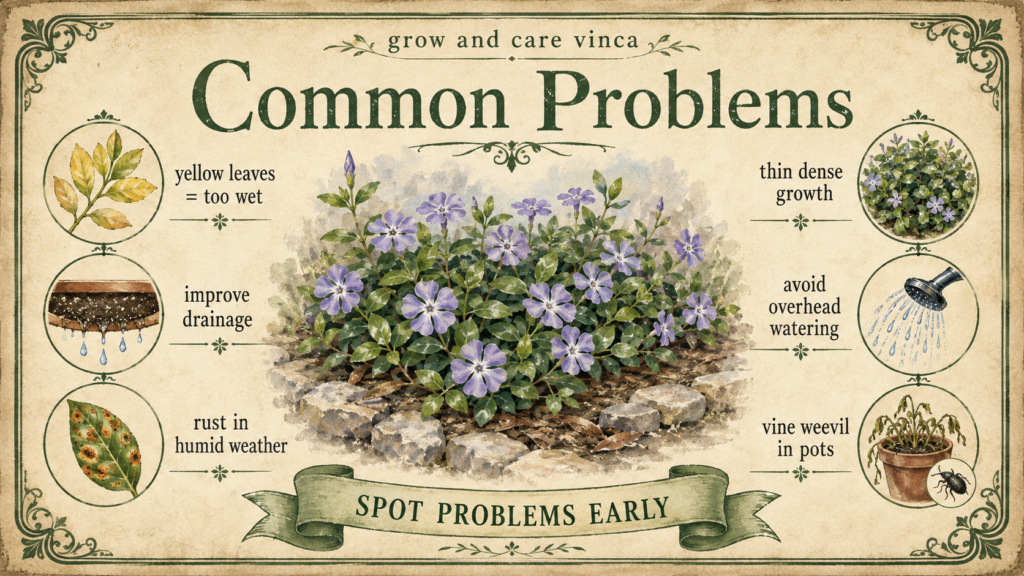
Yellow leaves usually indicate overwatering or poor drainage. Improve soil structure or reduce watering frequency. In containers, ensure drainage holes are not blocked.
Rust (orange-brown spots on leaves) can appear in humid conditions. Remove affected foliage, improve air circulation by thinning dense growth, and avoid overhead watering. Severe cases may need a fungicide spray.
Vine weevil larvae sometimes attack container-grown plants, causing sudden wilting. Biological nematode treatments applied in late summer are the most effective organic control.
Is Periwinkle Toxic to Pets and Children?
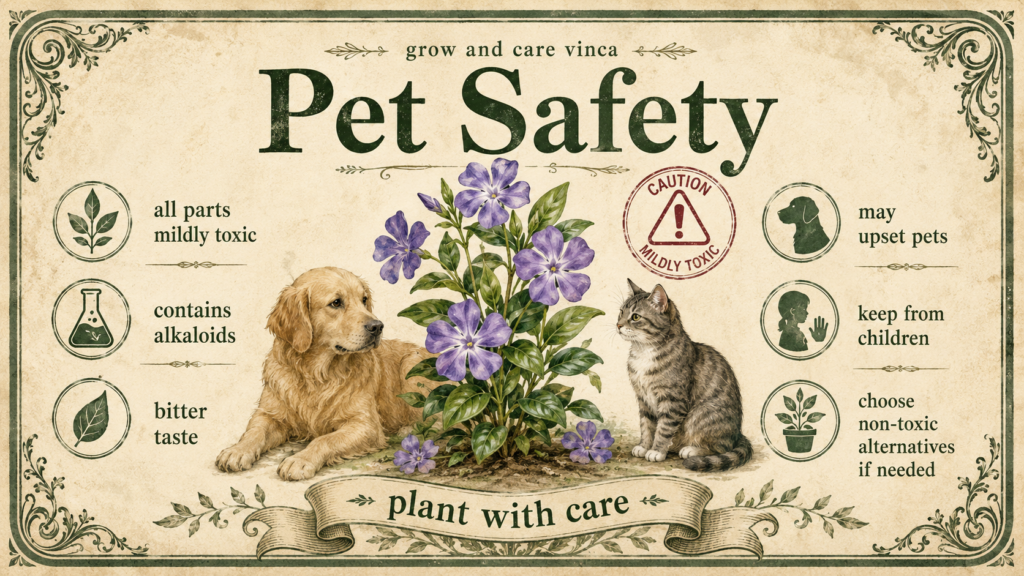
Yes — all parts of Vinca minor and Vinca major contain alkaloids that are mildly toxic if ingested. Symptoms in pets (particularly dogs and cats) can include vomiting, diarrhoea, and low blood pressure. In practice, serious poisoning is rare because the plant tastes bitter.
As a precaution, plant periwinkle in areas that curious pets and young children cannot easily access, or choose a non-toxic alternative ground cover such as creeping thyme if this is a concern in your garden.
Frequently Asked Questions
How quickly does periwinkle spread?
Vinca minor usually fills in steadily over two to three growing seasons, while Vinca major spreads more quickly in mild conditions. Trim rooted runners at the edges to keep the planting within bounds.
Can periwinkle grow in full shade?
Yes. Periwinkle tolerates full shade, although flowering is generally better with a little morning or filtered light. Keep the soil well drained, especially in dark, damp areas.
When is the best time to plant periwinkle?
Plant in spring or autumn when the soil is workable. Water new plants regularly during their first growing season while they establish roots.