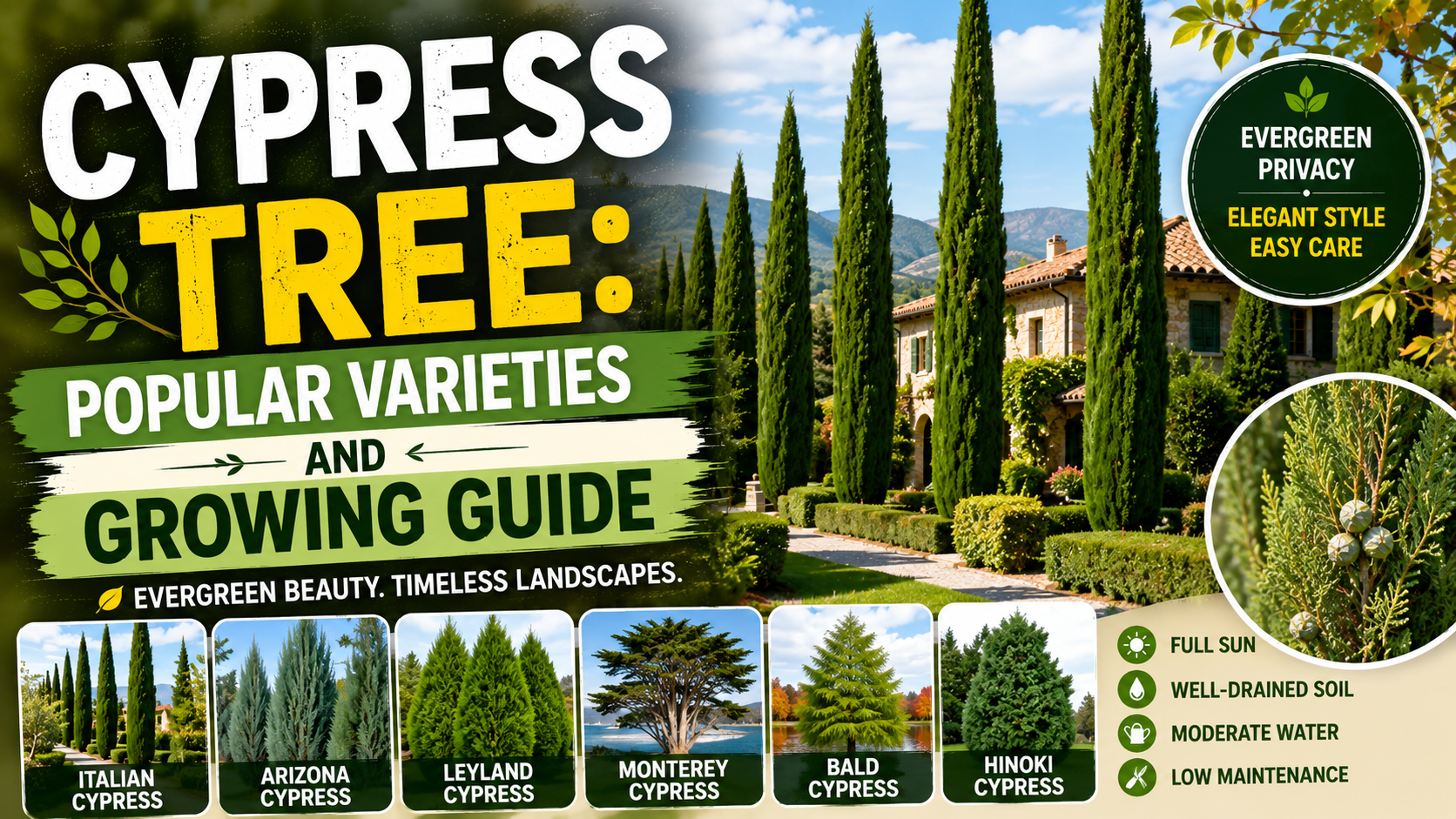

Everything you need to know about choosing, planting, and caring for cypress trees — from the iconic Italian cypress to hardy bald cypress and fast-growing Leyland varieties.
What Is a Cypress Tree?
A cypress tree is an evergreen or deciduous conifer valued for its distinctive shape, year-round structure, privacy benefits, and adaptability to a range of climates. The term encompasses several genera, but true cypresses belong to the genus Cupressus — a group of about 25 species native to warm-temperate and subtropical regions across the Northern Hemisphere.
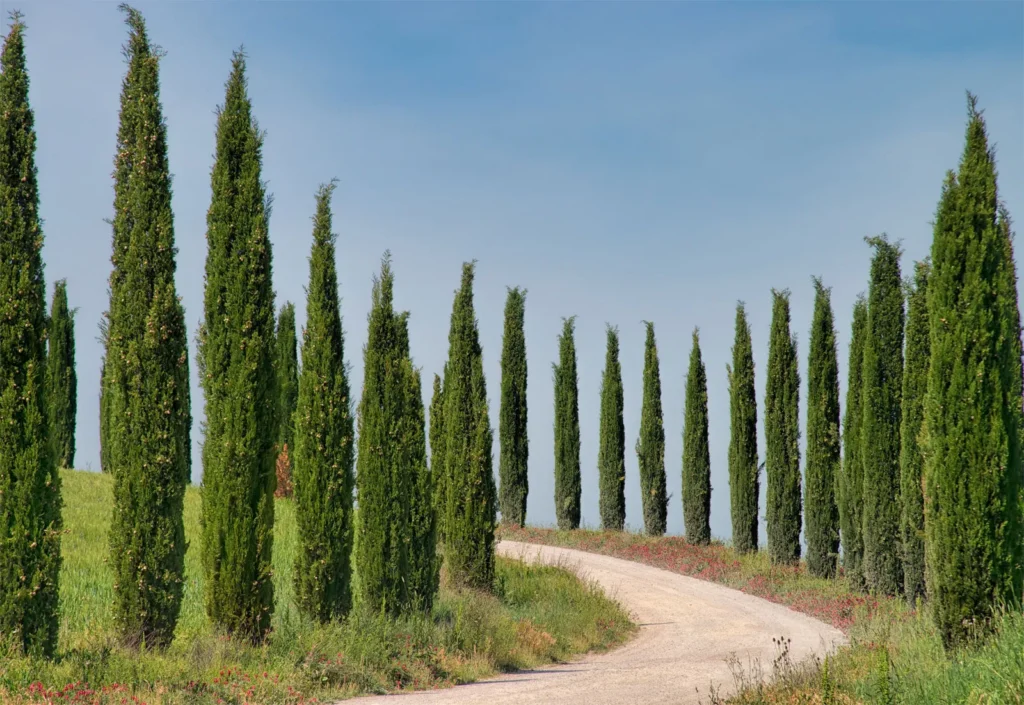
Not every tree with ‘cypress’ in its common name is a true cypress. Italian cypress (Cupressus sempervirens) and Arizona cypress (Cupressus arizonica) are true cypresses. Leyland cypress is an intergeneric hybrid (×Cuprocyparis leylandii). Bald cypress (Taxodium distichum) belongs to a separate family entirely and is one of the few deciduous conifers. Hinoki cypress and Lawson cypress are technically in the genus Chamaecyparis — often called false cypresses.
Understanding this distinction matters because their climate needs, mature size, growth habit, and disease susceptibility can vary significantly. This guide covers the most popular cypress trees used in home landscapes and explains how to choose and grow the right one for your property.
Popular Cypress Tree Varieties
| Variety | Mature Size | Growth Rate | Climate Zones | Best Use |
|---|---|---|---|---|
| Italian Cypress | 12–21 m tall, 1–2 m wide | Moderate (30–60 cm/yr) | USDA 7–11 | Vertical accents, driveways |
| Arizona Cypress | 12–18 m tall, 6–9 m wide | Moderate–Fast | USDA 7–9 | Windbreaks, dry landscapes |
| Leyland Cypress | 18–21 m tall, 4–6 m wide | Very Fast (90+ cm/yr) | USDA 6–10 | Privacy screens, hedges |
| Bald Cypress | 20–40 m tall, 6–9 m wide | Moderate (30–60 cm/yr) | USDA 4–10 | Wet sites, specimen tree |
| Monterey Cypress | 12–21 m tall, 6–12 m wide | Moderate | USDA 7–10 | Coastal gardens, windbreaks |
| Hinoki Cypress | 3–23 m tall, 3–6 m wide | Slow–Moderate | USDA 5–8 | Ornamental, containers |
| Lawson Cypress | 15–18 m tall, 4–6 m wide | Moderate | USDA 5–8 | Screens, specimens |
| Lemon Cypress | 3–5 m tall, 1–2 m wide | Slow | USDA 7–10 | Containers, small gardens |
Italian Cypress: The Iconic Columnar Evergreen
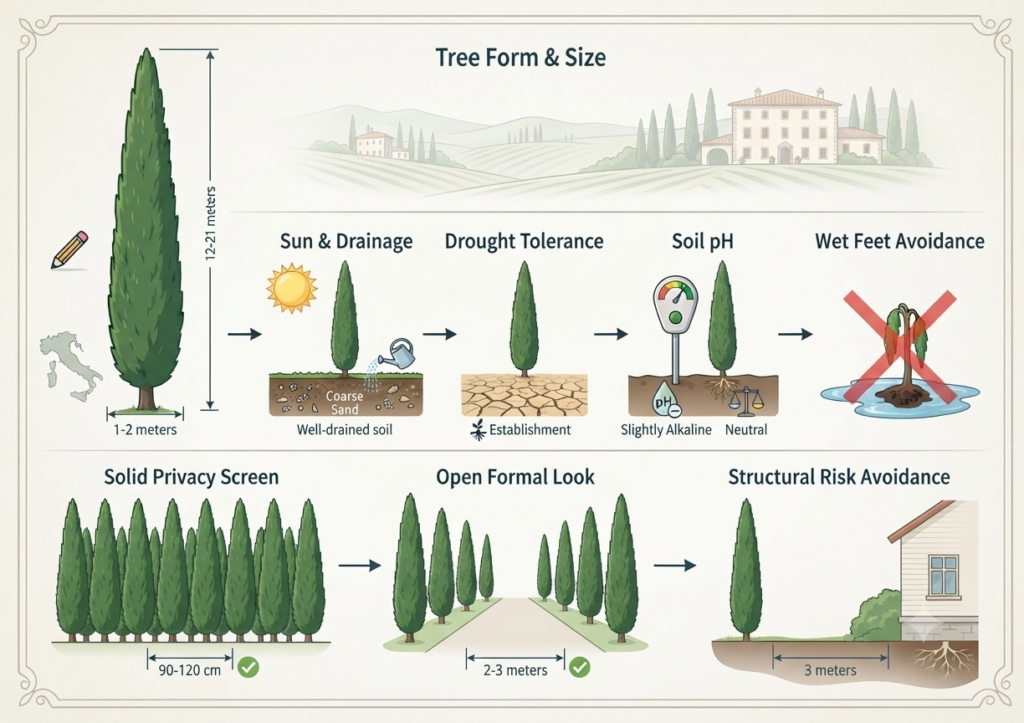
Italian cypress (Cupressus sempervirens) is arguably the most recognizable cypress tree in the world. Its tall, narrow columnar form — sometimes called pencil cypress or Mediterranean cypress — has shaped the landscape of Tuscany, Greece, and southern France for millennia. Mature specimens can reach 12 to 21 meters tall while remaining only 1 to 2 meters wide.
Italian cypress thrives in USDA zones 7–11 and requires full sun and excellent drainage. It is remarkably drought-tolerant once established, making it ideal for Mediterranean, arid, and xeriscape gardens. The tree does not tolerate wet feet — persistently waterlogged soil will cause root rot and rapid decline. Plant in well-drained, slightly alkaline to neutral soil.
Spacing depends on your goal. For a solid privacy screen, plant Italian cypress trees 90–120 cm apart. For a more open formal look along a driveway or path, space them 2–3 meters apart. Keep them at least 3 meters from walls and foundations to allow for root development without structural risk.
Common problems include Seiridium canker (causing branch dieback), spider mites in hot dry weather, and root rot in poorly drained sites. Never top an Italian cypress — it destroys the natural columnar form permanently and creates entry points for disease. If height is a concern, choose a naturally smaller cultivar such as ‘Tiny Tower’ or ‘Swane’s Golden’.
How to Grow Cypress Trees
Site Selection & Sunlight
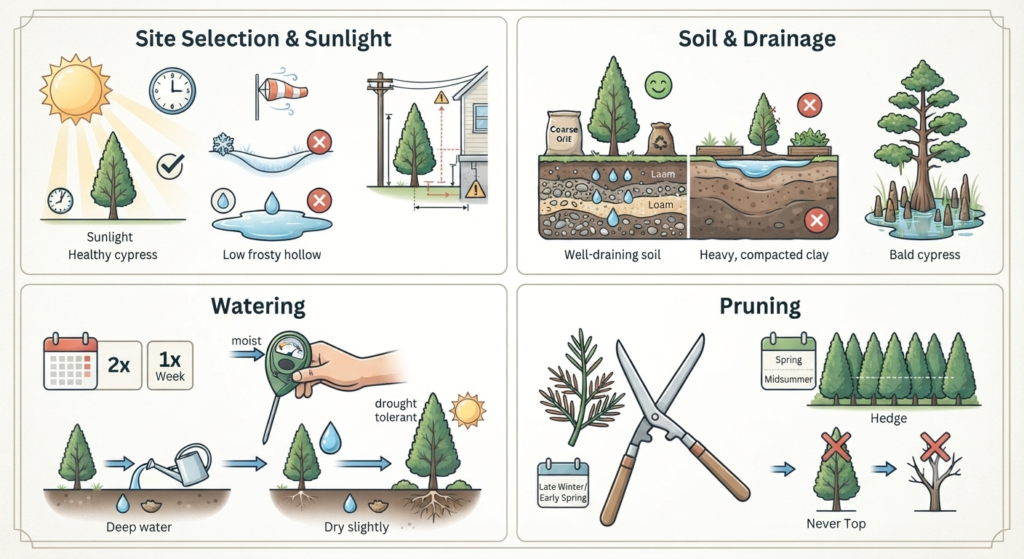
Most cypress trees need full sun — at least 6 hours of direct sunlight daily. Choose a location with good air circulation. Avoid planting in low-lying frost pockets or areas where water collects after rain. Confirm the mature height and spread of your chosen variety to ensure adequate clearance from buildings, utilities, and neighbouring properties.
Soil & Drainage
True cypress species (Cupressus) demand well-drained soil. Sandy loam, loam, or even rocky soils suit them well. Heavy clay must be amended with coarse grit and organic matter, or consider raised planting. Bald cypress is the exception — it thrives in wet, even periodically flooded soil. Always match the species to your site’s natural drainage rather than fighting it.
Watering
Water newly planted cypress trees deeply once or twice per week for the first two growing seasons. Allow the soil to dry slightly between waterings — soggy soil kills more cypress trees than drought. Once established, most species are moderately to highly drought-tolerant. Water based on your soil type: sandy soils dry faster and need more frequent irrigation than loam.
Pruning
Most cypress trees need minimal pruning. Remove dead, damaged, or diseased branches in late winter or early spring. For hedges (Leyland cypress), trim in spring and midsummer but never cut into bare wood — cypress cannot regenerate from old wood the way many broadleaf hedges can. Never top any cypress tree; it damages their natural form and invites disease.
Fertilizing
Cypress trees are generally light feeders. Apply a balanced slow-release fertilizer (10-10-10 or similar) once in early spring during the first few years. Mature, established trees rarely need supplemental feeding if mulched annually with organic matter. Over-fertilizing promotes soft growth that is more vulnerable to frost and disease.
Choosing the Right Cypress for Your Landscape
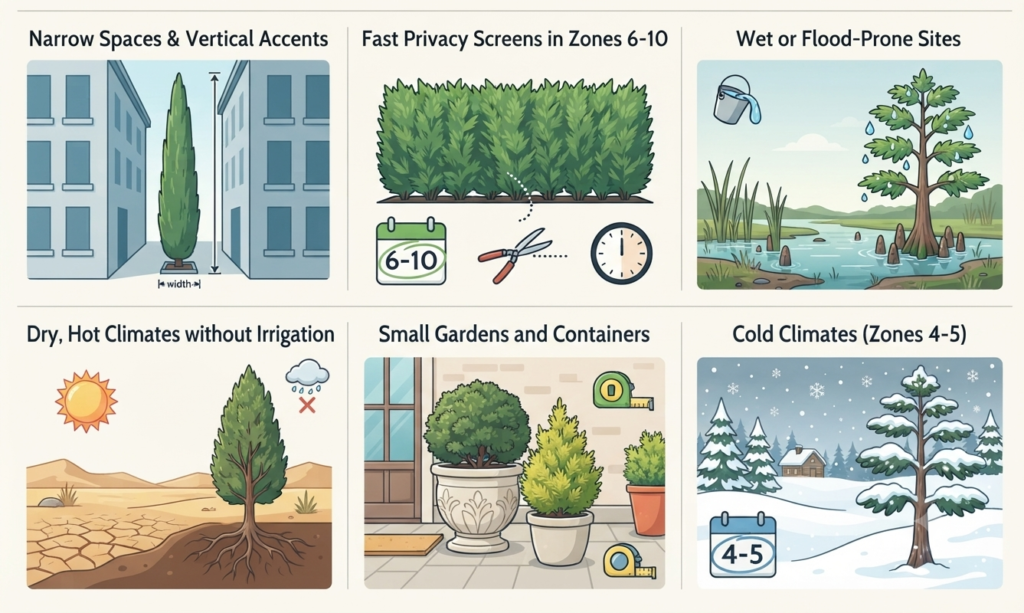
For narrow spaces and vertical accents, Italian cypress is unmatched. For fast privacy screens in zones 6–10, Leyland cypress delivers rapid coverage but requires regular trimming and has a shorter lifespan. For wet or flood-prone sites, bald cypress is the only reliable choice. For dry, hot climates without irrigation, Arizona cypress performs superbly. For small gardens and containers, dwarf Hinoki cypress cultivars or lemon cypress stay compact and ornamental.
For cold climates (zones 4–5), bald cypress is the hardiest option. Coastal gardeners dealing with salt spray should consider Monterey cypress. Beginners seeking a low-maintenance, forgiving tree should start with bald cypress (adaptable to most soils) or Arizona cypress (extremely drought-tolerant once established). Always confirm your USDA hardiness zone and match it to the species before purchasing.
Common Cypress Tree Problems
| Symptom | Possible Cause | Action |
|---|---|---|
| Brown tips | Drought, wind, salt stress | Check soil moisture and exposure |
| Yellow foliage | Overwatering or poor drainage | Inspect soil and reduce watering |
| Dead branches | Canker or winter damage | Prune affected growth, diagnose |
| Sparse foliage | Low light or overcrowding | Improve spacing and light |
| Webbing or speckles | Spider mites | Inspect and treat with miticide |
| Soft dark roots | Root rot (Phytophthora) | Improve drainage, remove damaged roots |
| Leaning tree | Loose soil or wind damage | Stake and reinforce root zone |
Potential Drawbacks to Consider
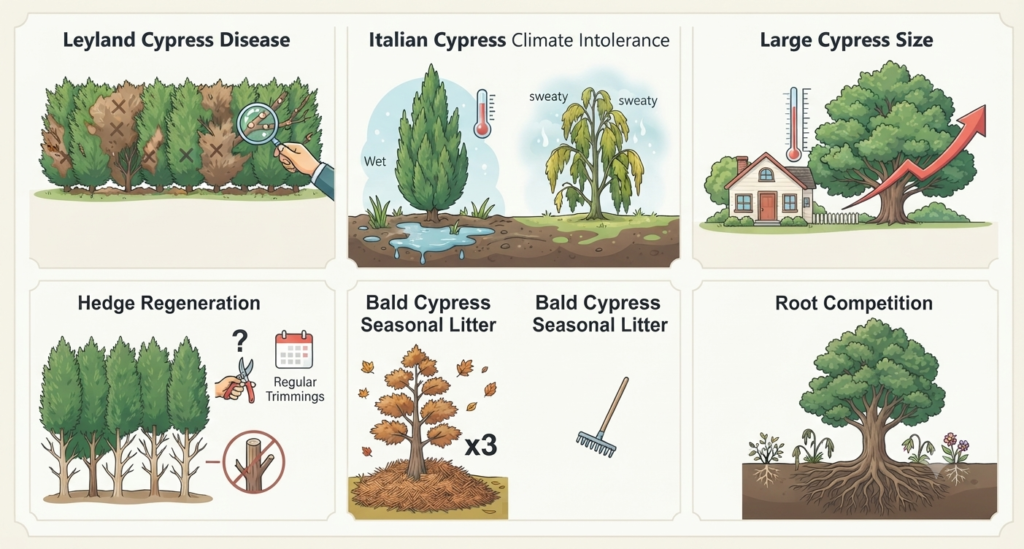
Fast-growing varieties like Leyland cypress can develop weak branch structure and are susceptible to canker diseases that can kill entire sections of a hedge within a season. Italian cypress is intolerant of wet soil and humidity — it declines rapidly in the wrong climate. Some cypress trees grow far larger than buyers expect from nursery size, eventually overwhelming small properties.
Cypress hedges require regular trimming to remain dense — neglected plants become bare at the base with no way to regenerate. Bald cypress drops its needles each autumn, creating seasonal litter. Root competition can make it difficult to grow plants directly beneath large specimens. For formal screens, budget for ongoing maintenance rather than expecting a one-time planting solution.
Frequently Asked Questions About Cypress Trees
How fast do cypress trees grow?
Growth rate varies by species. Leyland cypress is the fastest at 90+ cm per year. Italian cypress and Arizona cypress grow moderately at 30–60 cm per year. Bald cypress is similar. Hinoki cypress is slow-growing at 15–30 cm annually. Climate, soil quality, and water availability all influence actual growth rates.
Which cypress tree is best for privacy?
Leyland cypress is the most popular privacy screen choice due to its very fast growth, dense foliage, and tolerance for shearing. However, it is prone to disease and has a shorter lifespan (20–25 years in some areas). For a narrower screen in warm climates, Italian cypress planted 90–120 cm apart creates an effective year-round barrier.
Can cypress trees grow in containers?
Yes — dwarf Hinoki cypress, lemon cypress, and small Italian cypress cultivars like ‘Tiny Tower’ do well in large containers. Use a free-draining potting mix, ensure drainage holes, and water more frequently than in-ground trees. Container-grown cypress will need repotting every 2–3 years and may require winter protection in cold climates.
Are cypress tree roots invasive?
Most cypress roots are not aggressively invasive like willows or poplars. However, large species like bald cypress and Monterey cypress develop extensive root systems that can lift pavement if planted too close. Maintain at least 3–5 meters distance from foundations and 3 meters from paths. Bald cypress ‘knees’ can emerge in wet soil near the trunk.
Why is my cypress tree turning brown?
Browning can indicate drought stress, overwatering and root rot, canker disease, spider mites, winter desiccation, or salt damage. Check soil moisture first — if the root zone is soggy, drainage is likely the issue. If dry, water deeply. For branch dieback spreading along the tree, suspect Seiridium canker and consult an arborist for diagnosis.
How far apart should cypress trees be planted?
For Italian cypress screens: 90–120 cm apart. For Leyland cypress hedges: 2–3 meters apart. For standalone specimen trees: at least half the expected mature canopy width from neighbours and structures. Tighter spacing creates faster coverage but increases disease risk from reduced airflow and root competition.
Are cypress trees drought tolerant?
Once established (after 2–3 years), most true cypress species are moderately to highly drought-tolerant. Italian cypress and Arizona cypress are exceptionally drought-adapted. Bald cypress, despite thriving in wet conditions, also tolerates dry soil surprisingly well once mature. Newly planted trees of all species need consistent watering until roots establish.
Are cypress trees toxic to pets?
Cypress foliage and wood are generally considered low-toxicity for dogs and cats. The ASPCA does not list most cypress species as highly toxic. However, ingesting large quantities of foliage may cause mild gastrointestinal upset. Cypress mulch is generally safe but monitor pets who tend to chew wood. If concerned, consult your veterinarian.