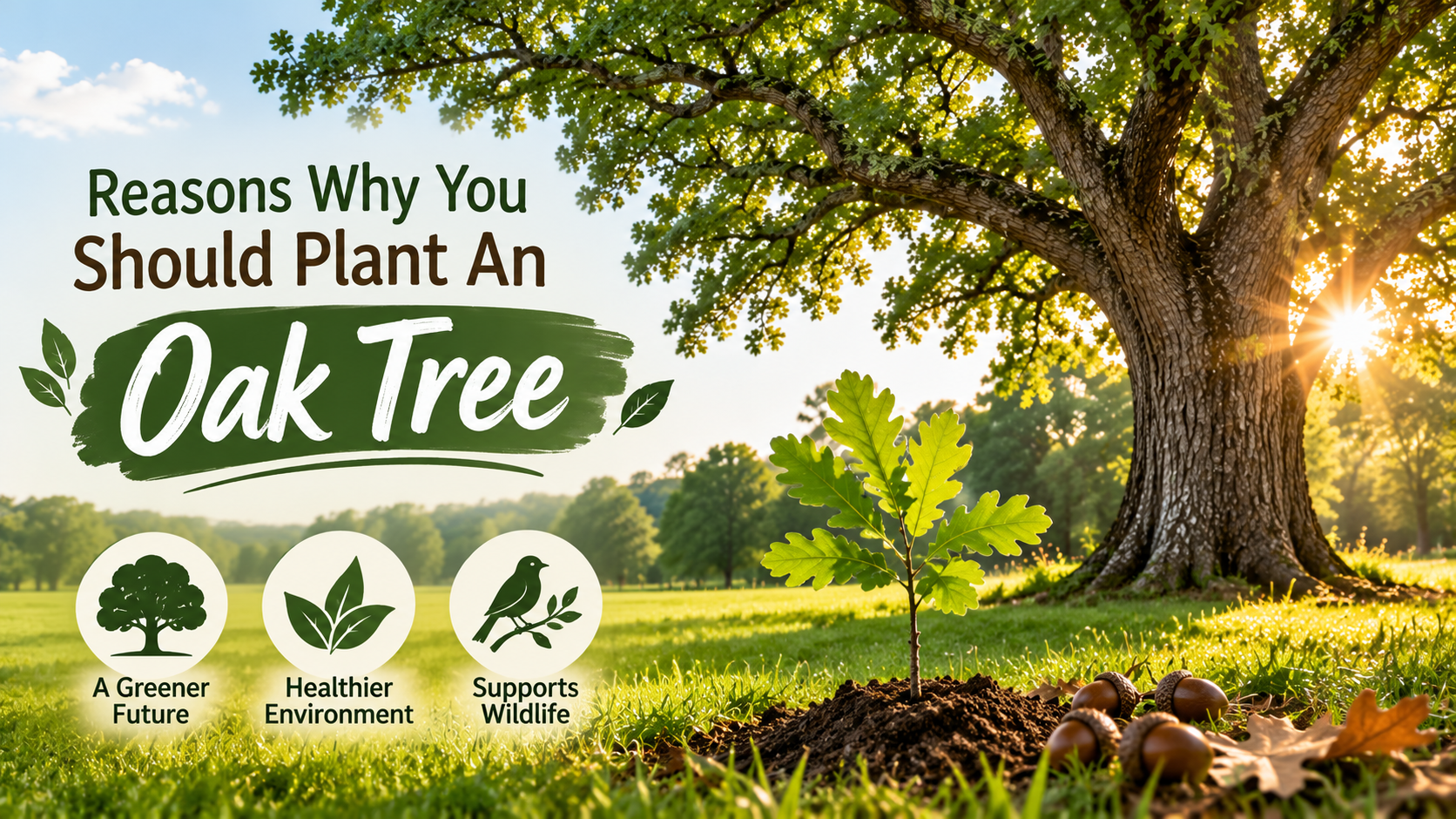

A legacy tree that benefits your home, the environment, and future generations
Who Is This Guide For?
This article is written for homeowners, hobby gardeners, and property developers who want to invest in long-term landscaping. You may be looking for a shade tree, want to boost your property value, or simply care about supporting local wildlife. Whether you have a large suburban lot or a modest backyard, an oak tree can be a transformative addition.
The oak tree is one of the most iconic and beneficial trees you can plant on your property. Known for their majestic canopies, incredible longevity, and ecological importance, oak trees offer advantages that few other species can match. From reducing your energy bills through natural shade to supporting hundreds of wildlife species, planting an oak tree is an investment that pays dividends for centuries.
Top Reasons to Plant an Oak Tree
Natural Shade & Energy Savings
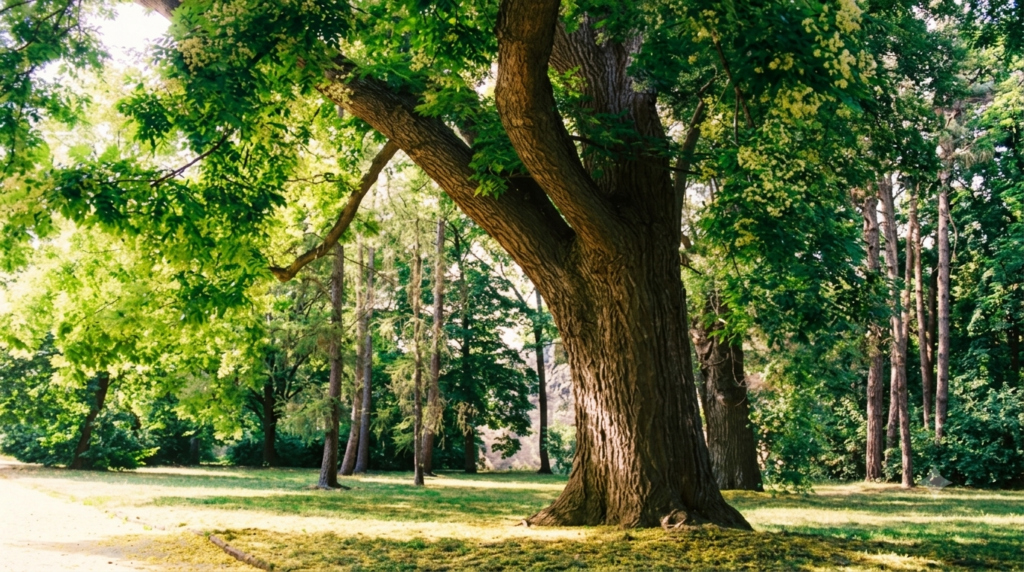
A mature oak tree’s canopy can span 20–25 metres, shading your home and reducing summer cooling costs by up to 30%. Strategically placed oaks on the south and west sides of a property provide the greatest energy savings.
Wildlife Habitat & Biodiversity
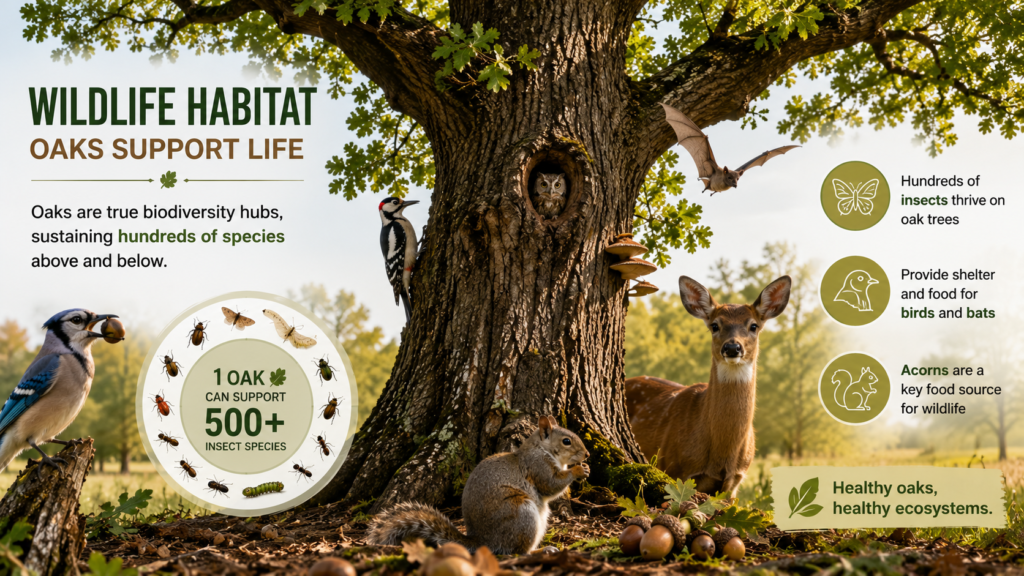
Oak trees support more life forms than almost any other tree genus. A single oak can host over 500 insect species, which in turn feed birds, bats, and small mammals. Acorns provide food for squirrels, deer, and jays.
Increased Property Value
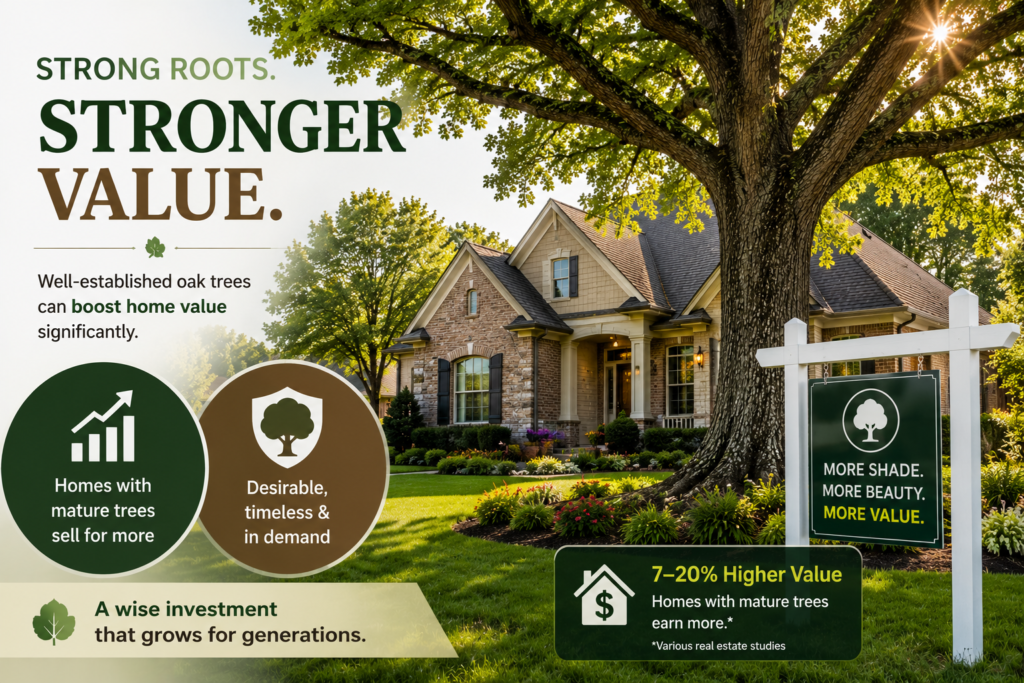
Studies consistently show that mature trees increase residential property values by 7–20%. Oak trees, with their stately appearance and longevity, are among the most desirable species for buyers and appraisers alike.
Oak Tree Quick Facts
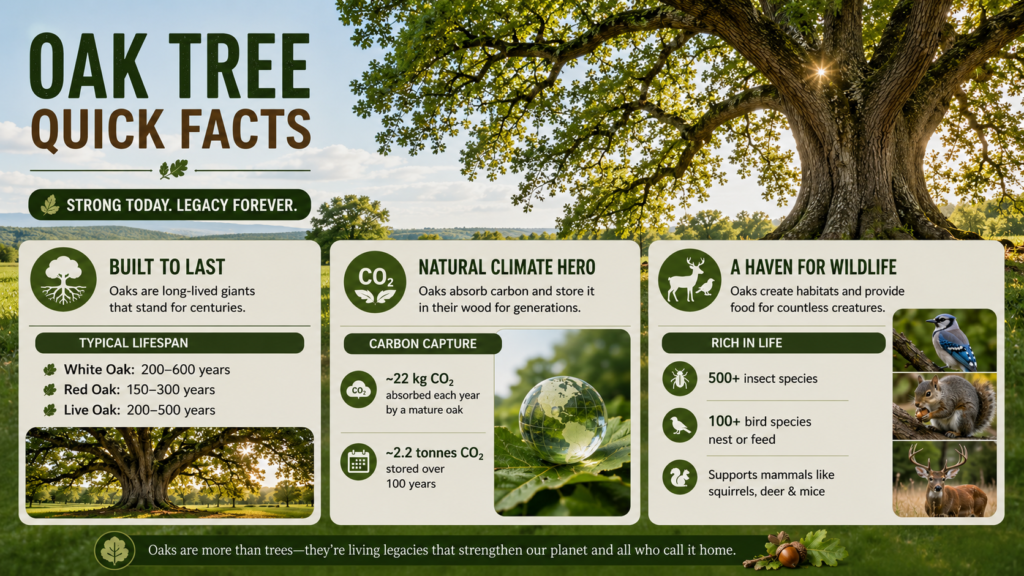
Incredible Longevity
An oak tree planted today could still be standing 300 years from now. These are true legacy trees that outlive generations.
OAK TREE LIFESPAN
White Oak: 200–600 years
Red Oak: 150–300 years
Live Oak: 200–500 years
Carbon Sequestration
Oak trees are excellent carbon sinks. Their dense wood and large biomass lock away significant amounts of CO₂ over their long lifetimes.
CO₂ ABSORPTION
Mature oak: ~22 kg CO₂/year
Over 100 years: ~2.2 tonnes total
Biodiversity Powerhouse
No other tree genus in temperate regions supports as many species. Oaks are keystone species in countless ecosystems.
WILDLIFE SUPPORTED
Insects: 500+ species
Birds: 100+ species nest or feed
Mammals: Squirrels, deer, mice
How to Plant an Oak Tree Successfully
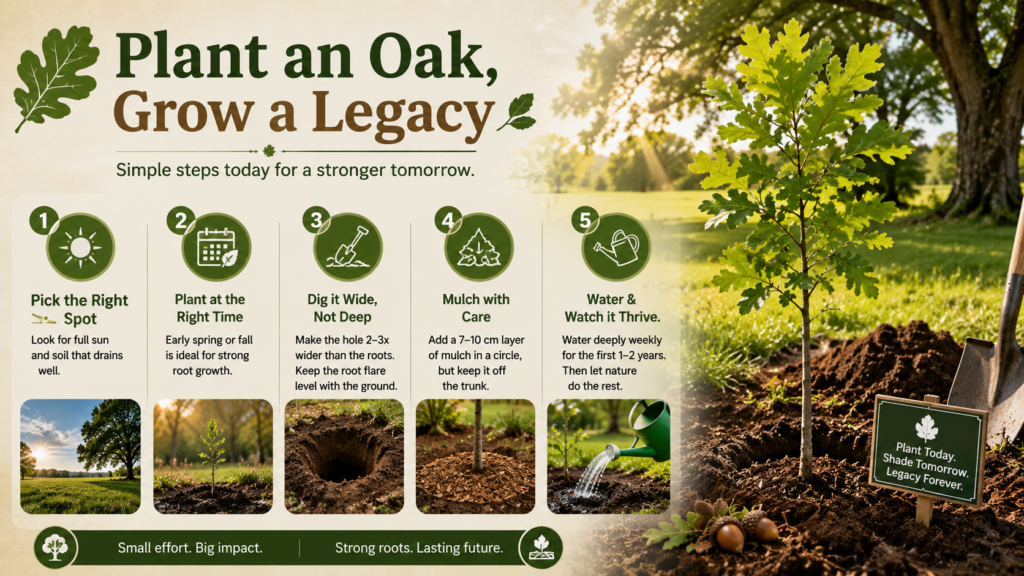
Based on my experience establishing oaks in diverse soil and climate conditions, these practices give your oak tree the best start:
- Choose a site with full sun and well-drained soil. Oaks tolerate many soil types but struggle in waterlogged conditions.
- Plant in autumn or early spring when the tree is dormant. This reduces transplant shock and allows roots to establish before summer heat.
- Dig a hole 2–3 times wider than the root ball but no deeper. The root flare should sit at or slightly above ground level.
- Mulch with 7–10cm of organic material in a wide ring, keeping mulch away from the trunk to prevent rot.
- Water deeply once a week during the first two growing seasons. After establishment, oaks are remarkably drought-tolerant.
Frequently Asked Questions
How fast does an oak tree grow?
Most oak species grow 30–60cm per year when young. Red oaks tend to grow faster than white oaks. With proper care, you’ll have noticeable shade within 8–10 years.
Will an oak tree damage my foundations?
Plant your oak tree at least 6–8 metres from structures. At this distance, roots pose no threat to foundations. Oak roots spread wide but are not aggressive enough to crack sound concrete.
Which oak species is best for a home garden?
For smaller gardens, consider the Pin Oak or Scarlet Oak — they offer a more upright form. For larger properties, White Oak and Bur Oak provide the classic wide canopy. Choose native species for your region for best results.