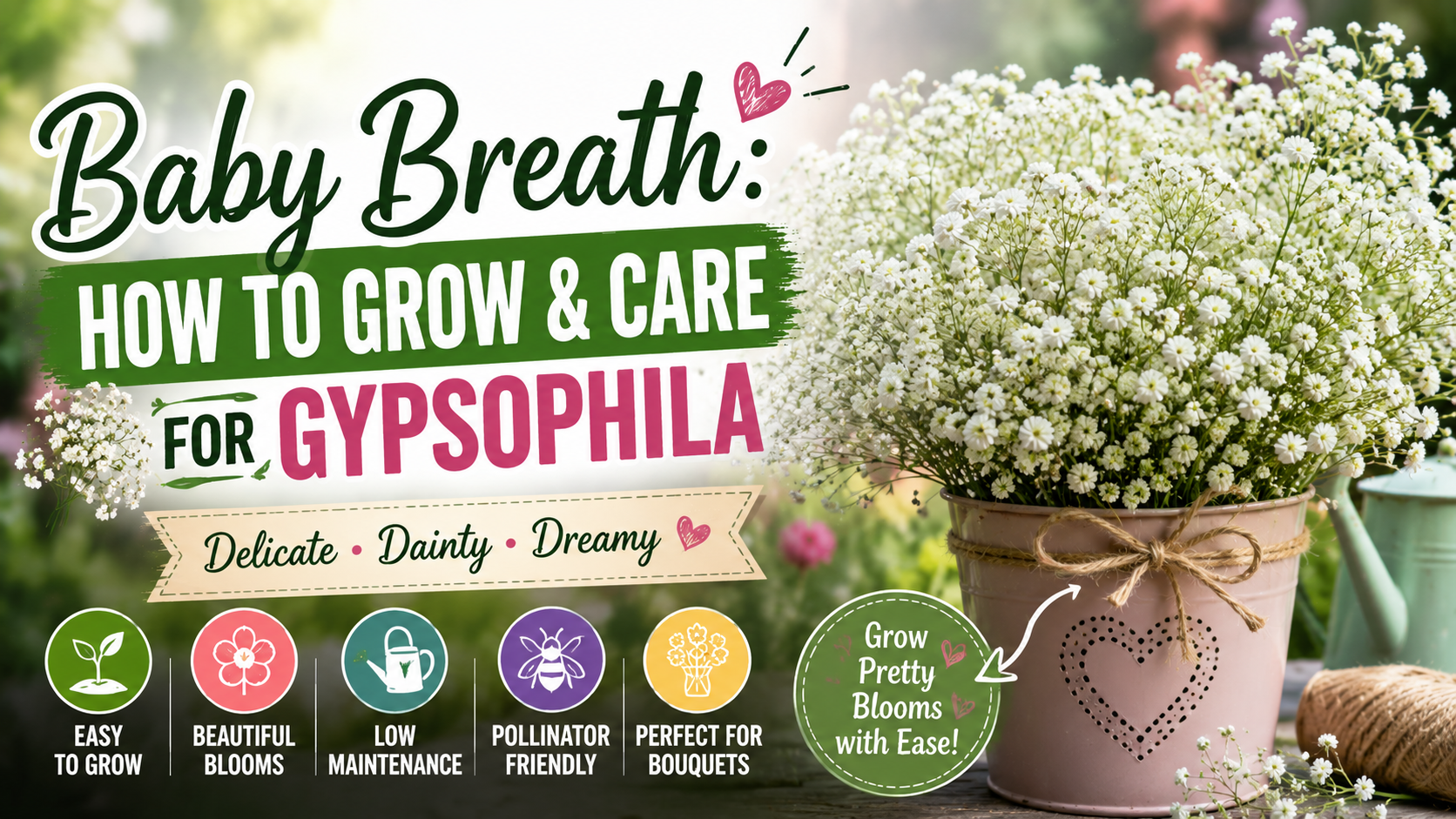

Everything you need to know about growing babys breath — from seed sowing and soil prep to pruning, pest control, and stunning bouquet ideas.
Baby’s breath (Gypsophila) is one of the most recognisable flowering plants in the world — those tiny, cloud-like white blooms that fill wedding bouquets, cottage gardens, and dried flower arrangements. Despite its delicate appearance, baby breath is surprisingly easy to grow when you understand its basic needs: well-drained alkaline soil, full sun, and minimal fuss.
In this guide, you’ll learn how to grow baby breath flowers from seed, choose the right Gypsophila variety for your garden, care for established plants throughout the season, and troubleshoot common problems. Whether you’re a beginner gardener or a small-scale cut-flower grower, this article gives you practical, experience-based advice you can act on immediately.
What Is Baby’s Breath?
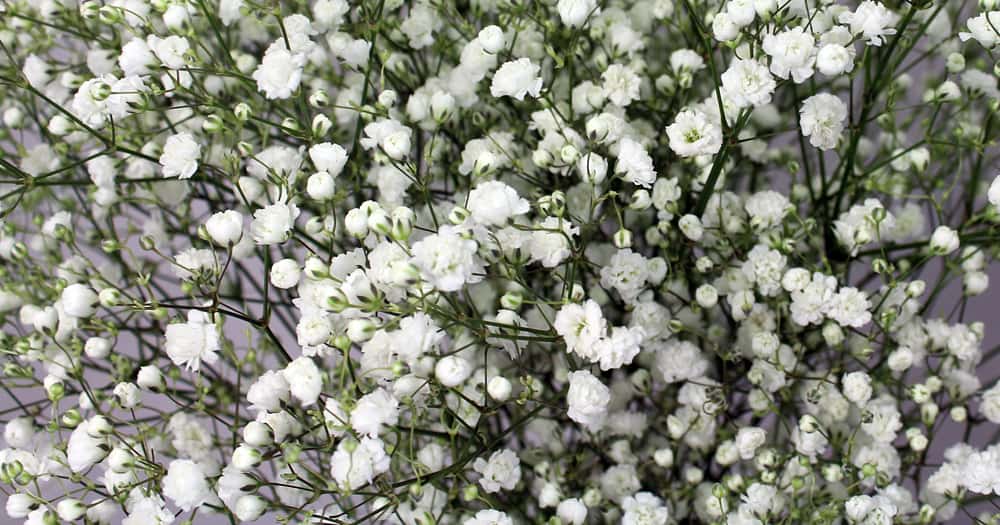
Baby’s breath is the common name for plants in the genus Gypsophila, a member of the carnation family (Caryophyllaceae). The name ‘Gypsophila’ comes from the Greek words ‘gypsos’ (gypsum) and ‘philos’ (loving) — a reference to the plant’s preference for calcium-rich, alkaline soils. There are over 100 species of Gypsophila native to Europe, Asia, and North Africa.
The most widely grown species is Gypsophila paniculata, a perennial that forms airy mounds of tiny white or pale pink flowers on wiry, branching stems. Plants typically reach 60–90 cm (2–3 feet) tall and wide at maturity. The blooms appear in early to mid-summer and can continue for 6–8 weeks with proper deadheading. Baby breath is hardy in USDA Zones 3–9, making it adaptable to a wide range of climates.
Gypsophila elegans is the popular annual species, blooming quickly from seed in just 8–10 weeks. It’s shorter-lived but perfect for filling gaps in borders and for cut-flower production. Both species share the characteristic cloud of tiny flowers that makes baby breath such an effective filler in floral design and such a charming presence in the garden.
Types of Baby Breath Flowers
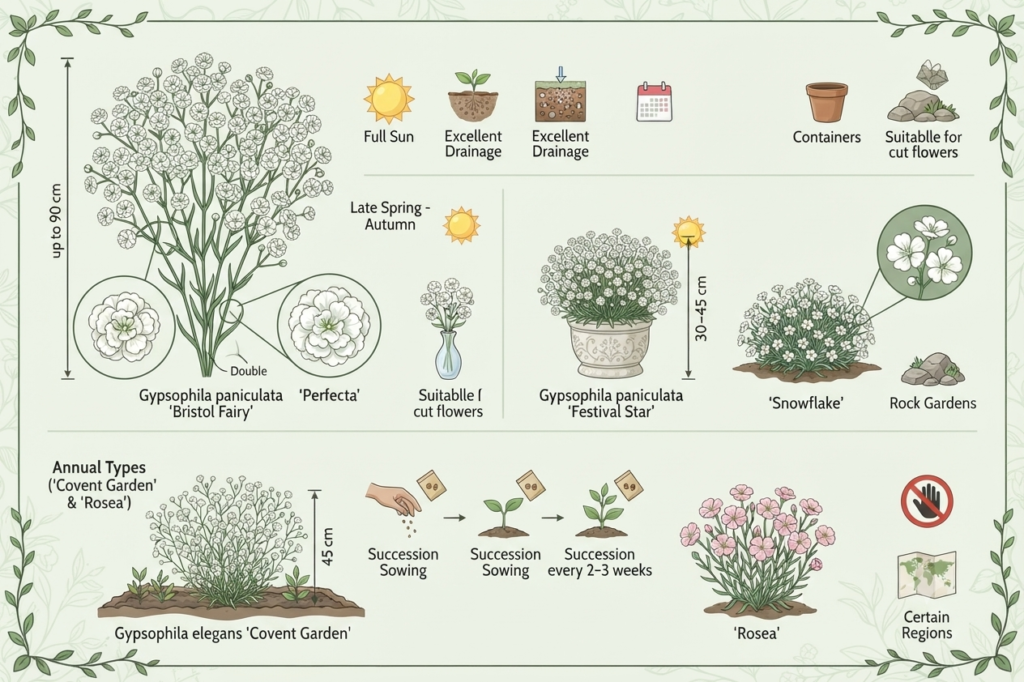
Gypsophila paniculata ‘Bristol Fairy’ is the classic double-flowered perennial cultivar, producing masses of tiny white rosette-like blooms on stems up to 90 cm tall. It’s the variety most commonly grown for cut flowers and dried arrangements. ‘Perfecta’ is similar but with larger individual flowers. Both prefer full sun and excellent drainage.
‘Festival Star’ is a compact perennial variety reaching only 30–45 cm, making it ideal for containers, rock gardens, and front-of-border planting. It blooms prolifically from late spring through autumn and is more heat-tolerant than older cultivars. ‘Snowflake’ is another compact option with single white flowers and a tidy mounding habit.
Gypsophila elegans (annual baby breath) is the easiest to grow from seed. ‘Covent Garden’ produces abundant white blooms on 45 cm stems — perfect for cutting gardens. ‘Rosea’ offers soft pink flowers for variety. Annual types are excellent for succession sowing every 2–3 weeks to ensure continuous blooms through summer. Note that some Gypsophila species can become invasive in certain regions — check local guidelines before planting.
How to Grow Baby’s Breath
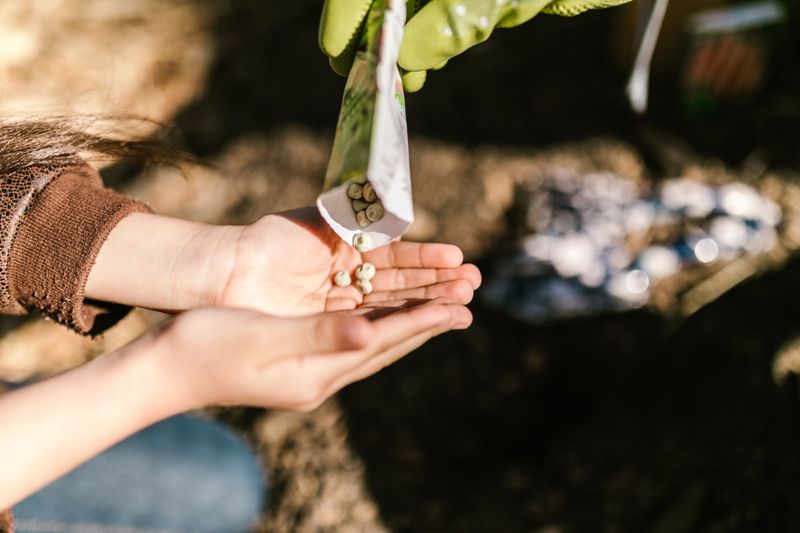
Timing: Sow annual baby breath seeds directly outdoors after the last frost date, when soil temperatures reach at least 15°C (60°F). For perennial varieties, start seeds indoors 6–8 weeks before the last frost, or direct sow in late spring. You can also plant nursery-grown perennials in spring or early autumn.
Soil: Gypsophila demands well-drained, slightly alkaline soil (pH 7.0–7.5). Heavy clay soil is the number one killer of baby breath — waterlogged roots rot quickly. If your soil is acidic, add garden lime before planting. Sandy or loamy soils are ideal. Raised beds work well in areas with poor drainage. Avoid rich, heavily amended soils — baby breath actually performs better in lean conditions.
Sunlight and spacing: Baby breath needs full sun — at least 6 hours of direct sunlight daily. Space perennial varieties 60–90 cm apart to allow for their mature spread. Annual types can be spaced 25–30 cm apart. Good air circulation helps prevent fungal diseases, so avoid overcrowding.
Sowing seeds: Scatter seeds on the soil surface and press lightly — they need light to germinate. Keep the soil consistently moist (not wet) until seedlings emerge in 10–14 days. Thin seedlings to their final spacing once they have two sets of true leaves. For succession blooms with annual types, sow a new batch every 2–3 weeks from spring through early summer.
Baby’s Breath Care Guide
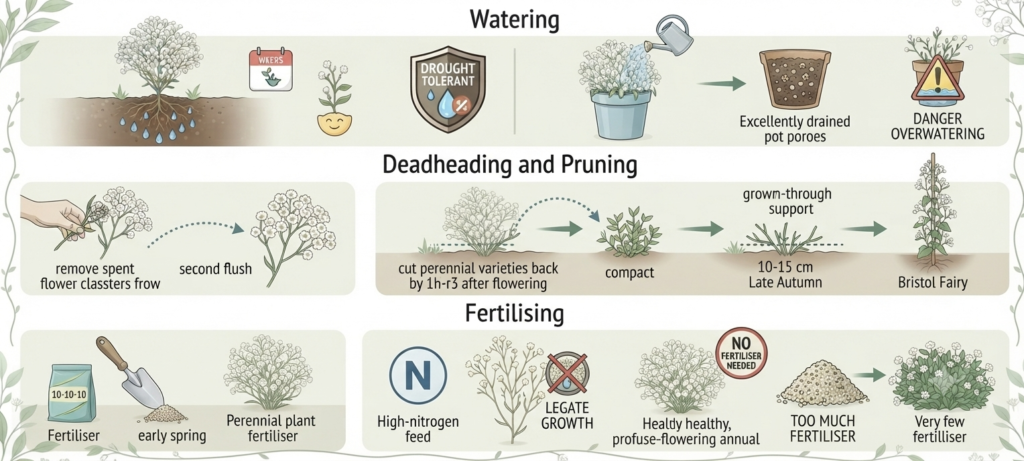
Watering:
Once established, baby breath is remarkably drought-tolerant. Water deeply but infrequently — roughly once a week in the absence of rain during the growing season. Overwatering is far more dangerous than underwatering for Gypsophila. Allow the soil to dry between waterings. Container-grown plants need more frequent watering but still require excellent drainage.
Deadheading and pruning:
Remove spent flower clusters to encourage a second flush of blooms. After the main flowering period, cut perennial varieties back by one-third to promote compact new growth. In late autumn, cut perennial baby breath back to 10–15 cm above ground level. Taller varieties like ‘Bristol Fairy’ benefit from staking or grow-through supports placed early in the season.
Fertilising:
Baby breath is a light feeder. A single application of balanced granular fertiliser (10-10-10) in early spring is sufficient for perennials. Avoid high-nitrogen feeds, which produce leggy growth with fewer flowers. Annual types rarely need fertiliser if planted in reasonably fertile garden soil. Too much fertility encourages foliage at the expense of flowers.
Common Problems and Solutions
Root rot is the most common issue, caused by poor drainage or overwatering. Symptoms include wilting despite moist soil, yellowing lower leaves, and a mushy stem base. Prevention is key: plant in well-drained soil and never let roots sit in water. Powdery mildew can appear in humid conditions with poor air circulation — improve spacing and avoid overhead watering. Aphids occasionally target new growth; a strong spray of water or insecticidal soap handles mild infestations.
Poor flowering usually results from insufficient sunlight, overly rich soil, or too much nitrogen fertiliser. Move or transplant to a sunnier spot if possible. Yellow leaves often indicate overwatering or iron deficiency in acidic soil — test your pH and amend with lime if needed. In heavy clay soils, consider growing baby breath in raised beds or large containers with a gritty, free-draining compost mix.
Garden Uses for Baby’s Breath
Baby breath flowers are iconic in wedding bouquets and floral design — their airy texture creates a romantic, cloud-like effect that complements roses, peonies, and other focal flowers. Dried baby breath lasts for months in arrangements and wreaths. As a cut flower, stems last 5–10 days in a vase with fresh water and flower food.
In the garden, Gypsophila excels as a filler in cottage-style borders, rock gardens, and along pathways. Its fine texture contrasts beautifully with bold-leaved plants like hostas or ornamental grasses. Compact varieties work well in containers and window boxes. Baby breath also attracts pollinators including bees and beneficial hoverflies, adding ecological value to your garden.
Benefits of Growing Baby’s Breath
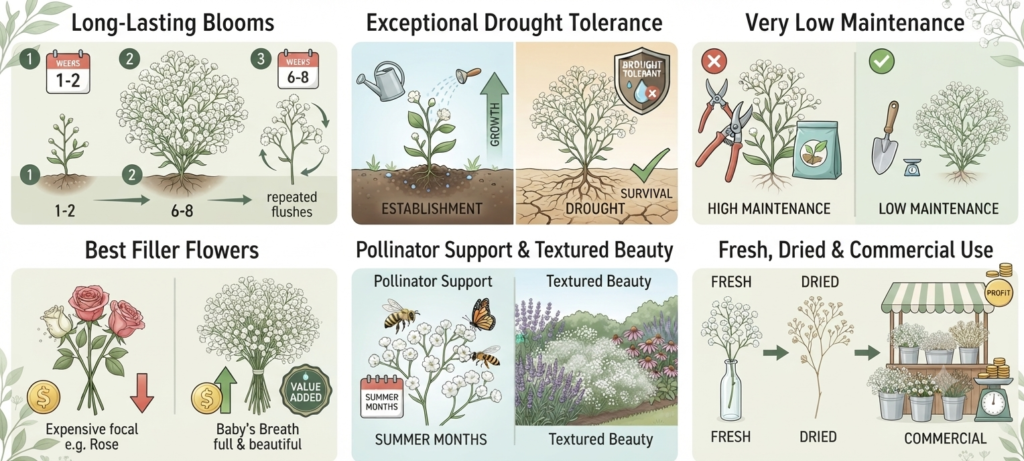
Baby breath offers long-lasting blooms (6–8 weeks for perennials, repeated flushes for annuals), exceptional drought tolerance once established, and very low maintenance requirements. It’s one of the best filler flowers you can grow at home — saving money if you regularly buy cut flowers or create your own arrangements.
The plant provides valuable pollinator support during peak summer months and adds fine-textured beauty to any landscape. It dries naturally on the stem, giving you both fresh and dried flowers from the same planting. For small-scale flower farmers, baby breath is a reliable, high-demand crop that’s simple to grow in quantity.
Frequently Asked Questions
Is baby’s breath annual or perennial?
Both. Gypsophila paniculata and ‘Festival Star’ are perennials that return year after year in Zones 3–9. Gypsophila elegans is an annual that completes its life cycle in one season. Choose based on whether you want a permanent garden feature or a quick-growing cut flower.
Can baby’s breath grow in pots?
Yes — compact varieties like ‘Festival Star’ and annual Gypsophila elegans grow well in containers. Use a large pot (at least 30 cm diameter) with drainage holes and a gritty, free-draining compost. Avoid saucers that trap water beneath the pot.
How long does baby’s breath bloom?
Perennial varieties bloom for 6–8 weeks in summer. With deadheading, some cultivars produce a lighter second flush in early autumn. Annual types bloom for about 4–6 weeks per sowing — succession sowing extends the display across the entire summer.
Does baby’s breath spread?
Perennial baby breath forms a gradually expanding clump but is not aggressive in most garden settings. However, some Gypsophila species can self-seed freely and are considered invasive in parts of North America. Deadhead spent flowers to prevent unwanted spreading and check local invasive species lists.
Is baby’s breath toxic to pets?
Gypsophila contains saponins that can cause mild gastrointestinal upset (vomiting, diarrhoea) in cats and dogs if ingested in large quantities. While not typically life-threatening, it’s best to keep plants out of reach of pets who chew plants. Consult your veterinarian if you suspect ingestion.
Can baby’s breath survive winter?
Perennial Gypsophila paniculata is hardy to Zone 3 (temperatures as low as -40°F/-40°C). It dies back to the ground in winter and re-emerges in spring. Good drainage is critical in winter — cold, wet soil is more damaging than cold alone. A light mulch of gravel or grit protects the crown without trapping moisture.
Does baby’s breath need full sun?
Yes. Baby breath performs best with at least 6 hours of direct sunlight daily. In partial shade, plants become leggy with fewer flowers. In hot climates (Zones 8–9), light afternoon shade can prevent scorching, but morning sun is essential.
Why is baby’s breath so popular in bouquets?
Its tiny, cloud-like flowers create volume and texture without competing with focal blooms. It’s affordable, long-lasting in a vase, dries beautifully, and its neutral white colour complements any colour palette. For weddings, baby breath symbolises everlasting love and purity — adding sentimental value to its practical appeal.
Start Growing Baby’s Breath Today
Baby’s breath remains one of the most versatile flowering plants for both gardens and floral design. Its airy, cloud-like appearance belies a tough, drought-tolerant nature that rewards even beginner gardeners with abundant blooms. Whether you’re planting a cottage border, starting a cut-flower patch, or simply want a low-maintenance perennial that earns its keep, Gypsophila delivers.
Choose a variety suited to your climate and growing conditions, give it full sun and lean, well-drained soil, and resist the temptation to overwater. With these simple principles, you’ll enjoy waves of delicate baby breath flowers from early summer well into autumn. Happy growing!