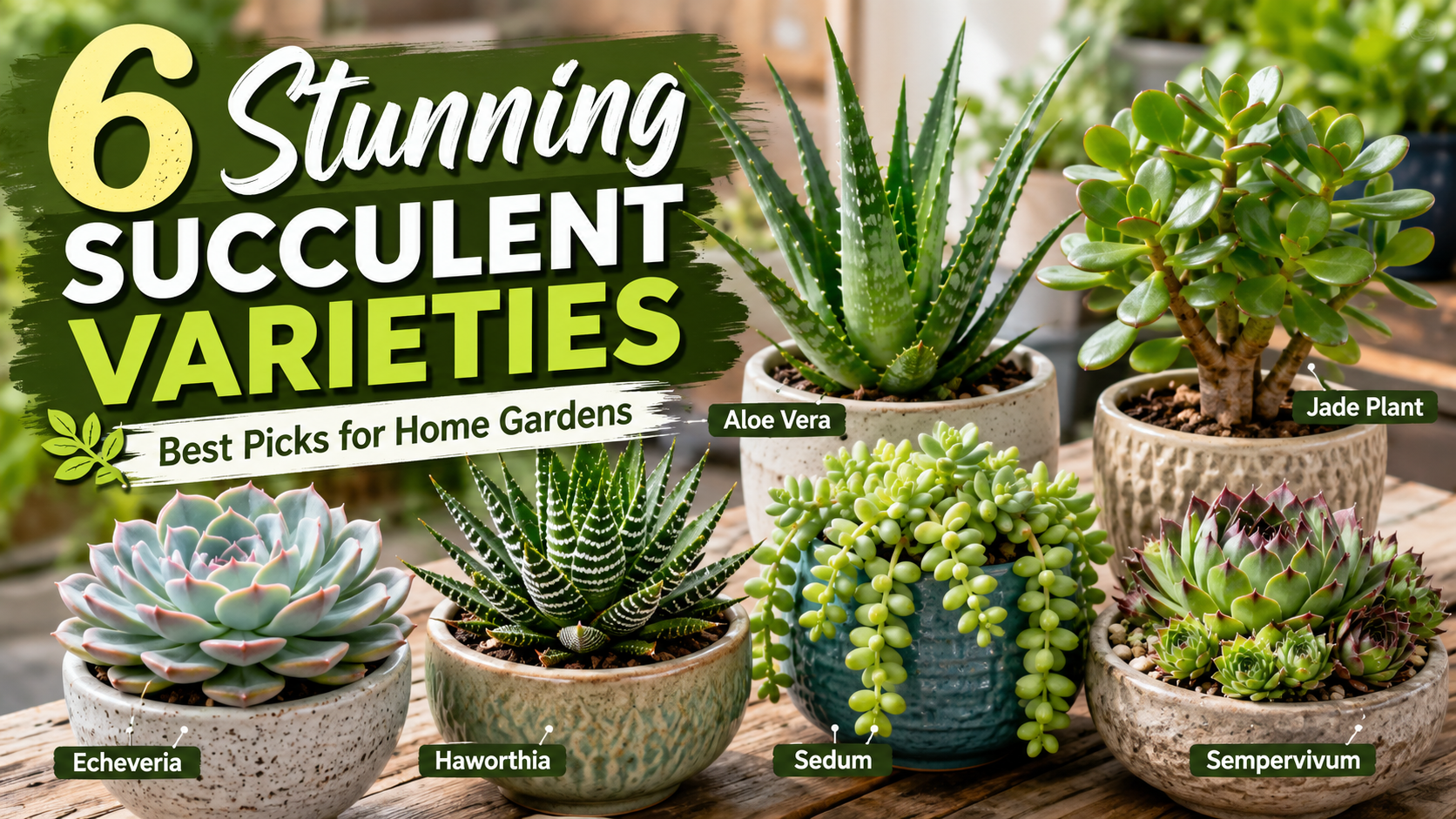

Succulents have taken the gardening world by storm — and for good reason. These water-storing plants come in an astonishing range of shapes, colors, and textures that can transform any home garden into a living art piece. Whether you’re a first-time plant parent or a seasoned collector, the succulent varieties below will add striking visual interest to your indoor or outdoor space.
1. Echeveria — The Rose-Shaped Classic
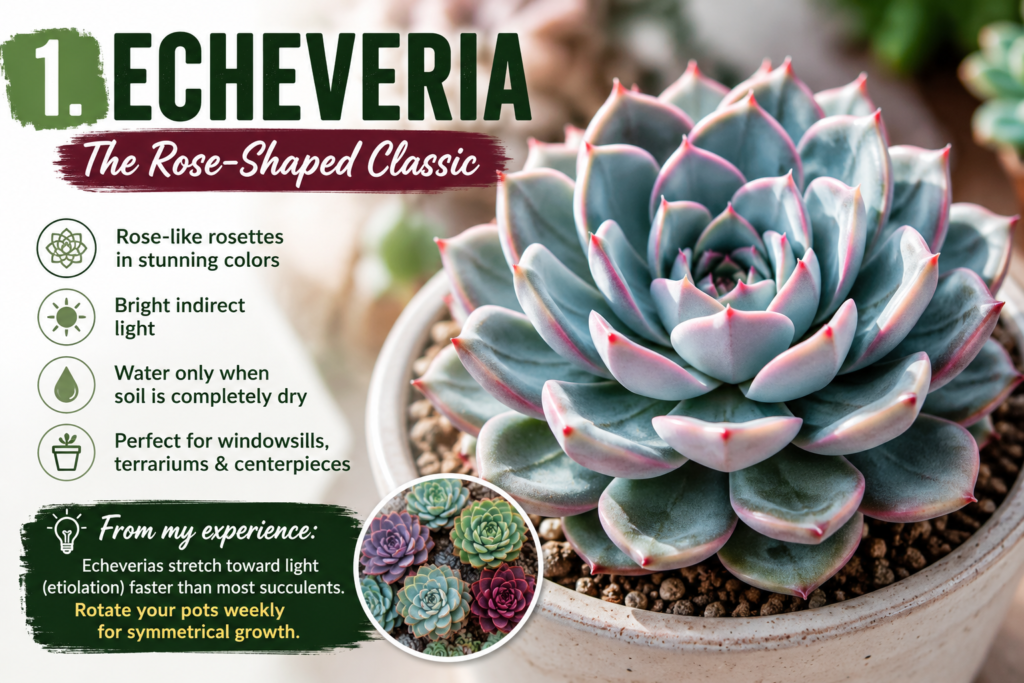
Echeveria is arguably the most recognizable succulent genus, forming tight rosettes that resemble roses carved from jade. With over 150 species, colors range from powdery blue-grey to deep burgundy. They thrive in bright indirect light and need watering only when soil is completely dry. Their compact form makes them ideal for windowsills, terrariums, and arrangement centerpieces.
From my experience: Echeverias stretch toward light (etiolation) faster than most succulents. Rotate your pots weekly for symmetrical growth.
2. Aloe Vera — Beauty Meets Function
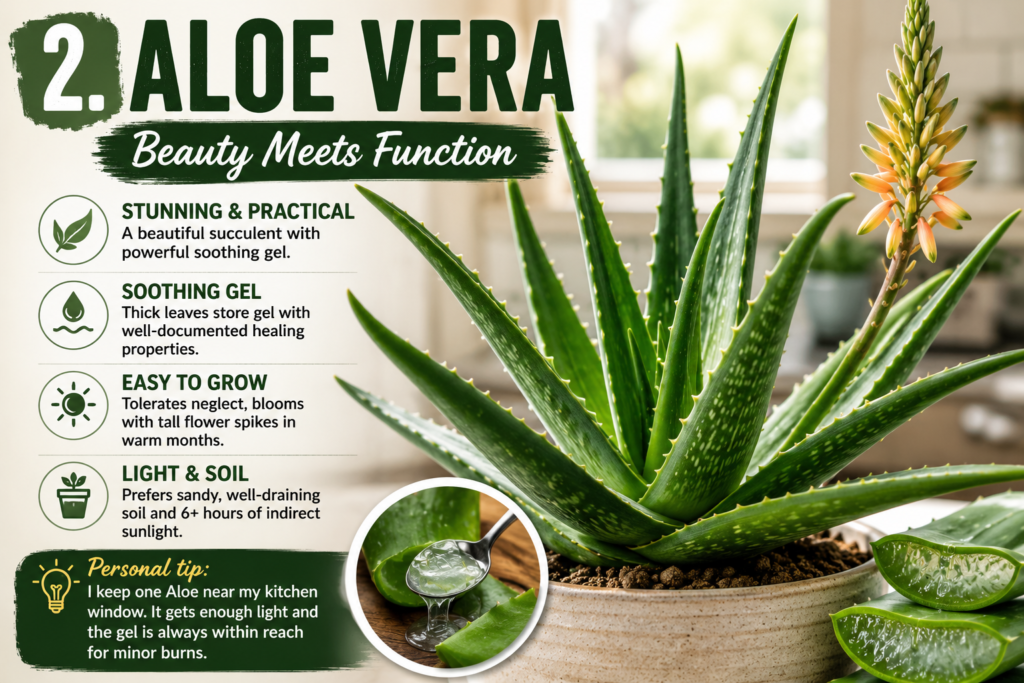
Aloe Vera is both a stunning succulent plant and a practical household remedy. Its thick, serrated leaves store a gel with well-documented soothing properties. As a garden plant, Aloe Vera produces tall flower spikes in warm months and tolerates neglect remarkably well. It prefers sandy, well-draining soil and at least 6 hours of indirect sunlight.
Personal tip: I keep one Aloe near my kitchen window. It gets enough light and the gel is always within reach for minor burns.
3. Jade Plant (Crassula ovata) — The Money Tree
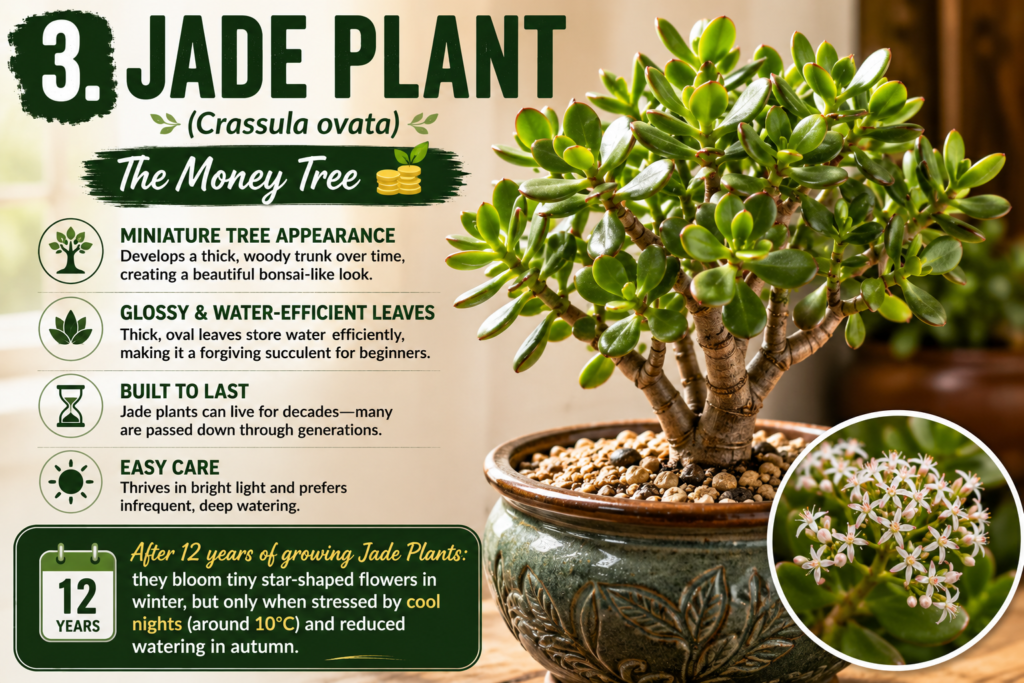
The Jade Plant develops a thick woody trunk over time, giving it the appearance of a miniature tree. Its glossy, oval leaves retain water efficiently, making it one of the most forgiving succulents for beginners. Jade plants can live for decades — some specimens are passed down through generations. They appreciate bright light and infrequent deep watering.
After 12 years of growing Jade Plants: they bloom tiny star-shaped flowers in winter, but only when stressed by cool nights (around 10°C) and reduced watering in autumn.
4. Haworthia — Perfect for Low-Light Spaces
Haworthia is the succulent plant for spaces other succulents would struggle in. These small, slow-growing rosettes feature distinctive white stripes or translucent leaf windows. Unlike most succulents, they actually prefer indirect light and can thrive on north-facing windowsills. Their compact size (rarely exceeding 12 cm) makes them ideal desk companions.
What I’ve learned: Haworthia’s roots rot fast in standard potting mix. I use 70% perlite and 30% cactus soil for perfect drainage.
5. Sedum — The Versatile Ground Cover
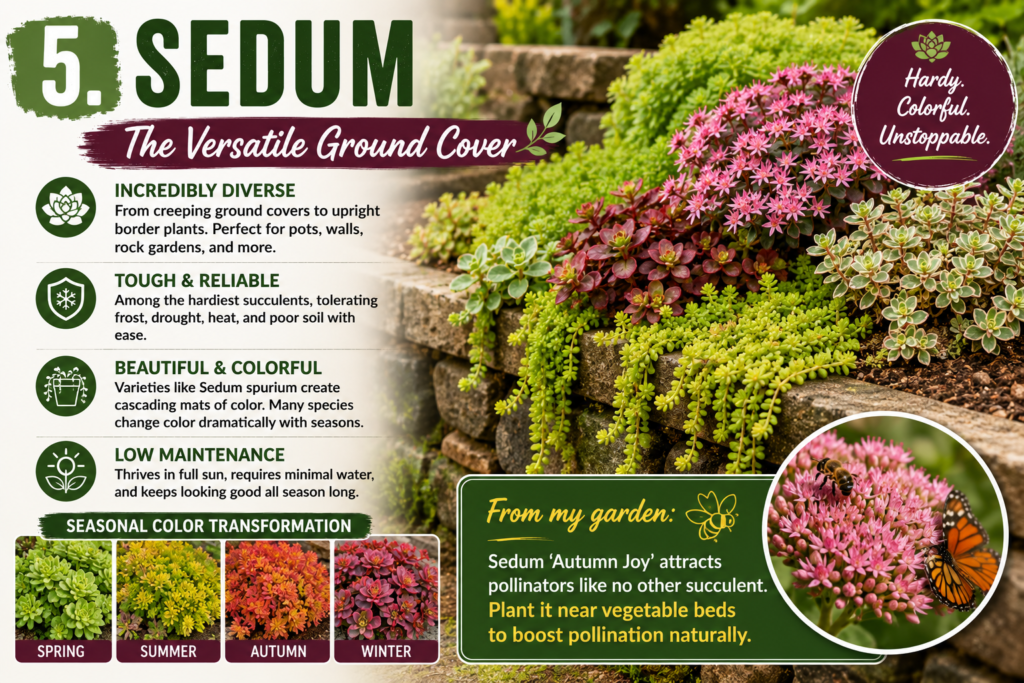
Sedum (Stonecrop) is incredibly diverse — from creeping ground covers to upright border plants. They’re among the hardiest succulents, tolerating frost, drought, and poor soil. Varieties like Sedum spurium produce cascading mats of color that look spectacular spilling over containers or retaining walls. Many species shift color dramatically with seasons.
In my garden, Sedum ‘Autumn Joy’ attracts pollinators like no other succulent. Plant it near vegetable beds to boost pollination naturally.
6. Sempervivum — Hen and Chicks
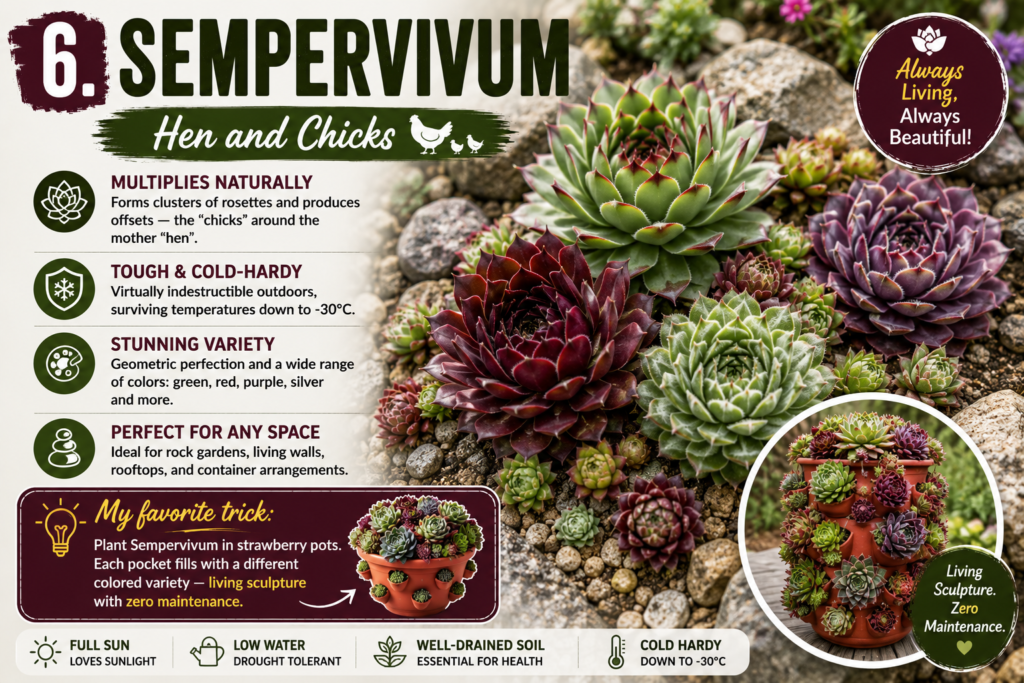
Sempervivum (meaning ‘always living’) forms satisfying clusters of rosettes that multiply by producing offsets — the ‘chicks’ around the mother ‘hen.’ They’re virtually indestructible outdoors, surviving temperatures down to -30°C. Their geometric perfection and color variations (green, red, purple, silver) make them excellent for rock gardens, living walls, and container arrangements.
My favorite trick: plant Sempervivum in strawberry pots. Each pocket fills with a different colored variety — living sculpture with zero maintenance.
Frequently Asked Questions
How often should I water my succulents?
Water only when the soil is completely dry — typically every 7–14 days in summer and every 3–4 weeks in winter. Overwatering is the #1 killer of succulent plants. When in doubt, wait another few days.
Can succulents survive indoors with low light?
Some can! Haworthia, Gasteria, and certain Sansevieria tolerate low light well. Most other succulents need at least 4–6 hours of bright indirect light. If leaves stretch or lose color, move them closer to a window.
What soil mix is best for succulent plants?
A mix of 50% regular potting soil and 50% inorganic material (perlite, pumice, or coarse sand) provides ideal drainage. Commercial cactus mixes work but often benefit from extra perlite. Good drainage prevents root rot — the most common issue with circulance plants grown in containers.