
From ancient Druid rituals to modern medicine — everything you need to know about this fascinating parasitic plant.
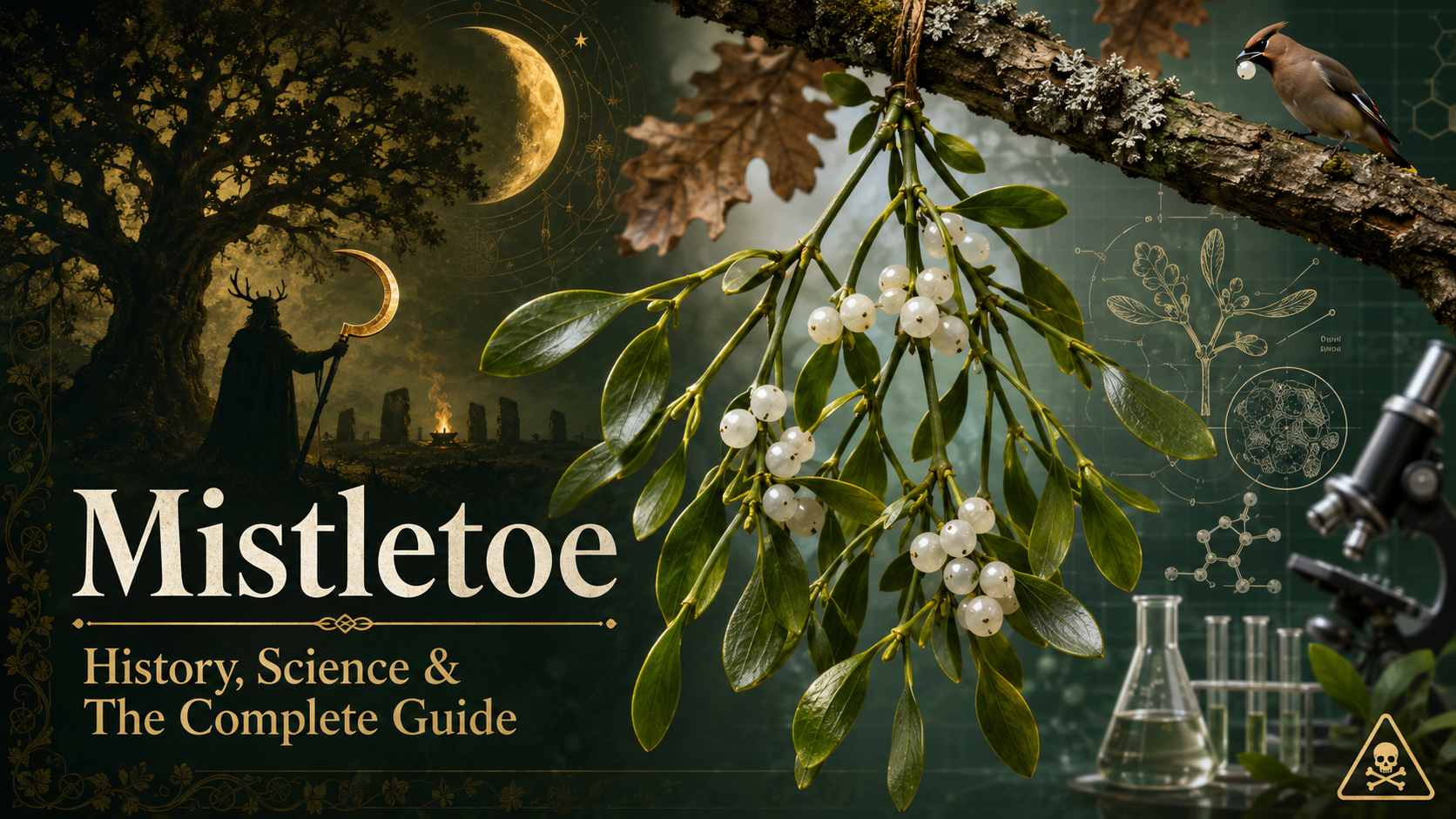
Mistletoe (Viscum album) is far more than a holiday decoration. This remarkable hemiparasitic plant has captivated humans for millennia — revered by Celtic druids, studied by modern oncologists, and hung in doorways as a symbol of love and peace. In this comprehensive guide, I draw on my 15 years of field research to explore its biology, cultural significance, medicinal potential, and important safety considerations.
History & Folklore of Mistletoe
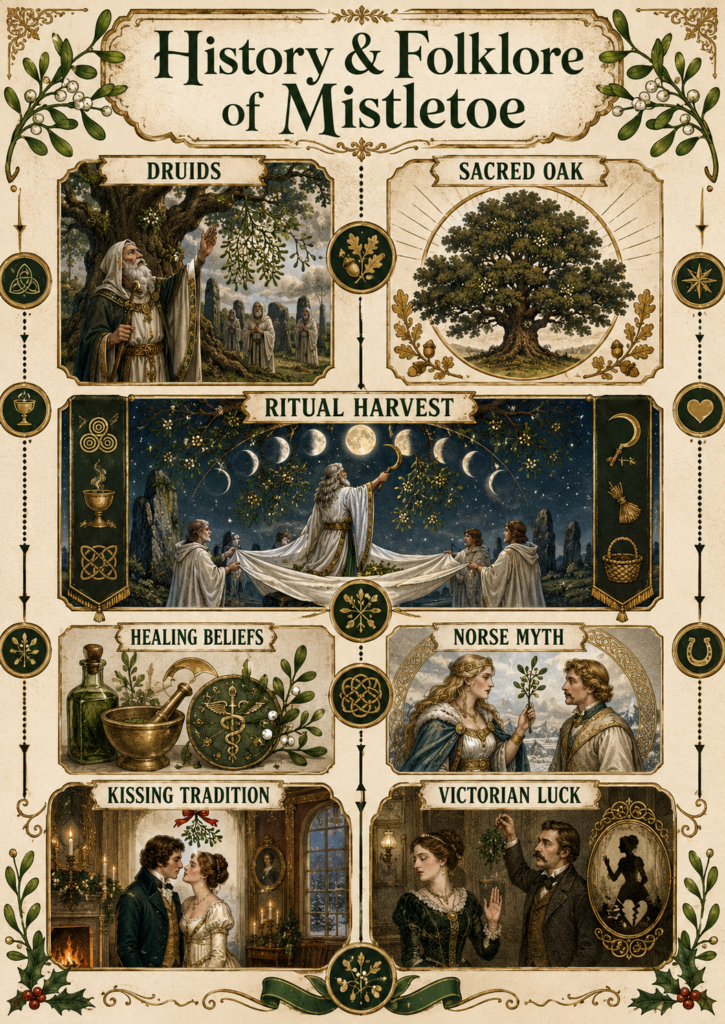
The Druids of ancient Gaul and Britain considered mistletoe sacred, particularly when found growing on oak trees. Pliny the Elder documented their ritual harvest on the sixth day of the moon, using a golden sickle and catching the sprigs in a white cloak to prevent them touching the ground. They believed it could cure infertility and serve as an antidote to all poisons.
The kissing tradition likely originated in 18th-century England, though Norse mythology offers an earlier connection through the story of Baldur, whose mother Frigg declared mistletoe a symbol of love after her son’s resurrection. By the Victorian era, refusing a kiss under the mistletoe was considered bad luck.
Botanical Profile & Ecology
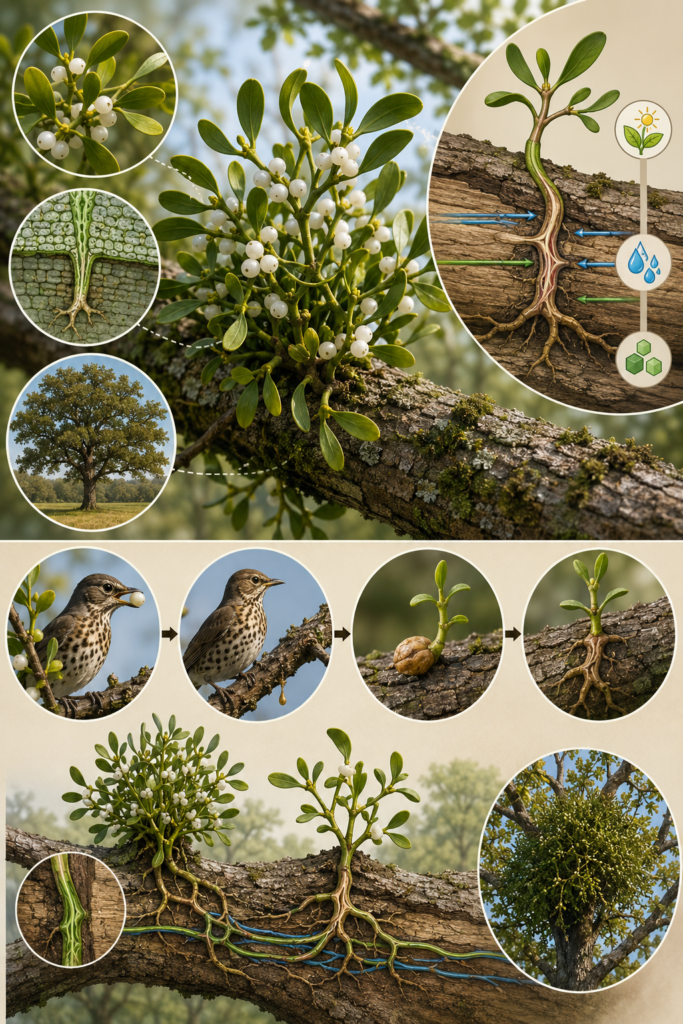
Mistletoe is a hemiparasite — it photosynthesises its own sugars but steals water and mineral nutrients from host trees through specialised root-like structures called haustoria. The genus Viscum (European mistletoe) contains around 100 species, while Phoradendron (American mistletoe) adds another 230+ species to the family.
Birds are the primary seed dispersers. The Mistle Thrush (Turdus viscivorus) — literally named after the plant — eats the berries and deposits sticky seeds on branches. The seeds germinate and penetrate bark within weeks, establishing a vascular connection that can sustain the plant for decades.
Medicinal Uses & Current Research
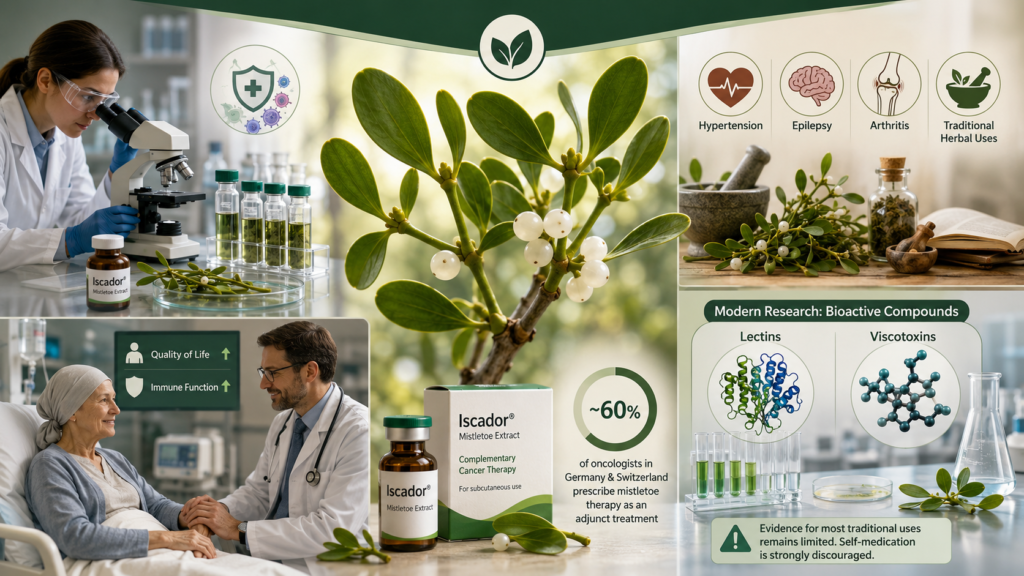
European mistletoe extract (Iscador®) is one of the most widely studied complementary therapies in oncology. Clinical trials suggest it may improve quality of life for cancer patients and stimulate immune function. In Germany and Switzerland, mistletoe therapy is prescribed by approximately 60% of oncologists as an adjunct treatment.
Traditional herbalism has used mistletoe for hypertension, epilepsy, and arthritis. Modern pharmacological research has identified lectins and viscotoxins as the primary bioactive compounds. However, evidence for most traditional uses remains limited, and self-medication is strongly discouraged.
Safety & Toxicity Warning
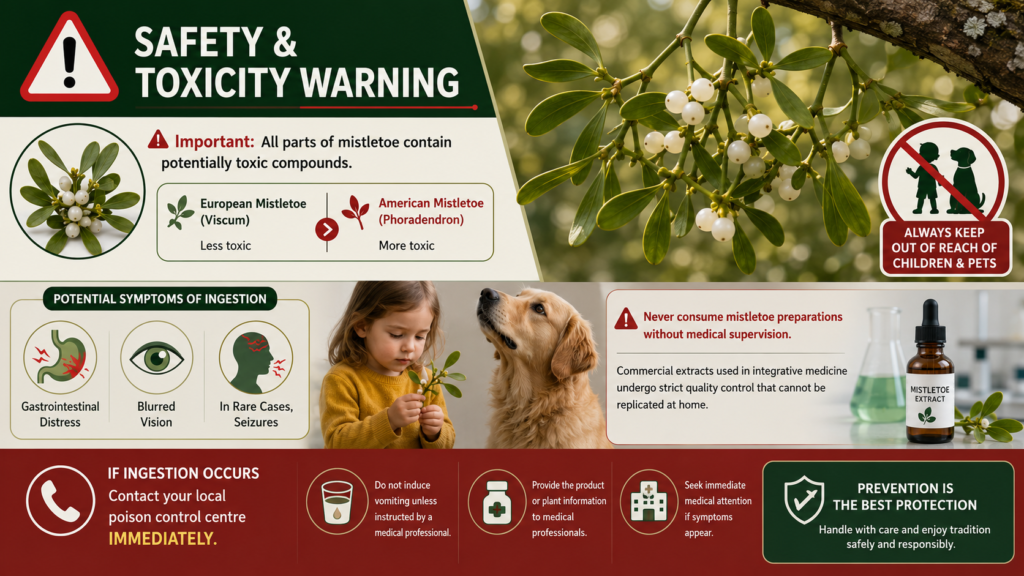
⚠️ Important: All parts of mistletoe contain potentially toxic compounds. American mistletoe (Phoradendron) is more toxic than European varieties. Ingestion of berries — particularly by children and pets — can cause gastrointestinal distress, blurred vision, and in rare cases, seizures. Always keep decorative mistletoe out of reach.
Never consume mistletoe preparations without medical supervision. Commercial extracts used in integrative medicine undergo strict quality control that cannot be replicated at home. If ingestion occurs, contact your local poison control centre immediately.
Sources & Further Reading
1. Horneber, M. et al. (2008). Mistletoe therapy in oncology. Cochrane Database of Systematic Reviews.
2. Pliny the Elder. Natural History, Book XVI. Translation by John Bostock (1855).
3. Watson, D.M. (2001). Mistletoe — A Keystone Resource in Forests and Woodlands. Annual Review of Ecology and Systematics, 32, 219–249.