

A veterinarian-informed guide to kiwi for dogs: safer preparation, realistic portions, possible risks, and when to call your vet.
If your dog is watching while you slice kiwi, one tiny piece of ripe flesh is usually a reasonable occasional treat for a healthy adult dog. The important distinction is between kiwi being poisonous and kiwi being suitable in every form or amount: those are not the same thing.
A dog’s regular complete and balanced food should remain the nutritional foundation. Kiwi is optional, naturally sweet, and best treated as a small extra—not a supplement or a remedy for constipation, immunity, or any medical condition.
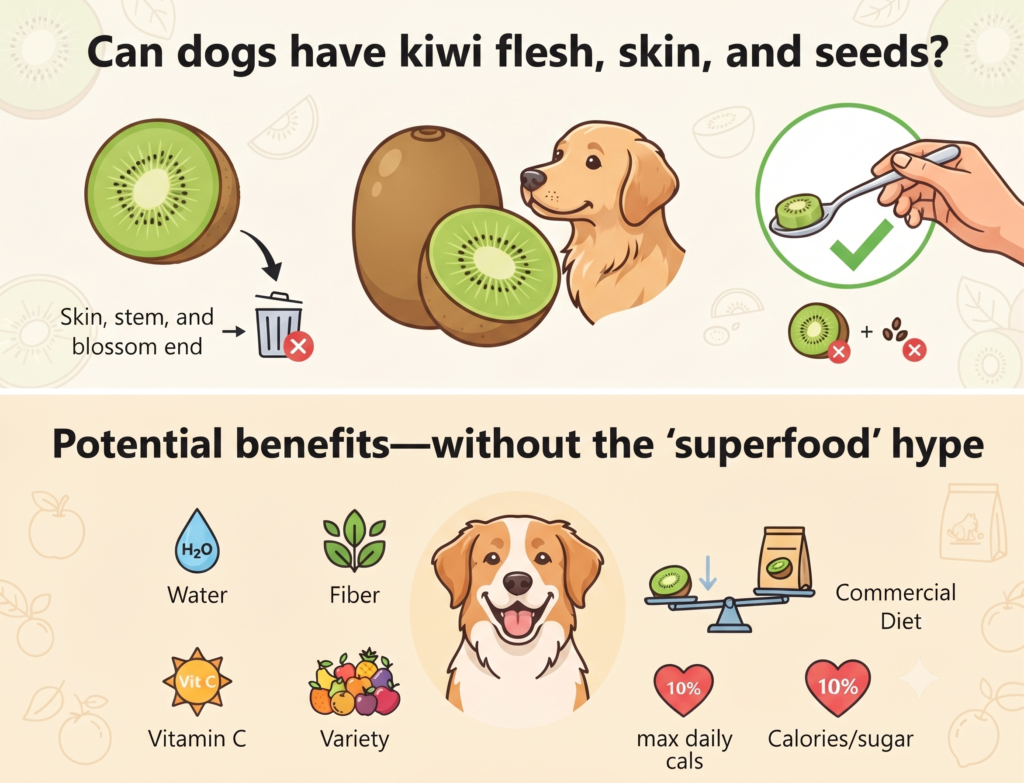
Can dogs have kiwi flesh, skin, and seeds?
The soft green or golden flesh is the part most appropriate to offer. Wash the fruit before cutting it, then peel it and remove any tough ends. Although kiwi seeds are tiny and are not typically the main concern, they add no benefit and are easiest to avoid by offering small pieces of peeled flesh.
Potential benefits—without the “superfood” hype
Kiwi contains water, fiber, and nutrients such as vitamin C. Those nutrients can be part of a person’s diet, but dogs eating a complete commercial diet generally do not need kiwi to meet nutritional requirements. The real benefit is variety for dogs that tolerate it, with portions small enough that natural sugar and extra calories stay modest.
Kiwi risks and possible digestive problems
Too much kiwi may cause gas, soft stool, vomiting, or diarrhea—especially in dogs that are sensitive to new foods. Choking is a separate concern: round slices, large chunks, and peel are harder to manage. Dogs with diabetes, obesity, pancreatitis, gastrointestinal disease, food allergies, or a prescription diet should only try kiwi after their veterinary team says it fits their plan.
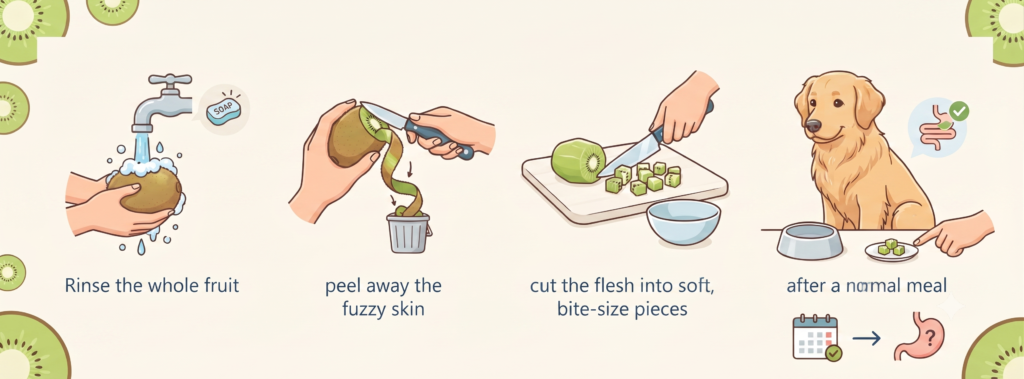
Wash, peel, cut, then offer one tiny piece
Rinse the whole fruit, peel away the fuzzy skin, and cut the flesh into soft, bite-size pieces smaller than your dog could gulp. For a first try, offer one piece after a normal meal and monitor for digestive changes over the next day.
How much kiwi can a dog eat?
There is no single serving amount that works for every dog. Treats together should generally stay a small part of the day’s calories. Use your dog’s size, usual diet, health needs, and other treats that day to guide the portion; the ranges below are deliberately conservative first tastes, not a daily target.
| Dog size | First taste | Practical reminder |
|---|---|---|
| Small dog | 1 tiny peeled cube | Cut especially small; avoid slices a dog could swallow whole. |
| Medium dog | 1–2 small peeled cubes | Wait to see how your dog tolerates the first taste. |
| Large dog | A few small peeled cubes | More size does not mean unlimited fruit or a whole kiwi. |
Fresh, frozen, dried, and golden kiwi
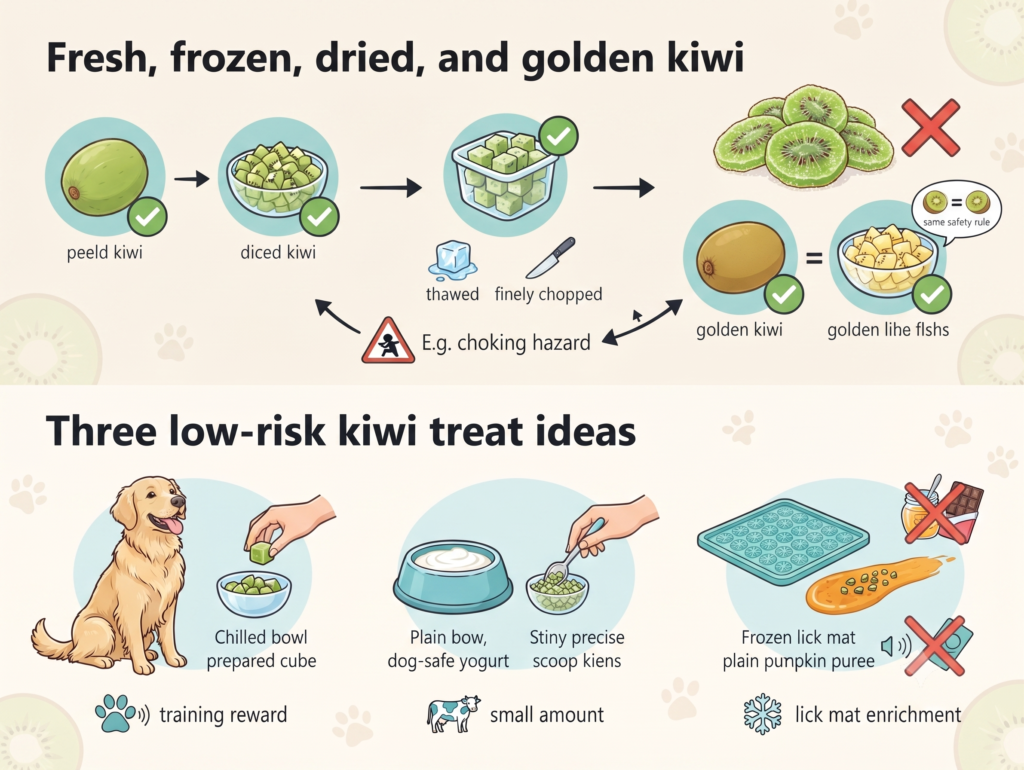
Fresh peeled kiwi is the simplest option. Plain frozen kiwi can be offered only in very small, thawed or finely chopped pieces so it is not a hard choking hazard. Dried, candied, sweetened, or flavored kiwi is best skipped because it is concentrated in sugar and may contain added ingredients. Golden kiwi follows the same safety approach as green kiwi: peeled flesh, small portions, and no assumptions that it is better for every dog.
Three low-risk kiwi treat ideas
- One chilled, peeled kiwi cube as an occasional training-sized treat.
- A tiny amount of finely chopped kiwi stirred into plain, dog-safe yogurt only if dairy already agrees with your dog.
- A frozen lick mat with a thin smear of plain pumpkin and a few minced kiwi pieces—never sweetened yogurt, syrup, or xylitol-containing products.
What if your dog ate a whole kiwi?
Stay calm and check what was eaten: flesh only, peel, the whole fruit, dried kiwi, or a kiwi product with other ingredients. A healthy large dog that ate a little plain flesh may only need monitoring, but a whole kiwi can pose a greater choking or blockage concern—particularly for a puppy or small dog. Do not induce vomiting or try a home remedy unless a veterinary professional instructs you to.
- Contact a veterinarian promptly for repeated vomiting, diarrhea that is severe or persistent, marked lethargy, abdominal pain, trouble breathing, gagging, or inability to keep water down.
- Call sooner if a small dog or puppy swallowed a whole kiwi or a large piece of peel.
- Seek urgent advice if dried kiwi or a processed product may contain xylitol, chocolate, raisins, alcohol, or another unsafe ingredient. Have the package, amount eaten, dog’s weight, and time of ingestion ready.